








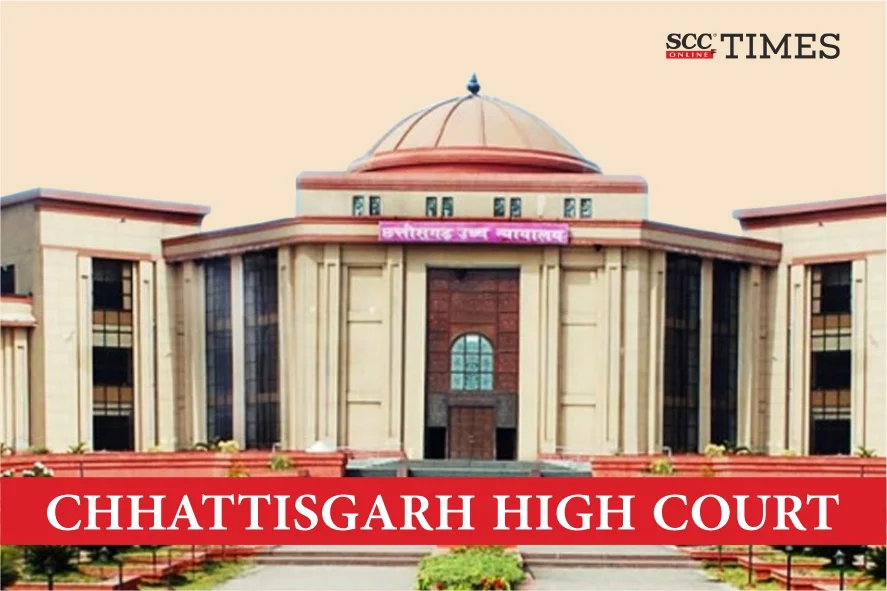
Chhattisgarh High Court: In a petition filed for quashing the impugned orders dated 02-02-2019 and 18-02-2016 and directing the respondent authorities to reinstate the petitioner in service, Sachin Singh Rajput, J., stated that though there was a finding that the petitioner remained in unauthorized absent, but the enquiry officer, disciplinary authority and appellate authority failed to give a positive finding that the unauthorized absence of petitioner was wilful and deliberate. The charges levelled against the petitioner also did not reflect the same. Rather, the petitioner had taken a specific defence that his wife was seriously ill and was under medical treatment for a long time and ultimately, she passed away.
Thus, in light of Krushnakant B. Parmar v. Union of India, (2012) 3 SCC 178 and Chhel Singh v. MGB Gramin Bank, (2014) 13 SCC 166, the Court set aside the impugned orders and stated that the petitioner to be reinstated in service.
Background
In the present case, the petitioner who was working as constable with the respondents faced a departmental enquiry, as remained in absence from duty from 28-02-2013 to 16-10-2013, and he made his report on 16-10-2013. When his reporting was accepted by respondents, note sheet was prepared in which it was proposed that on humanitarian ground his absence might be added in the earned leave. The Superintendent of Police directed that the matter be sent for enquiry. The note-sheet also indicated that the petitioner had 246 days earned leave in his account and 480 days half pay leave in his account. From the record of departmental enquiry, it appeared that a charge-sheet was issued to the petitioner and the copy of the same was delivered to him.
On completion of departmental enquiry, the report was sent to the petitioner inviting his response and ultimately vide order dated 18-02-2016, the petitioner was removed from the service. An appeal was preferred against the order, which was also dismissed vide order dated 02-02-2019.
The petitioner stated that the findings recorded by the Enquiry Officer, disciplinary authority and appellate authority in dismissing him from service is bad in law, perverse to the record. It was submitted that the petitioner had sufficient and valid reasons for his absence from duty as his wife was suffering from serious ailment and was being treated for a long time. The treatment papers, which were submitted by the petitioner, were ignored by the enquiry officer, disciplinary authority and appellate authority. The petitioner also submitted that the punishment imposed upon him was shockingly disproportionate to the charge as he had put in more than 23 years of service hence petitioner could have been awarded lesser punishment.
Analysis, Law, and Decision
The Court observed that the petitioner tried to justify his long absence by placing on record the treatment of medical paper of his wife. The Court stated that though he might be unauthorizedly absent, but the same could not be termed as deliberate or wilful. The Enquiry Officer found the charges levelled against the petitioner was proved and should have placed on record the death certificate of his wife.
The Court stated that though there was a finding that the petitioner remained in unauthorized absent, but the enquiry officer, disciplinary authority and appellate authority failed to give a positive finding that the unauthorized absence of petitioner was wilful and deliberate. The charges levelled against the petitioner also did not reflect the same. Rather, the petitioner had taken a specific defence that his wife was seriously ill and was under medical treatment for a long time and ultimately, she passed away. The records of the departmental enquiry also suggested that the medical papers of the wife of the petitioner were duly placed on record. The enquiry officer failed to take this in account to its proper perspective.
Thus, in light of Krushnakant B. Parmar v. Union of India, (2012) 3 SCC 178 and Chhel Singh v. MGB Gramin Bank, (2014) 13 SCC 166, the Court set aside the orders dated 02-02-2019 and 18-02-2016 and directed the petitioner to be reinstated in service. The petitioner should be considered in continuity in service during this period. For back wages, liberty was reserved in favour of the petitioner to represent before the competent authority.
[Kudiam Bhima v. State of Chhattisgarh, 2024 SCC OnLine Chh 10289, decided on 14-10-2024]
Advocates who appeared in this case :
For the Petitioner: Kamlesh Kumar Pandey, Advocate;
For the Respondent: Nupur Trivedi, Panel Lawyer.






0 replies