








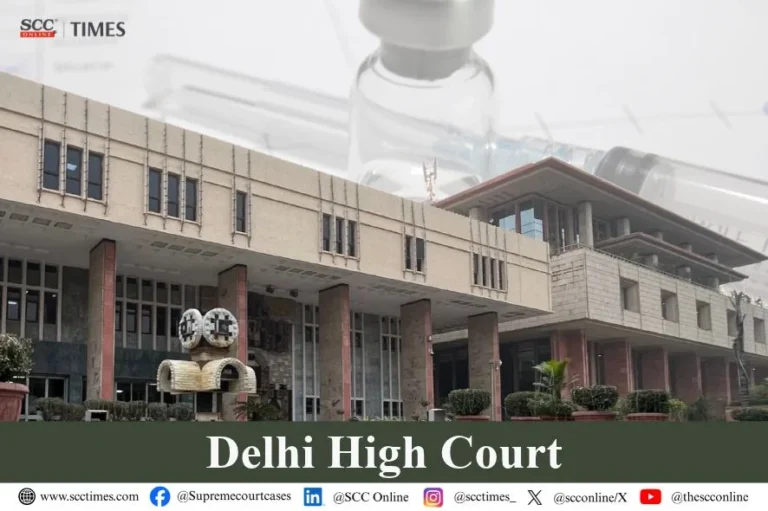
Delhi High Court: A Bench of Manmohan and Sangita Dhingra Sehgal, JJ. dismissed an appeal filed by the prosecutrix under Section 372 CrPC challenging the trial court’s judgment whereby the accused was acquitted of the charge of rape.
Simran Sadyora and Sanjeev Bhatia, Advocates, representing the prosecutrix, submitted that the trial court failed to appreciate that there is a presumption under Section 114-A of the Evidence Act as to absence of consent in a case for prosecution of the offence under Section 376 IPC and consequently the onus to prove that he had not committed the offence under Section 376(2)(n) had shifted to the accused.
At the outset, the High Court observed: “the presumption under Section 114-A of the Evidence Act would only be attracted if the factum of sexual intercourse is proved.” It was noted that the prosecutrix had refused an internal medical examination. the Court was also of the opinion that her testimony was highly unreliable, untrustworthy and inspired no confidence. It was noted further that the delay in registering FIR was not successfully explained. Also, she made 529 calls to the accused between the dates of the alleged rape and filing of the complaint. Her acts were inconsistent with her allegations. Moreover, the factum of sexual intercourse remained not proved. Keeping on view such and other findings, the Court held that the accused was entitled to be given benefit of doubt. Hence, the appeal was dismissed. [Rachna Singh v. State (NCT of Delhi), 2019 SCC OnLine Del 8519, decided on 13-05-2019]







0 replies