








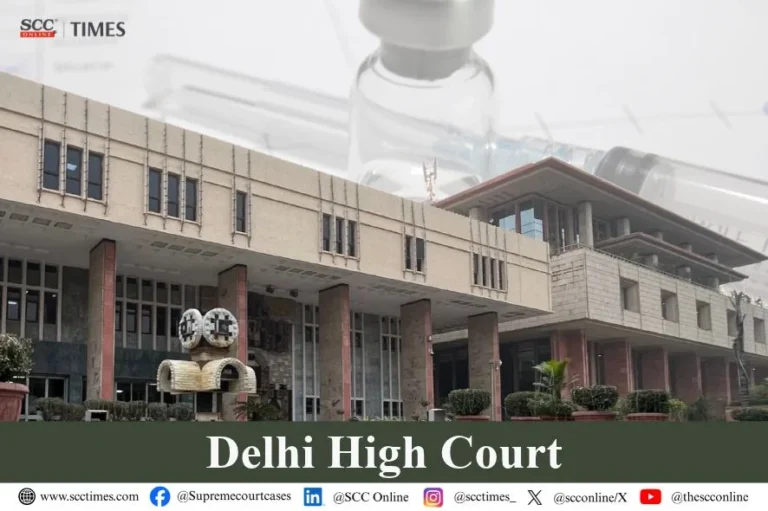
Delhi High Court: A Single Judge Bench comprising of Vinod Goel, J. dismissed a revision petition filed against the order of Additional District Judge whereby petitioners application under Order 7 Rule 11 CPC was dismissed.
The respondents, an unregistered partnership firm, had filed a suit against the petitioners for recovery of Rs 24,41,967 on account of dishonour of cheques. The petitioners filed an application under Order 7 Rule 11 CPC for rejection of plaint on the ground that the suit was barred under Section 69(2) of the Indian Partnership Act, 1932. The application was dismissed as mentioned above. Notably, Section 69(2) specifies that no suit to enforce a right arising from a contract shall be instituted in any court against any third party by an unregistered firm. Aggrieved by the dismissal of the application, the petitioners were before the High Court.
The High Court noted that in the instant case, the respondents were seeking enforcement of liability of the petitioners created under Sections 30 and 37 of the Negotiable Instruments Act, 1881 as the cause of action for the plaint was based on dishonour of cheques. Reference was made to the judgment of Kerala High Court in Afsal Baker v. Maya Printers, 2016 SCC OnLine Ker 29914, wherein it was observed, “by virtue of Section 30 and 37 of the Negotiable Instruments Act, on the dishonour of a cheque, the statute creates liability on the drawer, apart from the general law of contracts.” In such view of the matter, the Court held that since the suit was not based on any contract between the parties, the bar under Section 69(2) of the Partnership Act would not apply. Resultantly, the petition was dismissed. [Hindustan Infrastructure Construction Corpn. Ltd. v. R.S. Woods International Ltd., 2018 SCC OnLine Del 12960, Order dated 13-12-2018]







0 replies