








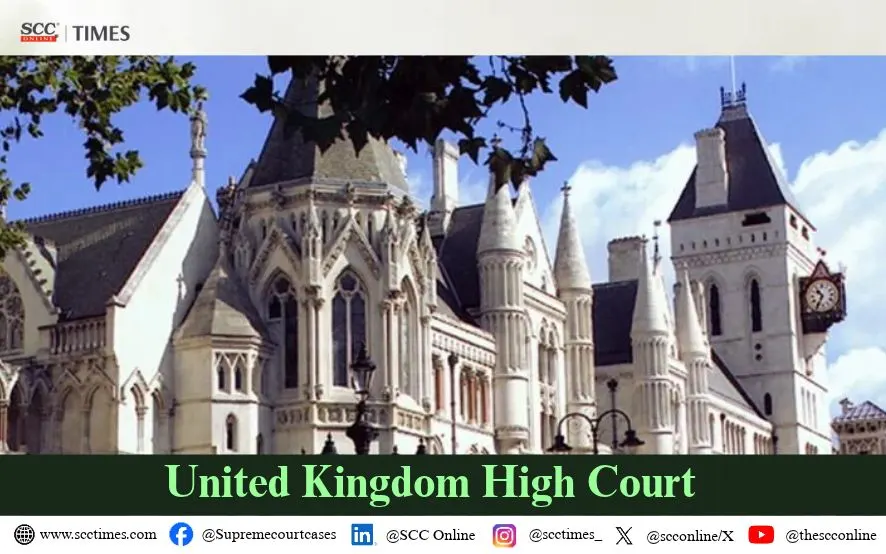
United Kingdom High Court: In an anonymised challenge to an LCIA arbitral award under Sections 67 and 68 of the Arbitration Act 1996 (the Act), Nigel Cooper KC, J., considered whether Clause 4 of a deed, which conferred upon the defendant a unilateral right to refer disputes to arbitration, constituted a valid arbitration agreement. The Court held that a separate, free-standing unilateral conferral of the right to refer a dispute to arbitration constitutes an arbitration agreement for the purposes of the Act. It further held that a binding written unilateral undertaking to submit disputes to arbitration in advance is equally an agreement to arbitrate, consistent with the established principle that a unilateral submission to arbitration when requested constitutes an agreement to arbitrate. Thus, the Court rejected the claimants’ arguments that the arbitration clause lacked mutuality, that the deed was subject to unfulfilled conditions precedent, and that the tribunal lacked jurisdiction to determine disputes concerning pre-deed nominee arrangements, withdrawals and salaries.
Background
The defendant, the parent company of a substantial family-owned group of companies, commenced LCIA arbitration proceedings against four members of the same family, alleging that members of the family held shares in entities operating in Country G, as nominees and fiduciaries for the defendant under a long-standing nominee arrangement. On 21 June 2021, the claimants executed a deed confirming that they held, and had always held, the relevant shares and interests as nominees and fiduciaries for the defendant. Clause 4 of the deed conferred upon the defendant a unilateral right to refer disputes arising in relation to the deed to arbitration under the LCIA Rules.
The dispute arose after the claimants denied the existence of the nominee arrangement and asserted beneficial ownership of the Country G entities, contending that the deed had been executed subject to conditions that had not been fulfilled. On 26 June 2023, the defendant commenced arbitration proceedings seeking, among other relief, declarations concerning the nominee arrangements, an account, financial information relating to the Country G entities, injunctive relief and orders concerning the transfer of shares.
Following a hearing in April 2025, the Arbitral Tribunal found in favour of the defendant and issued its award on 31 October 2025, granting extensive declaratory and injunctive relief. The claimants subsequently challenged the award before the High Court under Sections 67 and 68 of the Act, contending that the tribunal lacked substantive jurisdiction and that the award was affected by serious irregularity.
Analysis, Law and Decision
Issue 1 — Challenge based on absence of a valid arbitration agreement
The claimants contended that Clause 4 of the deed did not constitute a valid arbitration agreement because it conferred only upon the defendant a unilateral right to refer disputes to arbitration and therefore lacked mutuality. The Court held that a separate, free-standing unilateral conferral of the right to refer a dispute to arbitration constitutes an arbitration agreement for the purposes of the Arbitration Act 1996. It further held that a binding written unilateral undertaking to submit disputes to arbitration in advance is equally an agreement to arbitrate, consistent with the established principle that a unilateral submission to arbitration when requested constitutes an agreement to arbitrate.
The Court emphasised that Sections 5 and 6(1) of the Act refer to an “agreement” rather than a “contract” or a bilateral contract. The relevant question was whether there existed a binding written obligation to submit disputes to arbitration, rather than whether both parties enjoyed identical rights to initiate proceedings. The Court held that the deed constituted a legally binding and enforceable undertaking by the claimants to submit disputes falling within Clause 4 to arbitration if referred by the defendant. The absence of a wider bilateral agreement did not invalidate that undertaking. Accordingly, the Court rejected the challenge based on the alleged absence of a valid arbitration agreement.
Issue 2 — Whether the deed was subject to conditions precedent
The claimants argued that the deed was subject to two conditions precedent: an “Escrow Condition”, requiring all shareholders to sign equivalent deeds before the document became effective, and a “Good Faith Condition”, under which the deed would not be relied upon without compliance with a purported ‘Overarching Agreement’.
The Court rejected both alleged conditions. Regarding the Escrow Condition, the Court observed that the deed was unconditional on its face and contained no provision making its effectiveness dependent upon the execution of equivalent deeds by other shareholders. The Court examined the contemporaneous documentation, including meeting records, correspondence surrounding the execution and delivery of the deed, and other communications between the parties. It found that these documents did not establish any intention that the deed should remain ineffective or unenforceable until all other shareholders had signed equivalent documents.
The Court also considered the meeting note recording the First Claimant’s acceptance that he would sign the deed “no ifs and buts”. It further noted that the deed merely confirmed an existing nominee arrangement and did not place the claimants in a worse position than other shareholders. Accordingly, the Court found that there was no Escrow Condition.
Regarding the Good Faith Condition, the claimants relied on informal assurances allegedly given by the defendant’s Deputy Chairman and Group Chairman that the deed would not be used against them. The Court held that the communications relied upon did not constitute sufficiently clear and unequivocal assurances that the deed would not be enforced. The Court also considered the claimants’ contention that the defendant had agreed that the deed would be uniquely non-binding upon them, despite being binding upon other signatories, and found that such an arrangement would require clear terms and evidence, which were absent.
The Court further held that, even if conditions affecting the enforceability of the deed had existed, they would not automatically invalidate the arbitration agreement contained in Clause 4. Applying the separability principle under Section 7 of the Act, the Court found no exceptional circumstances establishing that the arbitration agreement itself was invalid. Accordingly, the Court rejected the claimants’ arguments concerning both alleged conditions precedent.
Issue 3 — Jurisdiction over pre-deed nominee arrangements
The claimants argued that the tribunal lacked jurisdiction to determine matters concerning nominee arrangements predating the execution of the 2021 deed. The Court rejected this challenge and held that it did not accurately reflect the scope of the tribunal’s determination.
The tribunal had expressly recognised that its jurisdiction derived from and was circumscribed by Clause 4 of the deed. It was entitled to examine pre-deed documents and arrangements for their evidentiary relevance in determining whether the declarations contained in Clause 1(a) of the deed were true. In particular, the deed recorded that the claimants held, and had always held, the relevant shares and interests as nominees and fiduciaries for the defendant.
The tribunal considered the earlier agreements and other contemporaneous materials to determine the truth of that declaration. It did not assume jurisdiction over a separate claim based exclusively on pre-deed materials and independent of the deed. The Court accepted that distinction and held that the tribunal’s declaration that the deed was valid and effective and set out the parties’ legal rights concerning its subject matter fell within its jurisdiction.
The subsequent declarations concerning beneficial ownership and the shares held in the Country G entities followed from that determination.
Issue 4 — Jurisdiction over withdrawals and salaries
The claimants further contended that the tribunal lacked jurisdiction to determine disputes concerning withdrawals of money from the Country G entities and the payment of salaries, arguing that these matters were unconnected with the deed. The Court rejected that challenge, referring to the presumption that rational commercial parties intend disputes arising out of their relationship to be determined by the same tribunal.
The Court emphasised that Clause 4 required arbitration of “any dispute or claim arising in relation to this Deed”. It also considered the associated governing law provision, which extended to disputes arising out of or in connection with the deed, its subject matter or formation. The Court held that the subject matter of the deed encompassed the parties’ past and present relationship and therefore included disputes concerning withdrawals and salaries relating to the nominee arrangement recorded in the deed.
The Court also accepted the tribunal’s conclusion that the pledge executed contemporaneously with the deed, concerning the withdrawals, formed part of the same overall subject matter. Accordingly, the Court rejected the challenge to the tribunal’s jurisdiction over these disputes.
Issue 5 — Serious irregularity challenge under Section 68
The claimants contended that the tribunal’s definition of the “Country G Entities” in the glossary to the award was overly broad and could potentially include entities that did not form part of the defendant’s group. The Court held that the glossary definition had to be read in the context of the Request for Arbitration, the Statement of Claim and the agreed List of Issues, all of which consistently referred to the defendant’s subsidiaries and affiliated entities operating in Country G. Thus, the Court found no ambiguity in the award.
The Court further observed that, even if clarification were required, the matter could be addressed under Section 57 of the Act. This did not approach the high threshold required to establish serious irregularity under Section 68. The Court also considered the defendant’s undertaking that it would enforce the award only based on the narrower definition of the Country G Entities advanced in the arbitration proceedings. Finally, the Court concluded that the claimants had not demonstrated any substantial injustice.
Thus, the Court dismissed the Section 67 application challenging the tribunal’s substantive jurisdiction and the Section 68 application alleging serious irregularity, and accordingly upheld the arbitral award.
[A v. E, [2026] EWHC 2590 (BP), decided on 13-10-2026]
Advocates who appeared in this case :
For the Claimants: Emma Horner (instructed by Michelmores).
For the Defendant: Andrew Hunter KC and Abe Chauhan (instructed by Kingsley Napley).








0 replies