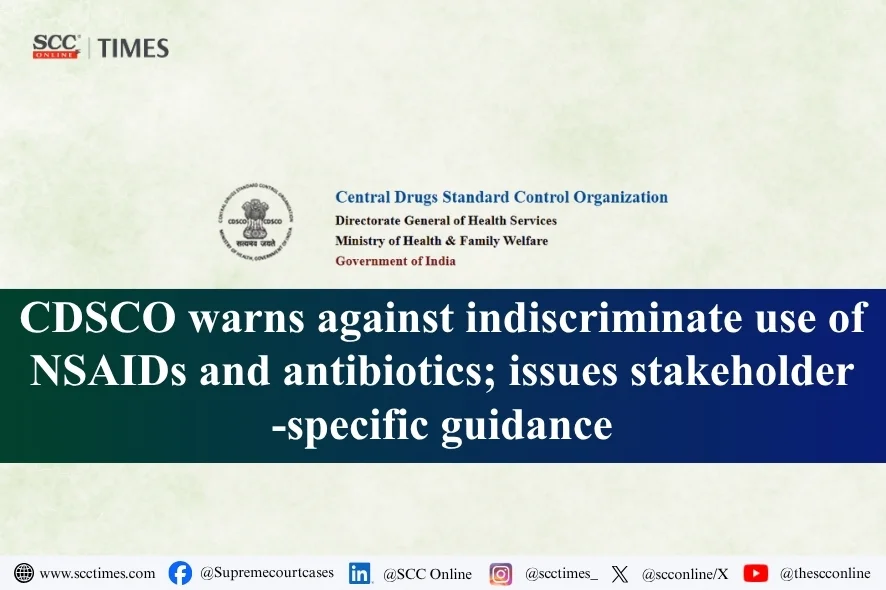
On 21 September 2026, the Central Drugs Standard Control Organization (CDSCO issued a circular highlighting the risks associated with the indiscriminate use of non-steroidal anti-inflammatory drugs (NSAIDs), commonly known as painkillers, and antibiotics.
Key Highlights:
-
The circular addresses concerns regarding the indiscriminate use of NSAIDs and antibiotics, links such misuse to the risk of chronic kidney disease, and reiterates the statutory requirements governing the sale and distribution of these medicines in India.
-
It notes that the import, manufacture, sale and distribution of drugs are regulated under the Drugs and Cosmetics Act, 1940 and the rules framed thereunder.
-
CDSCO has reiterated that prescription drugs, including NSAIDs and antibiotics, must be sold and distributed only on the prescription of a Registered Medical Practitioner or specialist.
-
Various NSAIDs and antibiotics are placed under Schedules G, H, H1 and X of the Drugs Rules, 1945, requiring appropriate medical supervision and compliance with prescribed warnings and conditions of sale under Rule 97.
-
Most NSAIDs and antibiotics continue to be subject to prescription-based controls under Schedules H and H1 of the Drugs Rules, 1945, with retail sale restricted without a valid prescription and statutory warning labels required on antibiotic preparations.
-
The circular states that such medicines should be used only when clinically indicated, in appropriate doses, for the appropriate duration and under medical supervision.
-
The advisory contains stakeholder-specific recommendations for:
A. General Public
-
Avoid self-medication with painkillers and antibiotics.
-
Do not use antibiotics for common viral infections.
-
Take antibiotics only as prescribed.
-
Inform healthcare professionals of any kidney-related risk factors before using NSAIDs.
-
Seek medical advice for persistent symptoms.
B. Healthcare Professionals
-
Prescribe only when clinically indicated.
-
Use the lowest effective NSAID dose for the shortest duration.
-
Exercise caution in high-risk patients.
-
Follow antimicrobial stewardship principles.
-
Avoid inappropriate or prolonged antibiotic therapy.
C. Pharmacists, Retailers and Distributors
-
Comply with Schedule H and H1 requirements.
-
Do not sell prescription drugs without a valid prescription.
-
Avoid facilitating self-medication.
-
Adhere to label warnings and sale conditions.
D. Hospitals and Healthcare Institutions
-
Promote rational prescribing practices.
-
Strengthen antimicrobial stewardship.
-
Conduct prescription reviews.
-
Ensure effective patient counselling.
E. State/UT Drugs Control Authorities
-
Raise awareness about risks of indiscriminate NSAID and antibiotic use.
-
Promote compliance with prescription-only sale requirements.
-
-
The circular urges all stakeholders to promote the rational, safe and responsible use of NSAIDs and antibiotics to prevent avoidable adverse drug reactions, renal complications and antimicrobial resistance.
[CDSCO Circular on NSAIDS and anti-biotics, dated 21-09-2026]