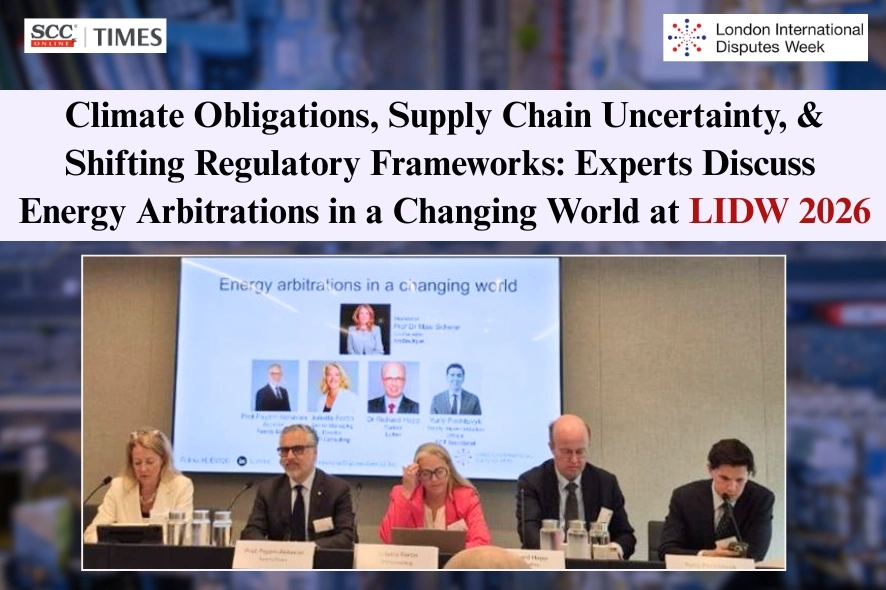
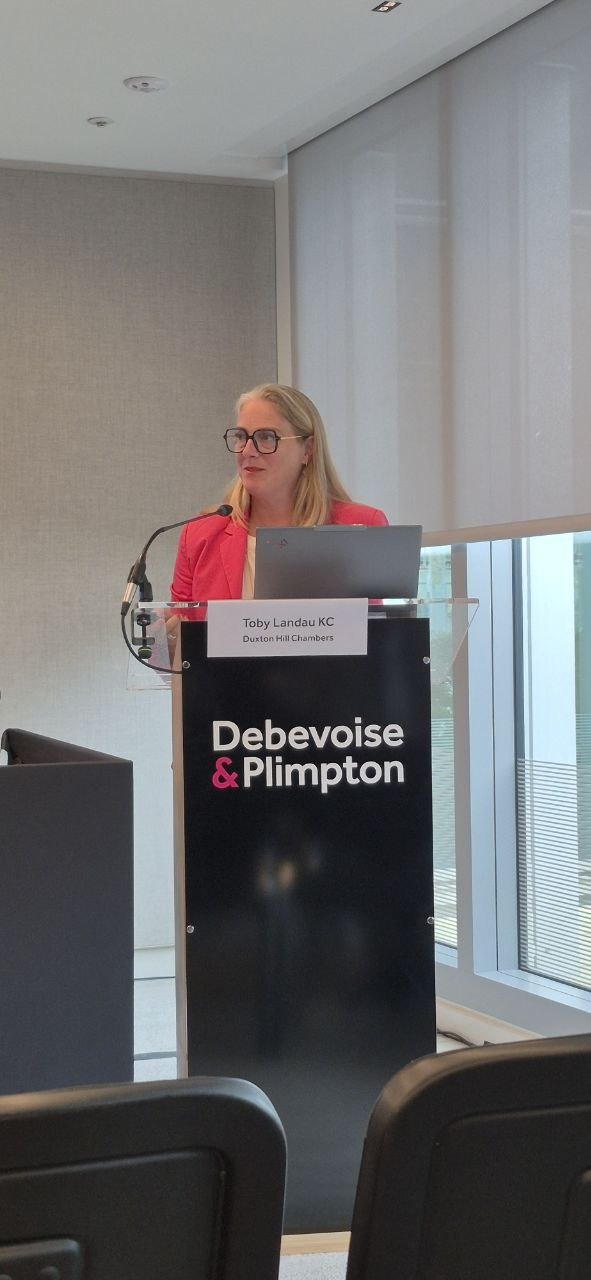
Following the remarkable keynote address by Mr. Toby Landau KC, the LIDW 2026 proceeded to a panel discussion on “Energy Arbitrations in a Changing World”. The session delved into State defences based on climate obligations, emerging energy disputes, shifting regulatory frameworks, and reshaping disputes across the energy value chain, the impact of the Iran-US war, and much more.
Moderated by Prof. Dr. Maxi Scherer, Solicitor, Arbitrator and Co-founder of ArbBoutique, the panel consisted of esteemed professionals namely, Dr. Richard Happ, Partner, Luther Lawfirm; Mr. Yuriy Pochtovyk, General Counsel and Treaty Implementation Official, Energy Charter Secretariat; Prof. Payam Akhavan, Lawyer, Twenty Essex; and Ms. Juliette Fortin, Senior Managing Director, Head of France Economic and Financial Consulting, FTI Consulting.
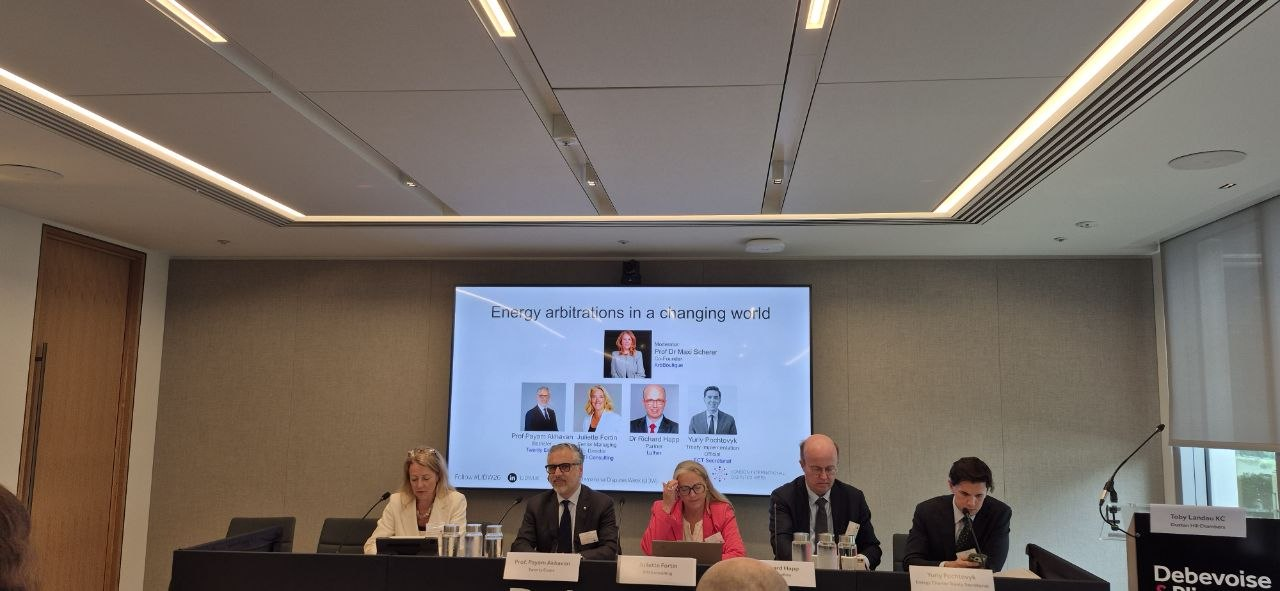
Kickstarting the discussion, Prof. Dr. Maxi Scherer laid out the sub-topics for the discussion on energy arbitration in the context of energy transition and the pressing geopolitical developments affecting global energy markets. Thereafter, she introduced the panellists and handed over the floor to Dr. Richard Happ.
Energy Transition in the Age of Uncertainty: Dr. Richard Happ
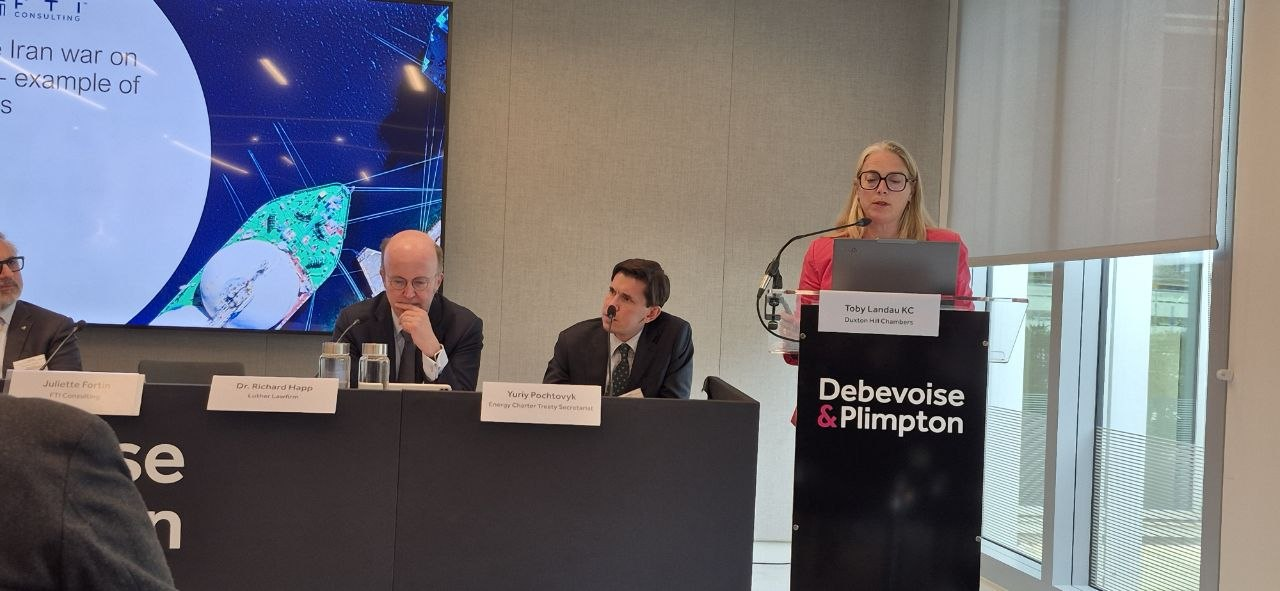
At the outset, Dr. Happ explained why he decided to discuss this subtopic. He stated that discussions about energy transitions often focus on familiar categories such as phase-out disputes involving fossil fuels, ceasing use of coal and oil, retirement of conventional power generation, and transition to electric mobility. While acknowledging these issues, he suggested that a much more important category of disputes was emerging, i.e., synchronization disputes.
“What states currently tell their citizens what they plan to do and what they need to do if they want to comply with their obligations to reach the 1.5 degrees climate target has a vast difference.”
He highlighted that there was an enormous investment challenge associated with achieving global climate targets, as the measures required to be imposed are much stricter than what already exists. He added that there were also phase-in disputes that were arising out of the construction of renewable infrastructure and new energy systems. According to the International Energy Agency (IEA), approximately US $4.8 trillion in additional annual investment may be required till 2035, and roughly 70 per cent of these investments will come from private capital.
Synchronization Disputes:
He underscored the mismatch between phase-out and phase-in processes, wherein the former was controlled by the State, but the latter was not. He argued that disputes will increasingly arise from efforts to manage this mismatch. If conventional assets are retired before sufficient renewable capacity is available, states may face energy shortages, security-of-supply concerns, delays in meeting climate targets, and regulatory reversals.
Reasons for Synchronization Disputes:
Dr. Happ identified four principal causes of synchronization disputes:
-
State does not control Markets: Governments can plan transitions, but cannot guarantee market outcomes. He cited Germany’s offshore wind strategy, noting reports that major projects may be delayed due to supply-chain issues and commercial considerations. Such delays may force governments to keep fossil fuel assets operational longer than anticipated, thereby threatening the climate goals.
-
Courts and NGOs: NGOs and Courts will redraw the regulatory landscape via climate litigation. Court decisions and NGO-led claims might require governments to accelerate or modify climate action, disrupting existing transition plans.
-
Black Swans and Gray Rhinos: Black Swans stood for unexpected shocks, such as Russia’s invasion of Ukraine, whereas Gray Rhinos meant foreseeable but underappreciated risks. He cited potential disruptions involving Iran and maritime trade routes as examples of gray rhino risks that could significantly affect energy markets.
-
Political Change: Political priorities might change, and Governments might revise climate policies for economic reasons. He discussed debates surrounding emissions trading systems and warned that changes in carbon pricing could undermine the economic assumptions supporting green investments. He explained the Butterfly Effect, wherein seemingly minor policy adjustments can cascade through energy systems and alter project economics.
Thus, he remarked that synchronization disputes were fundamentally about allocating uncertainty, as we did not know how the energy transition would take place. There could be disruptions like the US-Iran war, horizontal disputes between market actors, changes at the state level that cascade down the supply change, etc.
Lastly, Dr. Happ spoke about mixed disputes due to the state bearing different hats and underscored that the central question will be who bears the risk of transition-related uncertainty.
The Modernized Energy Charter Treaty and Parallel Treaty Regimes: Mr. Yuriy Pochtovyk
After underlining the scope of his address as the major reforms of the Energy Charter Treaty (ECT) and their implications for future energy disputes, Mr. Yuri Pochtovik began by tracing the treaty’s developments, from the birth in 1991 via a political declaration forming a legally binding treaty.
He explained how some arbitral tribunals occasionally interpreted the original ECT as placing a specific emphasis on the stability of the legal framework for energy investment, which was the jurisprudence that has become increasingly objectionable to some of the constituents of the very treaty. He stated that, except for a trade amendment, ECT remained substantively the same for almost three decades. It was only by 2024 that the constituency undertook substantive revision, mostly driven by increasing climate ambitions, evolving energy policies, and energy security considerations, as well as an effort to contribute to broader Investor-State Dispute Settlement (ISDS) and investment law reform.
However, Mr. Pochtovik stated that the adoption was postponed a few times and the membership was constantly evolving, leading to three parallel ECT regimes:
1. The 1994 Treaty: For states that have withdrawn or are withdrawing from the ECT, protections continue under the treaty’s sunset clause for twenty years.
2. The Modernized Treaty: Some states are applying the revised provisions provisionally.
3. Mixed Transitional Arrangements: Other states have opted out of provisional application while remaining treaty members. For them, the negotiators were drawing up an architecture of provisional application.
He explained that these changes were particularly motivated by a strong political consensus that there was an appetite to give effect to the treaty provisions, and specifically the ones allowing the phase-out of specific types of fuels, as well as the phase-in of some new technologies. It was also done to accommodate the constitutional or political considerations and limitations of contracting parties, by providing an opt-out mechanism via the 1994 amendment.
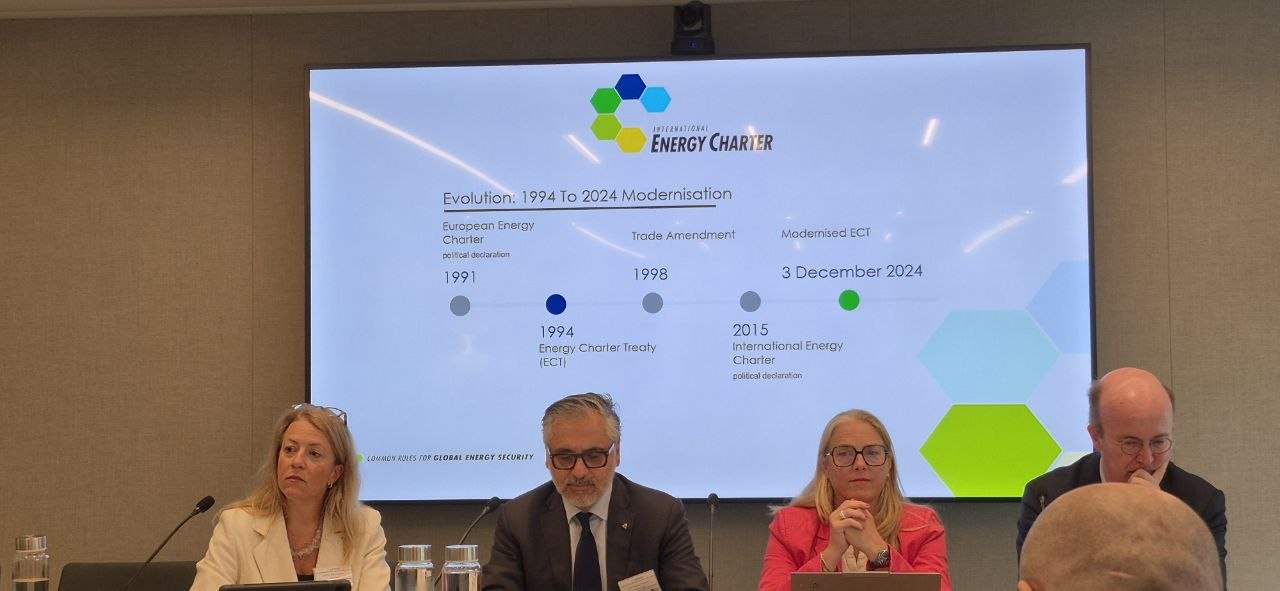
The 2024 Version:
Apart from the complex jurisdictional regime, Mr. Pochtovik shed light on the extension of this parallel application of ECT’s new version into the substantive scope of ECT. He stated that from 3 September 2025, several new member states that were still party to the treaty did not extend substantive protection to the new investments made on or after 3 September to specifically listed types of fossil fuel-related investments, including coal and petroleum, as well as fossil fuel-based hydrogen. The same applied to countries that did not apply the treaty provision, explaining that provisional application triggers the 10 years of gradual phase-down and eventual phase-out of fossil fuel-related investments for the countries that apply the treaty provision. Thus, the timing of the phase-down and phase-out of certain types of fuels will be different for different contracting parties.
He added that under the modernized ECT, protections were being expanded for new technologies meant to facilitate energy transition, like biofuels, hydrogen technologies, carbon capture and storage, green energy, etc. Thus, by the time the new ECT enters into force, there might already be disputes on the provisional application, and the countries not applying ECT provisionally will be treating their investors on a risk-first basis based on the 1994 version.
Substantive results:
Remarking that the countries that will eventually benefit from the new ECT will witness it being more state-centric, he mentioned the following implications of the new ECT:
-
Phase-out: Disputes concerning the continuation of certain protections would face
-
Standalone article on rights to regulate, standalone article on climate change and energy transition;
-
Express carve-outs for certain types of regulatory measures, including for the sake of environmental protection and climate change mitigation;
-
Narrowed down the list of conduct that may give rise to a violation of the revised umbrella clause or Chapter 3 of the ECT;
-
Reference to the Paris Accord and other environmental agreements across the text, which would reasonably be used as guidance in interpreting ECT by arbitral tribunals.
-
-
Phase-In: There would likely be disputes concerning investment in renewable energy, power generation, and emerging energy technologies, where investors would arguably face narrower protections.
He argued that this cumulative effect created a complex treaty framework where measures, on the one hand, receive more robust treaty-based state defences and, on the other hand, slightly narrower investment protection for renewable power generation.
Thus, Mr. Pochtovik concluded by stating that the 2024 version of ECT strives to achieve predictability and legal certainty for both states, which will enjoy more leeway when taking regulatory measures in environmental protection and climate change adaptation & mitigation , as well as investors who would see more clearly what type of treatment they’re going to face in every jurisdiction.
Climate Change Advisory Opinions and Their Impact on Investment Treaty Interpretation: Prof. Payam Akhavan
At the outset, Prof. Payam Akhavan clarified that the scope of his remarks would be limited to landmark advisory opinions on climate change issued by the International Tribunal for the Law of the Sea (ITLOS) and the International Court of Justice (ICJ). He remarked that although environmental clauses were increasingly prominent in investment treaties, or even revision of treaties, the potential impact of this emerging jurisprudence on the interpretation of investment treaties was notable, especially at a time when the consequences of global warming were accelerating.
He mentioned the seminal ITLOS opinion dated 21 May 2024 on the marine environment under the UN Convention on the Law of the Sea that preceded and shaped the ICJ opinion. He stated that this opinion was made at the request of the Commission of Small Island States on Climate Change and International Law, under the leadership of Antigua and Barbuda in the Caribbean and Tuvalu in the South Pacific.
Drawing a comparison, Prof. Akhavan stated that while the ITLOS rules allow for states to make such requests based on international agreement, the ICJ rules only authorize UN organs and specialised agencies to make such requests. However, the General Assembly resolution for the ICJ opinion mentioned above was an initiative of a South-pacific nation named Vanuatu.
He underscored that for small island states, the adverse impacts of global warming, such as sea level rise and extreme weather events, are an existential threat. Tuvalu, for instance, a UN member state with a population of around 10,000, indigenous habitats, and an average elevation of less than 2 meters above sea level, was likely to be submerged under the Pacific Ocean within a generation.
“While these are tiny nations that you may choose to ignore, they are, so to speak, a canary in a coal mine of climate catastrophe, a forewarning of what will eventually happen to the entire planet without deep, rapid, and sustained reductions in greenhouse gas emissions.”
Failure of Existing Governance Mechanisms:
Prof. Akhavan argued that the recourse to international courts was motivated by the failure of the existing Conference of the Parties (COP) process under the 1992 UN Framework Convention on Climate Change to make sufficient progress. He added that the 2015 Paris Agreement helped recognize, consistent with the scientific evidence, that the average temperature increase must be limited to 1.5 degrees Celsius above pre-industrial levels to avoid the most catastrophic impacts of global warming.
He added that the Intergovernmental Panel on Climate Change concluded that risks and projected adverse impacts from climate change will escalate with every increment of global warming. Even 1.5 degrees Celsius was not considered safe for most nations, communities, ecosystems, and sectors, and posed significant risks to natural and human systems. Despite this, the current policies and nationally determined contributions under the Paris Agreement were projected to result in global warming of 2.6 to 3.1 degrees Celsius by 2100, which would result in a dystopian future.
Authority and Significance of the Advisory Opinions:
Prof. Akhavan continued the discussion by examining the landmark advisory opinions issued by the ITLOS and the ICJ on climate change. He emphasized that although advisory opinions are not legally binding in the same manner as judgments in contentious cases, they nevertheless carry significant authority as statements of international law delivered by the world’s highest judicial bodies. He mentioned how both advisory opinions were adopted unanimously by all 21 judges of ITLOS and all 15 judges of the ICJ. Their authority was further strengthened by the unprecedented participation of 96 states and 11 international organizations through written and oral submissions.
Furthermore, on 20 May 2026, the UN General Assembly adopted Resolution A8065 with 141 votes to operationalize the ICJ opinion, which reflected that international treaties and customary law would be undoubtedly invoked in future legal proceedings before international or domestic jurisdictions, including investment arbitrations.
ICJ’s Advisory Opinion:
Prof. Akhavan outlined the ICJ’s principal findings regarding climate change.
-
Treaty Obligations: States, under the Paris Agreement, have a due diligence obligation to take measures capable of making an adequate contribution to achieving the 1.5°C temperature goal. This obligation includes preparing, communicating, and maintaining successive and progressively nationally determined contributions.
-
Customary International Law Obligations: Beyond treaty obligations, the ICJ also confirmed the existence of customary international law duties requiring states to protect the climate system and the environment from anthropogenic greenhouse gas emissions. These duties include:
-
Prevention of significant environmental harm;
-
Exercising due diligence;
-
Use all means available to prevent activities under their jurisdiction or control from causing damage to the climate system and other parts of the environment.
He noted that Para 427 of the ICJ opinion was particularly significant as it mentioned that a state’s failure to take appropriate action to protect the climate system from greenhouse gas emissions, including through fossil fuel production, consumption, exploration license granting, or subsidy provision, may constitute an internationally wrongful act. He suggested that this passage may become one of the most frequently cited sections of the opinion in future climate-related disputes.
-
-
Harmonious Interpretation and Systemic Integration: He highlighted that a notable aspect of the opinion was the reliance on harmonious interpretation and systemic integration. The ICJ referred to the International Law Commission’s work on fragmentation of international law, stating that where multiple legal rules apply to the same issue, they should be interpreted in a manner that creates a coherent and compatible set of obligations.
He connected this principle to Article 31(3)(c) of the Vienna Convention on the Law of Treaties, which requires consideration of any relevant rules of international law applicable between the parties. In the investment arbitration context, he argued that investment treaties cannot be interpreted in isolation from broader international law obligations, including climate obligations.
Conclusion:
Prof. Akhavan explained that arbitral tribunals increasingly faced situations where investment protections and environmental obligations intersected. He predicted that the climate advisory opinions, together with the growing inclusion of environmental provisions in investment treaties, would profoundly influence future energy arbitrations.
Lastly, he concluded on a philosophical note, quoting the Persian poet Rumi:
“Wisdom is like the rain. Its source is limitless, but it comes down according to the season.”
Additional observations by Dr. Happ:
Following Prof. Akhavan’s presentation, Dr. Happ offered three observations concerning the interaction between climate obligations and investment protection:
-
Climate Action is no longer just ambitious political discretion: States faced clearly articulated legal obligations requiring governments to take climate protection measures.
-
Para 427 Must Be Read Carefully: While acknowledging its significance, he argued that it should not be interpreted as imposing absolute obligations or blanket prohibitions on fossil fuel activities. Instead, the Court referred to a state’s obligation to take “appropriate action” under a standard of due diligence. It does not oblige states to completely restructure their economic sectors now, regardless of the interests they might have themselves encouraged. Therefore, while climate obligations may justify regulatory change, they do not automatically validate every regulatory measure adopted by a state.
-
Systemic Integration as an Interpretive Tool: He agreed that climate obligations should form part of the interpretive context when tribunals evaluate investment treaty protections. However, systemic integration is a tool of treaty interpretation rather than a mechanism for rewriting treaties. He argued that investment treaties remain binding agreements and climate obligations do not erase negotiated investor protections. Advisory opinions do not create self-judging exceptions that shield all climate measures from arbitral review. Thus, tribunals must continue to assess whether specific regulatory measures comply with investment treaty standards.
-
The Real Question for Future Tribunals: He concluded that the central issue is no longer whether states must act on climate change, as the advisory opinions answer that question affirmatively. Rather, the question was whether the state behaviour was consistent with climate and inter-state obligations.
Impact of the Strait of Hormuz Closure on Global LNG Markets and International Arbitration: Ms. Juliette Fortin
At the outset, Ms. Fortin underlined the scope of her speech, limiting it to the closure of the Strait of Hormuz, causing a gas supply shortage and its impact on international arbitration. Approaching the issue from both an economic and disputes perspective, she explained how a geopolitical disruption rapidly cascaded through global energy markets, supply chains, contractual relationships, and ultimately dispute resolution mechanisms.
Her presentation was structured in three layers:
-
The nature and significance of the closure
-
The short- and medium-term economic consequences
-
The arbitration and contractual disputes are likely to arise
A. The Closure of the Strait of Hormuz and Its Immediate Significance:
Ms. Fortin began by outlining the scale of the disruption. She stated that following Iran’s closure of the Strait of Hormuz, one of the world’s most important energy transit routes, global LNG flows were severely affected, as it carries roughly 20% of all global LNG trade. The biggest impact is in Asia, as around 85% of LNG volumes transiting the Strait are destined for Asian markets. For many Asian countries, LNG passing through the Strait accounts for roughly one-quarter of their total LNG imports.
Following the closure:
-
Marine traffic of commodity carriers reportedly fell by approximately 95%.
-
LNG shipments nearly came to a standstill.
-
Concerns regarding Asian supply security emerged.
-
Global gas prices rose sharply.
According to her, the most significant consequences emerged not during the initial shock, but during the subsequent weeks and months as markets attempted to adjust.
She added that the price change was not confined to Asia, as Global LNG benchmarks moved in tandem. European spot prices at the TTF hub surged alongside Asian JKM prices, compressing the traditional regional price differentials that normally allow traders to arbitrage.
Ms. Fortin explained how, for Europe, this crisis arose at a vulnerable time. Since the Russian gas crisis of 2022, European countries have invested heavily in LNG import terminals, supply diversification strategies, and alternative gas sources. However, the Hormuz disruption demonstrated that diversification alone does not eliminate vulnerability because LNG markets are globally interconnected.
“Hormuz closure served as a reminder that the global LNG market is interconnected and that supply shocks in the Gulf do not stay in the Gulf.”
B. Short and Medium-Term Market Response:
Short-Term Response:
She stated that a key feature of the crisis was its uneven effect on different categories of buyers, both legally and commercially.
-
Asia: The most severe consequences were experienced in Asia, in Pakistan and Bangladesh, which were heavily dependent on LNG imports transiting through Hormuz. The gap in supply was not filled by new supply, and Asian LNG prices reportedly rose by approximately 42%, which was high enough to attract replacement cargoes from alternative origins and incentivize cargo swaps across the region. The market effectively priced out the most financially vulnerable buyers while allowing wealthier buyers to secure replacement supplies at substantially higher prices.
-
Europe: She explained that European buyers were relatively better positioned because of diversified supply sources like the US LNG exports, Norwegian pipeline gas, and North African gas supplies. They avoided acute shortages, but not the price rise. As Asian spot buyers competed aggressively for replacement cargoes, fewer LNG shipments remained available for Atlantic Basin buyers, tightening supply and increasing prices throughout Europe.
-
Middle East: In the Middle East, buyers faced a unique challenge. States dependent on Qatari gas, like Kuwait, for electricity generation, encountered severe supply risks because Qatar itself was directly affected by the conflict. Thus, they had to source emergency volumes or curtail industrial demand.
Medium-Term Response:
-
Market response: Looking beyond the immediate crisis, Ms. Fortin noted that global LNG production capacity was previously expected to expand significantly, approximately 38% between 2025 and 2030. A substantial portion of this expansion was expected to come from Qatar and the UAE. This was now uncertain due to the Iran-US War. However, the US LNG export capacity could eventually offset sustained reductions in Middle Eastern supply by 2028. She opined that this was a market-level offset and did not replace specific contractual relationships.
Therefore, while the macro supply stabilizes over time, the contractual disruption and the question of who bears the loss in the interim remain very much high.
-
Demand-Side Adjustments: Another medium-term impact, she highlighted, was that several Asian governments were reducing their reliance on importing LNG. This raised questions regarding whether the demand growth that underpinned many long-term contracts will materialize. For example, Taiwan was going back to nuclear energy, Thailand restarted coal units, Korea has put coal plant shutdowns on hold, and the Philippines had a policy to reduce LNG and increase coal and renewable energy usage.
Ms. Fortin added that European governments, which treated LNG as a permanent energy source, were accelerating the building of domestic renewable sources and reassessing the duration of long-term import problems. This creates significant uncertainty for LNG producers who entered long-term contracts based on expectations of sustained demand growth. Even if physical supply routes normalize, buyers may seek to renegotiate commitments because national energy policies have fundamentally shifted.
C. Force Majeure Disputes:
Turning to the last and most important aspect, Ms. Fortin delved into the cascade of force majeure claims.
-
Chain of Claims: She stated that the force majeure notices were being issued throughout the LNG value chain. For example, at the top, Qatar Energy declared force majeure, citing physical damage to production facilities. At the shipping level, Kuwait Petroleum Corp. declared force majeure, citing the near-total absence of available vessels. Lastly, at the buyer end of the chain, national gas companies and distributors passed force majeure claims down the contractual chain to industrial and utility customers.
However, she questioned whether these claims remained valid throughout the chain. Upstream claims generally have a clear causal connection to the conflict, but downstream claims involve increasingly indirect links. As the causal chain becomes more nuanced, disputes regarding the legitimacy of force majeure claims become more likely.
-
Liquidated Damages and Opportunistic Breach: According to Ms. Fortin, a second category of disputes arises even when force majeure is not invoked, as standard liquidated damages clauses create a structural imbalance. Most LNG Sale and Purchase Agreements (SPAs) contain liquidated damages provisions set at approximately 20—40% above the contract price. The clause serves both as compensation and as a liability cap under normal market conditions.
However, in crises like this one, sellers can pay contractual liquidated damages and profit more by diverting cargoes to the spot market. As a result, buyers receive liquidated damages and remain exposed to enormous replacement costs. The unrecovered loss drives them to arbitration. She underscored that in arbitration, buyers may argue that: liquidated damages provisions were designed to address genuine delivery failures rather than permitting deliberate, profit-driven non-performance. Thereby claiming that they were entitled to full replacement costs. These arguments are likely to become a central battleground in future LNG disputes.
-
Incomplete Contracts and Future Contract Design: Referring to the incomplete contract theory, Ms. Fortin stated that all contracts are incomplete as parties cannot anticipate every contingency. The Hormuz crisis illustrates how geopolitical developments can rapidly generate circumstances that parties never contemplated during negotiations. She suggested that one possible response could be to draft increasingly detailed contracts. LNG SPA contracts were already among the most complex commercial agreements in existence, but now they were getting more complex.
She commented that there was an expected shift towards greater flexibility, structured renegotiation clauses, expedited expert determination procedures, and broader arbitration provisions designed to manage uncertainty.
Thus, she concluded by stating that the emphasis will increasingly shift from anticipating every risk to creating frameworks capable of adapting to unforeseen events.
The discussion ended with concluding remarks by Dr. Scherer and a Q&A session with the audience.
This report forms part of SCC Times’ special coverage of London International Disputes Week (LIDW) 2026. As a Media Partner for the event, SCC Times is reporting key conversations across the conference, highlighting emerging trends and perspectives from the international dispute resolution community.
SCC Times extends its appreciation to Zehra Naqvi, EBC–SCC Online Foreign Student Ambassador and Lawyer, for her on ground presence, valuable assistance and contribution to the reporting of this event.