The London International Disputes Week, or LIDW, is a week-long event encompassing various conferences, social events, discussions, etc., that take place in different parts of London to have a global forum for discussing dispute resolution.
LIDW began as an initiative to showcase London’s dispute resolution community, but now it has evolved into a global forum where practitioners, judges, academics, institutions, and businesses engage with some of the most pressing issues facing the profession. The significance of LIDW today lies not merely in its scale but in its ability to bring together diverse perspectives on challenges that transcend jurisdictions and practice areas.
This year, LIDW’s focus on Tradition, Trust, And Transformation captures three forces that increasingly define contemporary dispute resolution.
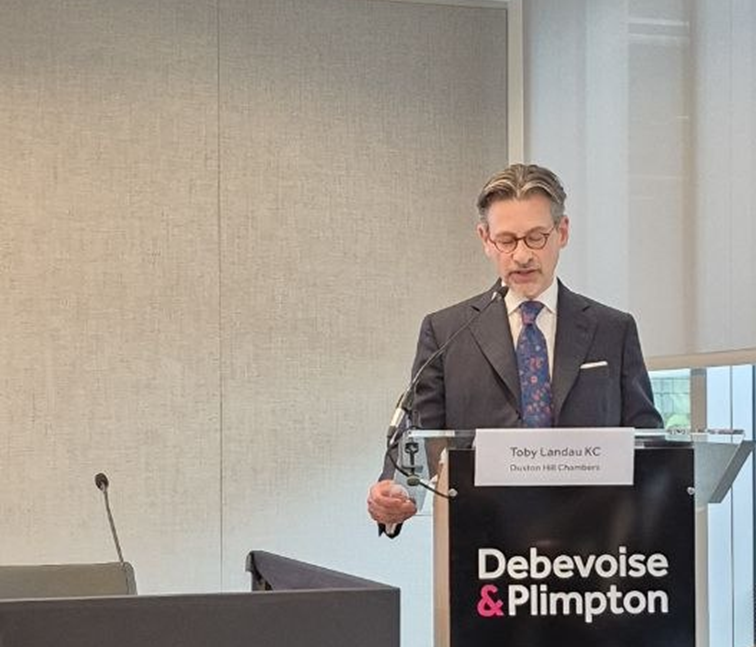
The much-awaited London International Disputes Week 2026 (LIDW 2026) began with some remarkable keynote addresses, such as the one delivered by Mr. Toby Landau KC, Barrister, Advocate and Arbitrator, Duxton Hill Chambers.
Introduction
At the outset, Mr. Landau stated that his address would shift the spotlight away from issues like procedural adaptation, substantive law, and procedural improvements, to the professionals in the field. He expressed his concerns regarding the increasingly troubling phenomenon of the rise of self-curated reputation or self-promotion. He stated that there was a shift from ability to visibility as substandard practitioners were increasingly able to sustain themselves in the market, and the traditional mechanisms of self-regulation were no longer as effective.
To illustrate his argument, he presented a thought experiment and asked the audience to imagine him:
-
Driving through the streets with a loudspeaker announcing his keynote address and how proud and humbled he was to have done so.
-
Publishing newspaper advertisements proclaiming how honoured he was to speak. And claiming that the invitation reflected the excellence of his legal practice.
-
Encouraging others to publicly state that he was superior to other practitioners.
-
Running a sustained publicity campaign designed to ensure that clients think of him first.
-
Sponsoring the conference in exchange for the speaking opportunity.
He stated that if he did this, it would sound obnoxious, but if he replaced the billboards and newspaper ads with social media, it would not be an unimaginable world. He remarked that there was now an objectionable yet normalised machinery for practitioners to promote themselves regardless of their ability, and reputations were no longer earned.
Tradition: History of Prohibition on Advertising by Lawyers
Speaking on the theme of Tradition, Mr. Landau mentioned how for most of the 19th and 20th Centuries, there were strict prohibitions on any form of advertising and promotion, typically prohibitions on advertising, soliciting clients directly, publishing fee schedules, or using promotional language.
He mentioned Canon 27 of the 1908 American Bar Association Canons of Professional Ethics, which stated that the best advertisement for a lawyer was a well-earned reputation for professional competence and trustworthiness. Such a reputation, the canon declared, could not be manufactured but had to emerge from character and conduct. It stated that solicitation of business by circuitous advertisements or by personal relations was unprofessional. The canon condemned indirect advertising, self-praise, and efforts to publicize the significance of one’s cases or achievements. Such behavior was viewed as incompatible with the traditions and lowered the dignity of the profession.
He explained that there were four core reasons underlying such prohibitions, not just in the Commonwealth but also in other jurisdictions:
-
Preservation of Professional Dignity: Law was conceived as a learned profession rather than a commercial business. Lawyers in Commonwealth jurisdictions regarded advertising as incompatible with professional dignity. The profession was expected to resemble the clergy and physicians. Thus, practitioners were expected to rely on reputation and referrals, not commercial promotion. Professional standing was supposed to emerge from independent assessments by others rather than self-assessment.
-
Protection of Clients: Restrictions sought to shield vulnerable clients from being misled by exaggerated claims, misleading representations, and aggressive solicitation.
-
Limitation of Fee Competition: He suggested that, though this rationale was largely outdated, advertising restrictions were intended to prevent excessive commercial competition.
-
Preservation of Independence: There were concerns that commercialization might undermine lawyers’ independence and their role as officers of the court.
Mr. Landau explained how these principles were incrementally broken down, starting with the turning point in the USA in the case of Bates v. State Bar of Arizona1, wherein the US Supreme Court held that lawyers’ advertising was protected commercial speech under the First Amendment. This decision, along with other Supreme Court cases, triggered a gradual dismantling of advertising restrictions and ushered in a minimally regulated system.
Drawing comparisons with other countries, he mentioned that the United Kingdom underwent a similar process following a 1986 report by the Office of Fair Trading, which criticized advertising prohibitions as anti-competitive restraints on trade. The legal profession responded by progressively relaxing restrictions on self-promotion for both barristers and solicitors.
Mr. Landau humorously recalled the initial stages in which lawyers could advertise what they did but not claim competence, and could use photographs only in black-and-white advertisements. He underscored that there were many arguments for these relaxations, such as consumer choice and transparency, the idea that advertising bans lead to anti-competitive cartels, access to justice concerns, etc. Thus, by the late 20th century, law firms were functioning as business enterprises.
However, he underscored how the changes in the last few years have been monumental as the key elements of Canon 27 have been upturned.
The New Reputation Machinery
According to Mr. Landau, modern professionals possess an unprecedented and extensive global infrastructure for self-promotion, comprising social media platforms like LinkedIn, conferences, sponsored publications, directories, etc. Out of these several elements, he chose to focus on the following two:
-
LinkedIn and Social Media: In this element, he identified five major concerns:
-
Shift from reputation to self-presentation: He stated that there was a seismic shift from earned reputation to self-curated visibility, wherein competence increasingly becomes a performance rather than an independently verified characteristic. “Professionals are now constantly performing competence in a visible arena, using impression management to continuously present evidence of skills, character, and proficiency.”
-
Reputation Inflation and Signal Dilution: He explained that users were constantly bombarded with posts on claims of excellence, professional achievements, speaking engagements, awards, case involvements, rankings, etc., which led to saturation of these signals, and their informational value diminishes. Genuine excellence becomes harder to distinguish from strategic self-promotion.
-
Quality of Information: Mr. Landau raised an alarm against unchecked and unverifiable claims, especially in arbitration. In arbitration, most of the information is confidential, which allows people to overstate their case involvement, overstate their case significance, emphasise their professional success while not posting about their losses, and publicise routine activities as achievements.
-
Reputational Cascade: He explained that social media platforms reward engagement like likes, reposts, comments, and endorsements, which create the appearance of collective validation. People infer quality from popularity. As a result, weak or unverified claims can gain legitimacy simply because they attract attention and social reinforcement.
-
Disconnect Between Visibility and Competence: The ultimate danger, according to Mr. Landau, was that those most willing to promote themselves may not be those with the greatest professional ability. This created a highly visible group of elite practitioners whose prominence might be sustained by reputation management rather than current excellence. These practitioners may continue to enjoy their elite status long after their abilities have declined, yet modern visibility mechanisms can preserve their standing indefinitely.
-
-
Legal Directories: Mr. Landau explained that while directories historically functioned as simple informational resources, modern versions increasingly rank, compare, and evaluate professionals. Early legal directories merely listed lawyers alphabetically and helped facilitate referrals, but modern directories, however, featured practice-area rankings, client interviews, editorial research, comparative evaluations, awards, conferences, enhanced profiles, and sponsored features.
Thus, he provided four criticisms of modern legal directories:
-
Self-Reinforcing Hierarchies: He stated that these directories do not objectively measure quality. Instead, they often reproduce existing market prestige as rankings rely heavily on reputation rather than actual performance, which is hard to monitor, and reputation itself influences rankings; a circular process emerges. Once an individual or firm achieves a high ranking, that status tends to perpetuate itself.
-
Methodological Weaknesses: He questioned the scientific validity of the ranking mechanism as they were typically based on law firm submissions, interviews with selected clients, and peer commentary. This method had issues like selection bias as firms choose what matters to submit and how they are presented. Furthermore, firms get to decide who will judge them, and they nominate only those who will give them favorable assessments. Mr. Landau also highlighted how ranking methodologies are often opaque. Users rarely know precisely how different factors are weighted.
-
Pay-to-Play: Mr. Landau explained that there was obviously a commercial structure that drives directories. Although directories insist that rankings are independent, they generate revenue through enhanced profiles, advertising packages, sponsorships, and conferences. Thus, one can purchase more visibility.
-
Strategic Distortion of Professional Behavior: He argued that rankings now shape law-firm behavior as many firms devote substantial resources to preparing submissions for directories, compiling sympathetic referees, coordinating responses, allocating resources to submission writing, creating dedicated departments, and tracking deadlines.
He raised an important question: Do legal directories measure excellence, or are they actually producing it?
Shedding light on the extension of rankings to experts, Mr. Landau noted that ranking systems were increasingly evaluating supposedly independent expert witnesses.
Consequences for the Profession
Mr. Landau identified three major consequences of the existing reputation machinery:
-
Declining Professional Standards: He argued that there was a collective tolerance for obnoxious behavior, as conduct that would once have been considered vain or inappropriate now attracts little criticism. The arbitrators who were “actively parading themselves for appointment” raised concerns of ambulance chasing, an individual approach to the practice as a trade, and some concerns that originally led to Canon 27. He remarked, “If I go down the street with a loud hailing billboard telling people how great I am, nobody likes it. But if I do it on LinkedIn, it seems to be acceptable and universal, and no surprise.”
“We are in a world of arbitral narcissism and vanity which cuts against professionalism.”
-
Reduced System Quality: He stated that the ability for lawyers to build visibility and presence in the market allowed our system to sustain substandard individuals, both as lawyers and as arbitrators. As a result, appointment decisions may become distorted, market signals may become less reliable, genuine talent may be overlooked, and system quality may gradually deteriorate. His concern is not merely mediocrity, but the profession’s growing tolerance of it.
-
Maintenance of Ethics/Weakening of Self-Regulation: Mr. Landau underscored how arbitration has traditionally relied upon self-regulation as small professional communities knew one another, and reputations circulated informally, which helped in maintaining professional standards. However, globalization has changed the environment. He stated that though a global and diverse community was a good thing, it raised a need for other mechanisms to maintain the quality of professionals.
Conclusion
In his concluding remarks, Mr. Landau connected his critique to the conference theme of “Tradition, Trust, and Transformation” by underscoring that a balance had to be maintained between the old ideals as reflected in Canon 27 and successfully transforming. He emphasised that in order to maintain trust in the system, the quality of individuals who are responsible for the process itself had to be maintained.
SCC Times extends its appreciation to Zehra Naqvi, EBC–SCC Online Foreign Student Ambassador and Lawyer, for her on ground presence, valuable assistance and contribution to the reporting of this event.
1. 433 U.S. 350 (1977)