Criminal Law October 2026
Legal RoundUpTopic-wise Roundup

The October 2026 Criminal Law Roundup witnessed several significant judicial developments in criminal law, with various High Courts addressing important questions concerning individual liberty, criminal liability, procedural safeguards, juvenile offenders, POCSO-related offences, bail, contempt of court and the quashing of criminal proceedings.
Calcutta high court Love Jihad
Case BriefsHigh Courts

A proceeding is not liable to be quashed in its entirety merely because one of the sections invoked may not ultimately be sustained.

practicing without clearing AIBE
Case BriefsHigh Courts

Karnataka High Court considered a complaint against an advocate who allegedly continued practising for nearly a decade without clearing the All India Bar Examination (AIBE), despite the two-year limit on provisional enrolment. The Court also examined the scope of the Bar Council’s disciplinary powers and the complainant’s right to initiate criminal proceedings.
contempt proceeding against advocate
Case BriefsHigh Courts

The High Court held that in a case of warrant case, in the absence of legal heirs on the death of the complainant during the proceedings, right of legal heirs of the deceased complainant to continue prosecution.

settlement POCSO case
Case BriefsHigh Courts

The Delhi High Court held that quashing the FIR would legitimise child marriage and the exploitation of a minor.

SCC Times NewsflashWATCH NOW

In Harcharanjeet Bains v. State (NCT of Delhi), the Delhi High Court partly quashed criminal proceedings arising from a matrimonial dispute. The

settlement demand extortion
Case BriefsHigh Courts

The Court held that an exorbitant settlement demand, without an intentional threat or fear of injury, does not attract Section 385 IPC.

Quashing of FIR against advocate
Case BriefsHigh Courts

The Court noted that that the continuation of the criminal proceedings was unwarranted and amounted to an abuse of the process of law, having regard to the civil and proprietary nature of the dispute.

religious images on garments sale FIR
Case BriefsHigh Courts

The Court held that Section 295-A, Penal Code, 1860, is attracted only when an insult to religion or religious beliefs is perpetrated with the deliberate and malicious intention of outraging the religious feelings of a class of citizens.

Non-return of stridhan under S. 406 IPC
Case BriefsHigh Courts

Delhi High Court partly quashed criminal proceedings arising from a matrimonial dispute, holding that the allegations under Section 498A IPC disclosed a prima facie case of cruelty, while the prosecution under Section 406 IPC could not be sustained for want of entrustment.

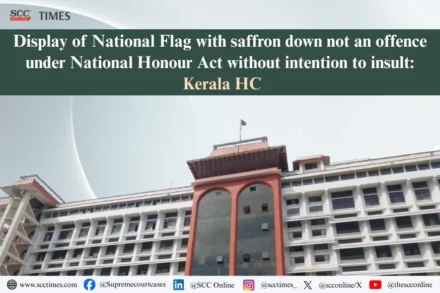
Intention to insult National Flag
Case BriefsHigh Courts

Mere display of the Flag with the saffron band downward, without material indicating a deliberate intention or mens rea to show disrespect, does not constitute an offence; accidental or inadvertent acts are not punishable under the provision.

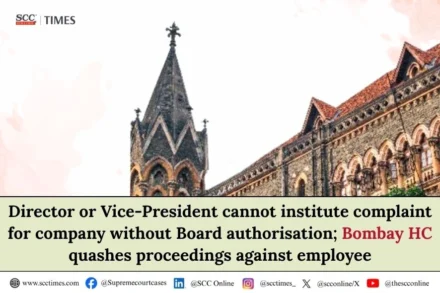
director cannot institute complaint without board authorisation
Case BriefsHigh Courts

In a copyright infringement case involving alleged unauthorised use of source codes, the Bombay High Court quashed proceedings against an employee, finding no material to show his active role beyond carrying out duties assigned by his employer. The Court also held that a company cannot maintain a criminal complaint through its Vice-President or an individual Director unless duly authorised by a Board resolution.

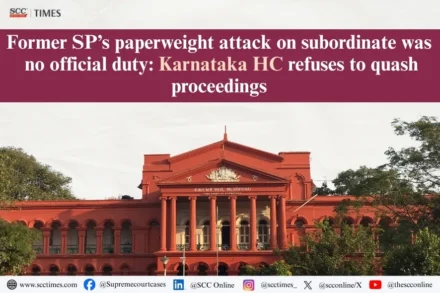
paperweight assault
Case BriefsHigh Courts

It would only be appropriate to apply nexus test to overt acts and determine, if they are wholly or reasonably connected to discharge of official function by accused and by taking note of fact that Section 170 Karnataka Police Act, 1963 extends statutory protection even to reasonable excesses.

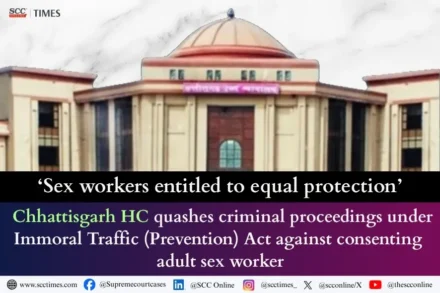
criminal proceedings against consenting adult sex worker
Case BriefsHigh Courts

The High Court held that continuation of criminal proceedings against an adult woman under the Immoral Traffic (Prevention) Act, 1956 would amount to abuse of the process of law where the material did not disclose any specific act constituting the alleged offences.

Satish Sanpal
Case BriefsHigh Courts

The Court stated that the contention that he was residing in Dubai since 2020 and had not visited India after March 2020 could not, by itself, furnish a ground for quashing the proceedings.

Bar Council response criminal cases against advocates
Case BriefsHigh Courts

The Court held that while mere registration of an FIR does not attach stigma and every accused is presumed innocent, the increasing criminal cases involving practising advocates warrant institutional attention and policy consideration by the Bar Councils.

Tinder relationship false promise of marriage
Case BriefsHigh Courts

It was alleged by the applicant that the social website named “Tinder app” is not a matrimonial site, but is a popular site among youngsters, and the said website is meant for making friends.

IBC moratorium and S. 138 NI Act
Case BriefsHigh Courts

The High Court object of the moratorium is merely to postpone civil debt enforcement and not to shield an accused from criminal accountability arising out of dishonour of cheques.

Delhi High Court public view SCST Act
Case BriefsHigh Courts

Delhi High Court ruled that a caste-based insult under Section 3(1)(x), SC/ST Act must occur in a place within public view. Finding this essential ingredient absent, it set aside the charge and remanded the case for consideration under the IPC.

FIR over movement on public road during COVID-19 lockdown
Case BriefsHigh Courts

The allegations in the FIR, even if accepted in their entirety, do not disclose the commission of any offence, nor does the material collected during the investigation cure that deficiency. The continuation of such a prosecution, more than six years after the incident, would amount to an abuse of the process of the Court, warranting the exercise of the inherent jurisdiction under Section 482 CrPC.