
2009 minor rape case release
Case BriefsHigh Courts

The incident pertains to the year 2009, there was intimacy between the appellant and the prosecutrix, which could not be recognized due to the prosecutrix being minor. Now, both the appellant and the prosecutrix are settled in their respective married lives, and the prosecutrix has also expressed her desire not to contest the case.

penetrative sexual assault convict acquitted
Case BriefsSupreme Court

Supreme Court held that the presumptions relating to the commission of an offence and culpable mental state under the POCSO Act are rebuttable. As the appellant had successfully rebutted the statutory presumption and the prosecution had failed to establish his guilt beyond reasonable doubt, the Court acquitted him of the offences under Section 363 IPC and Section 6, POCSO Act.

unverified school certificate not proof of age
Case BriefsHigh Courts

“To convict the accused under Section 363 IPC, two things are to be established beyond reasonable doubt, one that she was below the age of 18 years and other would be that she was taken away from her lawful guardianship without consent of the guardians.”

Undressing victim is attempt to rape
Case BriefsHigh Courts

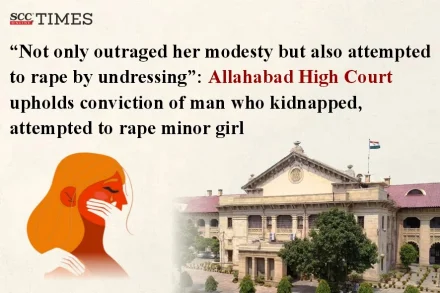
The Court found that it had been proved that the victim was forcibly kidnapped by the convict with the intention to marry and have intercourse with her. He not only outraged her modesty but also attempted to rape her by undressing her but failed due to her protest.

Allahabad High Court
Case BriefsHigh Courts

“The medical evidence on record does not support the allegation made by prosecutrix and there is no other corroboration of the version of the victim.”

Delhi High Court
Case BriefsHigh Courts

Delhi High Court has quashed an FIR registered under Sections 376 (rape), 363 (kidnapping), and 6 of the POCSO Act (aggravated penetrative assault). The decision was based on an amicable settlement between the parties, with no costs imposed on either side. This case underscores the court’s recognition of mutually agreed resolutions in certain criminal proceedings.

Madras High Court
Case BriefsHigh Courts

Madras High Court: Stating that two-finger test cannot be permitted to be continued, the Division Bench of R. Subramanian and N. Sathish