Jammu and Kashmir and Ladakh High Court
Case BriefsHigh Courts

“It is the duty of the Court to remove the chaff from the grain in its pursuit for truth. It is not open to the trial Court to throw out the entire prosecution evidence just because it was contradictory on certain aspects of the case.”

Continue reading
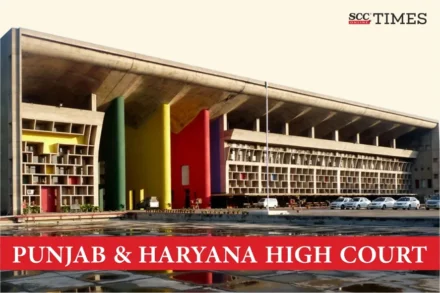
Punjab and Haryana High Court
Case BriefsHigh Courts

“Excess drinking and indulging in night life in Indian society is still a social taboo. While we may not be understood to discourage night clubs, but the policy makers ought to take into consideration the Indian culture and consider that the percentage of literacy and mature understanding and repercussions of excessive drinking is yet a far-reaching goal.”

Continue reading
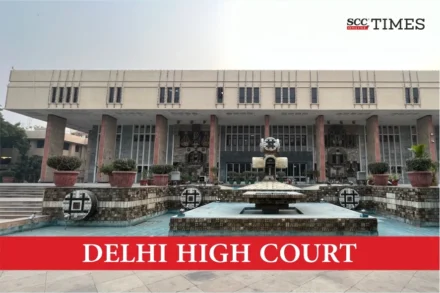
Delhi High Court
Case BriefsHigh Courts

Personal jewellery which is not found to have been acquired on an overseas trip and was always a used personal effect of the passenger would not be subject to the monetary prescriptions incorporated in Rules 3 and 4 of Baggage Rules, 2016.

Continue reading
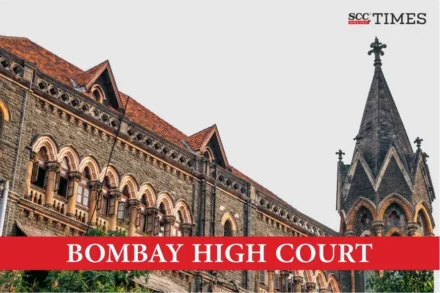
Bombay High Court
Case BriefsHigh Courts

To attract the offence under Section 3061 of the Penal Code, 1860, clear mens rea to commit the offence must be established on applicant-accused’s part, as it requires active/direct act, leading the deceased to commit suicide.

Continue reading
Calcutta High Court
Case BriefsHigh Courts

It is the obligation and bounded duty of the husband to maintain his wife and children, if he has sufficient means and neglects or refuses to maintain them in case wife is unable to maintain herself and her child.

Continue reading
Bombay High Court
Case BriefsHigh Courts

No separate category is carved out as an exception to the normal Rules of remission provided under Section 4321 of the Criminal Procedure Code, 1973 for a Police personnel committing heinous crime of murdering his pregnant wife.

Continue reading
Madras High Court
Case BriefsHigh Courts

“It is needless to say that the decision in the bail application would be dependent on the decision in the extension application”

Continue reading
Delhi High Court
Case BriefsHigh Courts

It is submitted that Plaintiff 1 is a ‘celebrity’ and has a valid and enforceable personality right. He satisfies the dual test of personality rights, viz. having a valid and enforceable personality right on account of being a well-known reputed personality and the same is clearly identifiable in the infringing content uploaded by Defendants 1-8 and 13 on their social media accounts.

Continue reading
Delhi High Court
Case BriefsHigh Courts

Special statutes have stringent conditions for grant of bail but they should not become means to detain the accused without there being any possibility of concluding the trial, expeditiously. Merely charging an accused person under the provisions of these special statutes should not become a punishment in itself which violates Article 21.

Continue reading
Gauhati High Court
Case BriefsHigh Courts

The Superintendent of Archaeology is empowered to undertake a thorough enquiry as to the antiquity of the monument to be protected and shall determine as accurately as possible the age of the monument on such evidence as may be available to him.

Continue reading
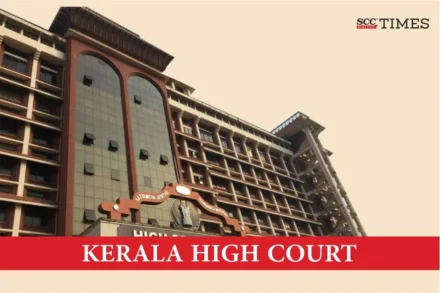
Kerala High Court
Case BriefsHigh Courts

Kerala High Court was reviewing the steps and action plans proposed by the Travancore Devaswom Board, the State Government, and the police to ensure the safety and security of pilgrims at Sabarimala.

Continue reading
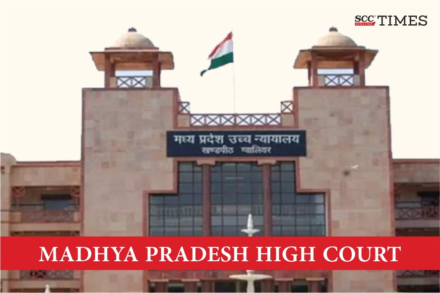
Madhya Pradesh High Court
Case BriefsHigh Courts

The Court noted that the provisions regarding social audit under the Municipal Corporation Act, 1956, should be invoked cautiously to customize schemes effectively.

Continue reading
Delhi High Court
Case BriefsHigh Courts

‘The Banking Ombudsman overlooked the key aspects of the matter and completely misdirected itself in law.’

Continue reading
Meghalaya High Court
Case BriefsHigh Courts

“Rule 12 of the Rules of Legal Education, 2008 shows that for a student who fails to attend 70% of the classes held in any subject, the Dean or the Principal may allow the student to take the Test, if the student concerned attended at least 65% of the classes held in the subject concerned, and attended 70% of classes on all subjects taken together.”

Continue reading
Delhi High Court
Case BriefsHigh Courts

It is not the petitioner’s case that he was not supplied with the grounds of arrest at the time of the arrest and prior to the remand being sought. The remand application was detailed, and contained, effectively the same set of facts as were stated in the grounds of arrest.

Continue reading
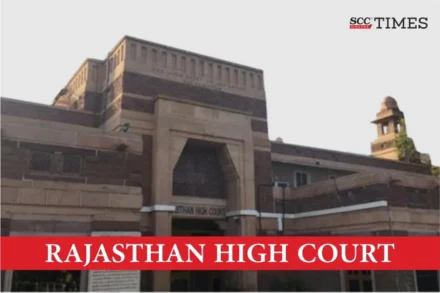
Rajasthan High Court
Case BriefsHigh Courts

“Clubbing of the FIRs will reduce the financial drain on the state exchequer as well as cut down the administrative burden, especially given that all the cases arise out of same or similar cause.”

Continue reading
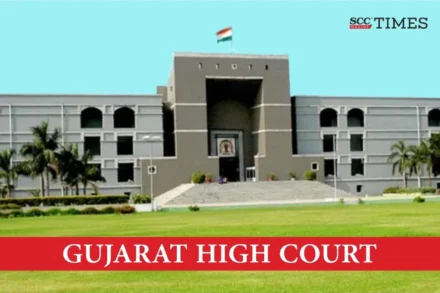
Gujarat High Court
Case BriefsHigh Courts

The Tribunal in the impugned decision reasoned that- whenever Government for public purpose bifurcates districts, a complex situation arises and on account of the same sometimes issues like the present, escape the notice of the Government authorities therefore, good cause for condoning delay of more than 22 years was made out.

Continue reading
Punjab and Haryana High Court
Case BriefsHigh Courts

In the present case, the complaint remained pending for several years and no application was filed by Respondent 2. Now, no purpose would be served by ordering the prosecution of the accused persons, after a long delay of 14 years, when Respondent 2 and his co-accused have already been convicted in a criminal trial, relating to the same occurrence.

Continue reading
Bombay High Court
Case BriefsHigh Courts

The rival marks are structurally, phonetically, and visually identical and/or deceptively similar when compared as a whole and the word ‘HIRECT’ is the important, prominent, and essential feature of the plaintiff’s registered mark.

Continue reading
Manipur High Court
Case BriefsHigh Courts

“The Governor cannot just give assent by just writing “may be approved” without expressing subjective satisfaction as to the recommendation of the Committee of Advisors.”

Continue reading