








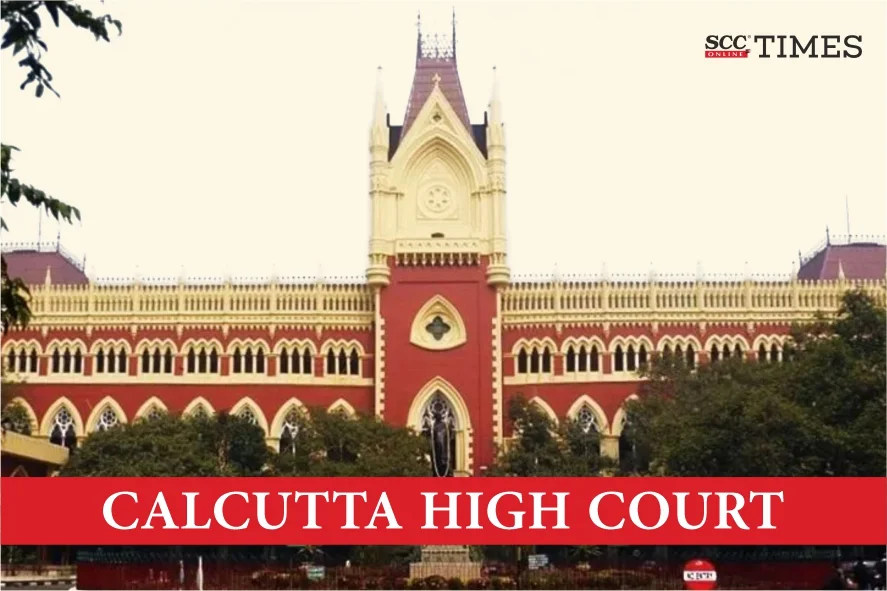
Calcutta High Court: In a writ petition by a Siddhi Vinayak Himghar (P) Ltd. i.e., borrower-company (petitioner) and its Directors against Punjab National Bank, Partha Sarathi Chatterjee, J., set aside the Bank’s communication dated 21 March 2024 classifying the petitioners’ loan account as a “fraud account”. The Court held that, considering SBI v. Amit Iron (P) Ltd., 2025 SCC OnLine SC 3220, the petitioners were entitled to the forensic audit report relied upon by the Bank. Only portions affecting the privacy or rights of third parties could be withheld, and only for reasons recorded by the Bank. The Court did not examine the merits of the fraud allegations.
Background
The petitioners, a borrower-company and its directors, challenged the show-cause notice dated 21 December 2023 and the communication dated 21 March 2024. The notice called on them to show cause why their loan account should not be classified and reported as a “fraud account”. The communication informed them that the account had been so classified. The petitioners said they are engaged, among other things, in the manufacture of organic manure.
According to them, at the instance of the erstwhile United Bank of India they acquired several non-performing asset (NPA)/closed cold storage units and commenced business through different companies, which substantially increased their credit exposure. They attributed their financial stress to demonetisation, a decline in demand in the potato market and other adverse market conditions. They also claimed that their restructuring proposals were not duly considered. They said that, despite their request for restructuring during the COVID-19 period, their loan accounts were classified as NPA. After the erstwhile United Bank of India was amalgamated with Punjab National Bank, the Bank instituted an original application before the Debts Recovery Tribunal under Section 19, Recovery of Debts and Bankruptcy Act, 1993. The petitioners filed a written statement and a counterclaim there.
The petitioners said that, on receiving the show-cause notice, they wrote to the Bank requesting the documents relied upon, including a copy of the FAR or any other audit report. The request was not acceded to. Their principal grievance was that the procedure under the RBI (Frauds Classification and Reporting by Commercial Banks and Select FIs) Directions, 2016 was not followed and that the FAR was not supplied to them.
The Bank said the petitioners had availed various credit facilities against equitable mortgages over immovable properties and hypothecation of movable assets. On the petitioners’ failure to adhere to the repayment schedule, the accounts were classified as NPA. The Bank also said the borrowers had violated various terms and conditions of the sanction and that the statements of account disclosed unlawful, illegal and suspicious transactions. A forensic auditor was appointed, and the Bank alleged that the petitioners did not cooperate with the audit despite repeated requests.
According to the Bank, the show-cause notice dated 21 December 2023 gave the petitioners fifteen days to respond and was accompanied by extracts and relevant portions of the FAR, including excerpts highlighting the circumstances and findings indicative of the alleged fraudulent activities. The Bank said the petitioners did not reply to the notice. Their letter dated 4 January 2024, which relied on SBI v. Rajesh Agarwal, (2023) 6 SCC 1, called for documents and could not be construed as a reply. The competent authority then classified the account by a reasoned order, which was communicated by the letter dated 21 March 2024.
The writ petition had earlier been allowed by a Coordinate Bench on 29 April 2024, which set aside the 21 March 2024 intimation on the ground that the FAR had not been furnished. In appeal, the Bank succeeded by order dated 16 September 2025, solely because the petition had been disposed of without giving the Bank an opportunity to file its affidavit-in-opposition, and the matter was remanded.
Issue and Analysis
The question before the Court was whether the procedure adopted by the Bank before classifying the petitioners’ loan account as “fraud” satisfied natural justice, the applicable RBI framework and settled principles of law.
The Court noted that Rajesh Agarwal held that classification as fraud entails serious civil consequences. The borrower must be served with a notice, be afforded an opportunity to explain the findings of the FAR and make a representation before classification, and the decision must be supported by a reasoned order. It also noted the Supreme Court’s reaffirmation, in line with Union of India v. Tulsiram Patel, (1985) 3 SCC 398, that a person must be made aware of the allegations and the evidence on which action is proposed, and be allowed to inspect the documents relied upon and adduce evidence in defence.
Placing reliance on SBI v. Amit Iron (P) Limited, 2025 SCC OnLine SC 3220, it was observed that held that the requirement of natural justice is satisfied by issuance of a show-cause notice, disclosure of the material relied upon, an opportunity to submit a representation and consideration thereof by the competent authority, followed by a reasoned decision. It was also made clear that the supply of the forensic audit report is the rule and furnishing merely the findings and conclusions of the audit report would not amount to compliance with the principles of natural justice, since the reasons and the material forming the basis of such findings are contained in the body of the report.
Applying this, the Court recorded that the Bank did not dispute having relied on a FAR, and admitted that the entire report was not supplied. Its case was that relevant extracts were furnished and the rest was withheld because it contained statements and information relating to Bank officials or third parties.
The Court rejected the Bank’s contention that FRMD Circular No. 70/2023 binds the petitioners because they never challenged it or the 2016 Master Directions. It held that non-challenge does not make every action under the circular immune from scrutiny. As an internal guideline, the circular cannot override or dilute the law declared by the Supreme Court, which binds all authorities under Article 141. The question was therefore not whether the circular binds the petitioners but whether the Bank’s procedure satisfied the law and natural justice.
Thus, the Court held the Bank’s explanation was not sufficient for compliance and that the Bank was required to furnish the entire FAR, subject only to justified redaction. The fact that the report may contain statements of Bank officials does not, by itself, justify withholding it in its entirety. The Bank had to identify the portions that could legitimately be withheld and record reasons.
The Court acknowledged that the allegations are serious and that the Bank may have material to support its decision and the petitioners are not entitled to a personal or oral hearing, and that a written representation after disclosure of the relied upon material would suffice if duly considered and followed by a reasoned decision.
Decision
The Court set aside the communication dated 21 March 2024 and directed that the show-cause notice dated 21 December 2023 shall stand revived. The Bank must furnish the FAR to the petitioners, subject to permissible redaction strictly in accordance with SBI v. Amit Iron (P) Ltd., 2025 SCC OnLine SC 3220. If it withholds any portion, it must record reasons identifying that portion and the basis for withholding.
On receipt of the FAR, the petitioners must be given a reasonable opportunity to submit a representation on its findings and conclusions, and the other material relied upon. The competent authority must then consider the representation independently and pass a fresh, reasoned, and speaking order in accordance with the applicable RBI Directions.
The Court expressed no opinion on the merits of the fraud allegations, which are left to the competent authority. The order does not prevent the Bank from pursuing proceedings before the DRT. No order as to costs.
[Siddhi Vinayak Himghar (P) Ltd. v. Punjab National Bank, WPO 339 of 2024, decided on 20-11-2026]
Judgment authored by: Justice Partha Sarathi Chatterjee
Advocates who appeared in this case:
Petitioners: Debabrata Ray, Sr. Adv., with S. Nag, Dwaipayan Basu Mullick, Rajesh Upadhyay, Subhankar Das, S. Biswas and Shoham Sanyal, Advocates.
Respondent (PNB): Swatarup Banerjee, with Sailendra Kr. Tiwari, Shambhu Mahato, T. Bose and M. Jalan, Advocates.





0 replies