Organised by the Dubai International Arbitration Centre (DIAC), the Dubai Arbitration Week 2026, being held from 9 to 13 November 2026, brings together the global arbitration community for a week of panel discussions, workshops and networking, highlighting Dubai’s growing role as an international dispute resolution hub and providing a platform to exchange perspectives on emerging trends, innovations and the future of arbitration.
In a panel discussion, hosted by Jus Mundi and Al Tamimi & Company, titled “AI Center Stage”, the panellists examined the adoption, implementation and regulation of AI in institutional arbitration. The discussion focused on how arbitral institutions were incorporating AI into their administrative processes, the challenges surrounding confidentiality and data security, the extent to which AI may assist arbitrators in their work, and the need for common guidelines governing its use. The panellists also examined the need for institutional standards governing AI use, the responsibility of arbitral institutions in ensuring the accuracy of awards, and the potential consequences of AI-driven processes for the legitimacy of arbitration.
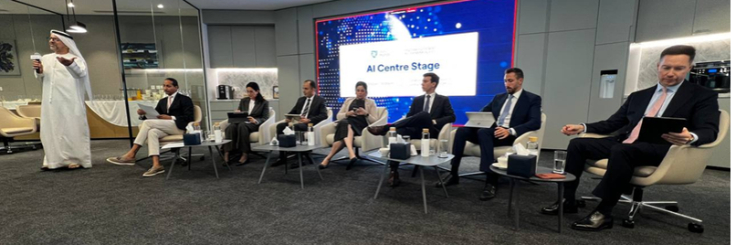
The panel featured Mr. Robert Stephen, Registrar, DIAC; Ms. Dalia Hussein, Director, Cairo Regional Centre for International Commercial Arbitration (CRCICA); Mr. Khaled Elgarhe, Chief Legal Counsel and Registrar, Qatar International Centre for Conciliation and Arbitration (QICCA); Mr. Arno Janssens, Head of Middle East, Singapore International Arbitration Centre (SIAC); Mr. Karam Farah, Counsel, International Chamber of Commerce (ICC); and Ms. Khushboo Shahdadpuri, Partner, Al-Tamimi. The discussion was moderated by Mr. Alexandre Vagenheim, Vice President of Jus Mundi, and began with introductory remarks by Dr. Hassan Arab, Regional Head of Dispute Resolution, Al Tamimi & Company.
AI’s increasing role in arbitration: Dr. Hassan Arab
Opening the discussion, Dr. Hassan Arab observed that conversations around AI in arbitration had traditionally focused on how counsel and arbitrators could use the technology for legal research, preparing submissions, and drafting awards. However, he explained that the session would focus on the perspective of arbitral institutions, which play an important role in administering disputes, from appointing tribunals and managing proceedings to reviewing awards before their issuance.

He noted that discussions concerning whether arbitrators and institutions should disclose their use of AI had evolved considerably. According to him, the use of AI had become an established reality, and the more pressing question was the extent to which tribunals and institutions should rely on it.
Referring to developments in the field, Dr. Arab mentioned the issuance of a construction award through an AI arbitrator by the American Arbitration Association (AAA) reported by the Global Arbitration Review (GAR). He observed that this development raised important questions about the correctness of an award generated through AI and whether it would satisfy the parties to the dispute. He further noted that courts were also becoming increasingly concerned about the use of AI in legal proceedings.
Dr. Arab also mentioned instances involving the Qatar Financial Centre Court and the Abu Dhabi Global Market (ADGM), where concerns had reportedly arisen regarding the non-disclosure of AI use. He also referred to a decision of the Dubai Court of Cassation concerning a student whose university had rejected his thesis after discovering that he had used AI-generated material and cited fake sources. The Court had accepted the university’s decision.
Thus, Dr. Arab anticipated that the use of AI would continue to generate disputes and legal questions. He encouraged the audience to participate in the discussion by sharing their experiences and raising questions.
Arbitral institutions adopting AI at different speeds; need to examine implementation and regulation: Mr. Alexandre Vagenheim
Introducing the panel, Mr. Alexandre Vagenheim explained that the discussion was intended to move beyond the familiar debate concerning the use of AI by counsel and arbitrators and examine how arbitral institutions themselves were adopting the technology.

He observed that institutions had progressed at different speeds in their approach to AI. Referring to the developments mentioned by Dr. Arab, he noted that the AAA had announced an expansion of its AI Arbitrator initiative beyond construction disputes to other industry-related cases involving documentary records. He also referred to the growing number of guidelines addressing AI in arbitration, including the Silicon Valley Arbitration & Mediation Center’s Guidelines on the Use of Artificial Intelligence in Arbitration, 2024, the guidance issued by SCC Arbitration Institute1, Vienna International Arbitration Centre2, and Danish Arbitration Institute3.
Setting out the structure of the discussion, Vagenheim identified three principal themes:
-
How arbitral institutions are already using AI
-
Regulatory framework and the extent of convergence in institutional approaches
-
Future strategies that institutions were considering in response to developments in AI
AI for case management, document handling, translation and more: Mr. Robert Stephen
Speaking about the adoption of AI at DIAC and the potential applications for arbitral institutions, Mr. Robert Stephen explained that institutions were increasingly incorporating technology and AI into their administrative processes and procedures. He stated that case management automation was one of the principal areas in which AI could provide immediate assistance. This included workflow automation, managing internal processes between teams, monitoring procedural timelines, ensuring compliance with institutional rules and internal targets, and automating notifications, deadlines, and procedural updates.
He also highlighted the importance of intelligent document management. Technology could assist in organizing, retrieving, and managing the documents sent by parties, as well as ensuring that awards and procedural orders were made accessible to the parties when required. Furthermore, an integrated case management system could manage the entire lifecycle of an arbitration, from the registration of a dispute to the issuance of the final award. Such systems could reduce repetitive administrative work, save time, and lower costs for everyone.
Emphasising the benefits for arbitrators, Mr. Stephen described the difficulties caused by the circulation of multiple versions of document bundles. Arbitrators may receive an initial set of documents from the institution, subsequently receive a different set from the parties, and then be presented with another set of documents by the electronic presentation of evidence (EPE) provider. This required them to repeat the process of marking up and organising documents multiple times. He suggested that a secure institutional case management system could provide a single source of truth, allowing arbitrators to retain their annotations and access the same marked-up documents throughout the proceedings. Such a system would also ensure that an arbitrator’s personal annotations remained confidential and were not visible to other participants.

He further explained that AI could assist arbitrators in analysing case files by summarising documents, extracting key data points, identifying events, individuals, organisations and legal issues, and responding to complex questions about the record. It could also help arbitrators examine the accuracy of information contained in submissions. For parties, a central document repository could provide a more level-playing field, particularly where parties had unequal access to sophisticated legal technology. It allows parties and their lawyers to share, review, and prepare submissions collaboratively and submit documents directly to the tribunal and the institution.
He also discussed the use of AI for language translation, real-time transcription, and document interpretation. These applications could reduce language barriers in cross-border disputes and enable institutions to work across a greater number of languages. He noted that DIAC’s team could cover 16 languages, although not every institution had access to similar linguistic resources.
Another application he identified was natural language processing. He explained that DIAC was considering a natural language search function for its website, which would allow users to enter questions and retrieve relevant information from the website and publicly available institutional documents without having to navigate multiple pages.
Regarding potential future applications, Mr. Stephen highlighted AI-assisted arbitrator research and appointment. Technology could help institutions identify suitable candidates by matching arbitrators’ profiles and experience with the requirements of specific disputes.
He also identified enforcement and compliance monitoring as a potential application, particularly in the region. AI could assist institutions in tracking the enforcement of awards, identifying patterns in enforcement difficulties, and flagging compliance concerns. It could also support the review and scrutiny of awards by identifying potential inconsistencies with institutional rules, applicable laws, and international treaties. Other possible applications included bias detection, monitoring tribunal conduct, analysing legal arguments, and facilitating settlement analysis.
On settlement analysis, Mr. Stephen explained that AI-enabled case management systems could allow in-house general counsels to obtain an assessment of the case based on the submissions and evidence available at a particular stage. This could help businesses respond to questions from their company management boards and encourage parties to reconsider settlement regularly before the hearing.
However, he cautioned that the use of AI raised serious concerns regarding sensitive information, data breaches, and unauthorised access. Institutions needed to ensure that their technology providers maintained secure infrastructure and prevented the unauthorised transfer of information between parties and tribunals. He further emphasised the importance of data localisation and contingency arrangements, citing DIAC’s ability to move data to Europe due to the recent regional conflicts.
CRCICA exploring AI for internal research, case statistics and greater predictability: Ms. Dalia Hussein
Ms. Dalia Hussein explained that CRCICA was pursuing two parallel initiatives: case automation and the use of AI. She stated that CRCICA was close to completing its case automation process, which was expected to be implemented by the beginning of 2027. With respect to AI, CRCICA was currently using it for internal purposes, particularly research, reporting, and the analysis of statistics relating to its cases and Egyptian court decisions.
She stated that one of the objectives was to provide users with greater insight into the CRCICA’s experience and make its processes more predictable. By studying the history of decisions concerning challenges, for instance, they hoped to provide users with a better understanding of how such matters had been dealt with.
Ms. Hussein added that CRCICA was also considering the use of AI in arbitrator appointments, selection, conflict checks, and award scrutiny. However, she clarified that these applications would be explored at a later stage, as CRCICA was still training its staff and assessing the appropriate use of the technology.
SIAC’s cautious approach towards AI use: Mr. Arno Janssens
From a Singaporean perspective, Mr. Arno Janssens described SIAC’s approach to AI adoption as relatively conservative. He explained that while they had identified several potential applications, it remained particularly conscious of the importance of security and confidentiality, which were primary responsibilities of an arbitral institution.

He stated that SIAC had established a task force to examine which tasks, particularly those relating to case management, could be automated while ensuring that the process remained secure and confidential. He agreed that repetitive and mechanical administrative tasks could utilise AI.
However, he emphasized that award scrutiny should remain inherently human-led, since it required an examination of the tribunal’s reasoning, exhibits, and footnotes. He clarified that AI could nevertheless assist with an initial review by flagging potential issues. For instance, it could identify whether a cited judgment or legal authority appeared to exist, after which a member of the institution’s team could independently verify its accuracy. He also added that the management of procedural calendars, deadlines, submissions, and changes in the amount in dispute were tasks that could benefit from automation.
Confidentiality obligations and party consent in institutional use of AI: Mr. Khaled Elgarhe
Mr. Khaled Elgarhe explained that the QICCA was currently using AI in a limited and carefully controlled manner. Its use was primarily confined to summarising data and correspondence, while human involvement continued to be necessary in the work of the institution’s team. They had not officially implemented AI across its wider administrative functions and were still considering a plan for future adoption.
He stated that confidentiality and data protection were the principal reasons for the cautious approach. He explained that national laws and institutional rules often impose legal obligations prohibiting the disclosure of confidential information to third parties. In certain circumstances, an AI tool could itself be regarded as a third party unless the applicable rules, regulations, and procedural law permitted or did not prohibit its use.
He cautioned that institutions needed to examine where data was stored, how it was protected, and whether information could be disclosed through the use of AI tools. Failure to address these concerns could affect the validity of arbitral proceedings and awards.
ICC’s risk-based approach and prioritising regulation before wider implementation: Mr. Karam Farah
Mr. Karam Farah explained that the ICC’s approach was primarily guided by the risks that AI could pose to international arbitration and the work of its Secretariat. He stated that the ICC had established a task force in 2025 to examine the regulation of AI. ICC is following a risk-based approach, under which it considered it necessary to establish appropriate regulatory safeguards before expanding the use of AI in its administrative and procedural functions.
He clarified that the ICC was not entirely abstaining from using AI. Their data privacy policy provided for limited use of the technology by the Secretariat, principally for translation and internal summaries (not summaries of the parties’ positions). He further explained that AI was not being used for decision-making functions, such as procedural decisions and the scrutiny of awards, which continued to be undertaken by the relevant teams and board members.

Mr. Farah emphasised that ICC considered appropriate safeguards necessary before AI could be used for more substantive functions and they would continue to assess the position as the work of the task force progressed.
Parties prioritise cost, efficiency and accuracy: Ms. Khushboo Shahdadpuri
Sharing the perspective of a law firm and an arbitrator, Ms. Khushboo Shahdadpuri stated that her law firm, Al-Tamimi, had made significant investments in AI and used more than eight AI-powered tools. She explained that she personally used AI almost every day and that lawyers in the firm were encouraged to incorporate the technology into their work. She opined that parties were unlikely to be particularly concerned with the extent to which an arbitral institution used AI internally, as their principal concerns were cost, efficiency, and accuracy.
Referring to her experience, Ms. Shahdadpuri noted that even minor administrative errors, such as mistakes in calculating costs or recording dates, could affect clients’ perception of an institution. Although such errors were understandable because case managers were human, clients could remain dissatisfied and might choose not to include that institution in future arbitration agreements. This is why she believed that AI could play an important role in eliminating basic inaccuracies, particularly in calculations, timelines, and other routine case management tasks. Automating these functions would allow case managers to devote more time to substantive scrutiny and other important responsibilities.
Agreeing with the need for guardrails and stating that firms too faced the same responsibilities, she suggested placing some parameters for confidentiality and other concerns. She cited the example of McKinsey’s QuantumBlack group, which had developed a fully AI-powered arbitrator; involving a human element to monitor the awards was one way of safeguarding the integrity of the process.

From an arbitrator’s perspective, Ms. Shahdadpuri highlighted the potential of integrated case management platforms to help arbitrators search for arguments and identify the positions advanced by parties. This could be particularly useful where parties were represented by lawyers with different levels of experience and where important arguments might be overlooked in lengthy or inaccurate submissions.
She added that she too had used AI as an arbitrator, not to render awards but rather to test her reasoning, identify arguments that might have been missed in lengthy submissions, and improve her drafting. She added that she had not encountered an institution prohibiting her from using AI in this manner.
Secure institutional platforms and clear guidelines for AI: Mr. Robert Stephen
Adding to the discussion, Mr. Stephen emphasised that institutions were proceeding cautiously and that there was an important distinction between using AI within a secure case management system and using publicly available AI tools. He cautioned against uploading confidential case documents to open AI platforms, as this could expose sensitive information and compromise the confidentiality of proceedings. In contrast, a closed and secure institutional environment could provide opportunities for AI to assist case management teams, parties, and arbitrators.
He reiterated that clients expected institutions and lawyers to adopt technology to improve efficiency, speed and costs, but confidentiality remained equally important.
Mr. Stephen also explained that DIAC was developing a set of guidelines based on a traffic-light system, similar to the approach adopted in the International Bar Association (IBA) guidelines, which would identify AI uses that were acceptable, those requiring disclosure, those that were unacceptable, and those that should not be undertaken at all. He emphasized that such guidelines needed to be reviewed regularly because AI technology was developing rapidly.
He further cautioned against arbitrators taking confidential case data out of an institution’s secure platform and uploading it to an external AI tool that had not been properly vetted. In his view, this could create significant risks for the parties and undermine the security arrangements established by the institution. He also highlighted the need to ensure that arbitrators and other participants understood the risks associated with AI. While sophisticated law firms might invest considerably in training their lawyers, not every participant would have the same level of technological awareness.
On the question of institutional access to AI, Mr. Stephen explained that several institutions were considering the integration of AI into their existing case management systems. However, the question remained as to who should receive access first. He suggested that institutions might initially use AI for their own internal processes, subsequently extend access to parties and, once the systems had been tested and their safeguards established, consider providing access to arbitrators.
He further stressed that arbitrators should not use external AI tools to process confidential case data without the express permission of the parties. Parties needed to understand what technology was being used, where their data was stored, and how it would be protected.
“We don’t want arbitrators to take the case data from the secure case environment and use some other tool, unless there is express permission of the parties to do that, and they understand what it is, where it is, how it’s being used, and how secure it is.”
Referring to data localisation, he explained that parties from different jurisdictions might have different preferences concerning the location of their data. DIAC’s ability to transfer data to other locations, for example, Dublin or Frankfurt, could help address such concerns.
Guidelines and disclosure obligations rather than AI provisions: Ms. Dalia Hussein
During the discussion on the appropriate form of AI regulation, Ms. Hussein explained that the approach adopted by an institution would depend on its understanding of arbitration and the extent to which parties should be involved in decisions concerning the conduct of proceedings.
She identified different approaches that could be adopted. One approach could be to leave the matter to the tribunal at the beginning of the proceedings, allowing the tribunal and parties to agree on the extent to which counsel and arbitrators could use AI. Another approach could be to issue institutional guidelines addressing confidentiality and disclosure. A further possibility would be to incorporate express provisions on AI into institutional rules.
Ms. Hussein stated that she would not favour incorporating extensive provisions concerning AI into the rules. Instead, she preferred guidelines that would require parties to address the use of AI at the beginning of proceedings. However, she considered that the rules should contain a disclosure obligation.
Disclosure should depend on the material impact of AI on tribunal reasoning: Mr. Arno Janssens
Agreeing with Ms. Shahdadpuri on the question of disclosure, Mr. Janssens observed that arbitration users were primarily concerned with obtaining a process that was efficient, quick, cost-effective, and accurate, provided that their data remained secure.
He reiterated that SIAC had chosen not to introduce express provisions on AI in its arbitration rules because rigid rules could become outdated as technology developed.
Referring to the existing AAA-ICDR guidelines4, he noted that disclosure was contemplated where AI made a significant contribution to the arbitral process or the reasoning of the tribunal. Although there was no complete convergence among the different institutional guidelines, he considered that the arbitration community was moving towards this principle. He opined that where AI materially affected the tribunal’s reasoning, such as where the tribunal’s analysis was drafted by AI rather than merely edited or refined with its assistance, disclosure should be required.
He explained that the distinction between administrative assistance and substantive decision-making was relatively clear at the two ends of the spectrum. Tasks such as preparing procedural histories, managing calendars, and sending scheduling emails could generally be assisted by AI. Conversely, the actual reasoning and decision-making of the tribunal should remain with the arbitrators.
However, he explained that the preparation of summaries of the parties’ positions presented a more difficult question. While some arbitrators regarded this as a neutral and mechanical exercise, others considered that identifying the issues arising from the parties’ submissions involved an element of reasoning. The identification of those issues could influence the subsequent analysis undertaken by the tribunal. Thus, the extent to which AI could be used for what tasks would remain an important subject of debate.
He also drew an analogy between AI assistants and tribunal secretaries. Arbitrators remained responsible for the work undertaken by tribunal secretaries and were required to verify their work. Similarly, an arbitrator using an AI assistant would remain responsible for checking its output and could not delegate functions that were impermissible for a tribunal secretary.
Disclosure alone may not be sufficient, parties should agree to the use of AI: Khaled Elgarhe
Adding to the discussion, Khaled Elgarhe reiterated that confidentiality was one of the principal reasons parties preferred arbitration over court proceedings. He acknowledged that AI could be useful for certain tasks when deployed within a closed and secure environment. However, he emphasised that transparency towards clients and parties was essential and that the applicable law and institutional rules needed to permit such use.
Mr. Elgarhe questioned whether provisions in institutional rules allowing the use of technology could automatically be understood to permit AI to perform functions or make decisions on behalf of the institution or arbitrator.
He stressed that parties select arbitrators based on their qualifications, experience, knowledge and skills. In his view, the delegation of responsibilities to AI could not take place without disclosure and, importantly, the agreement of the parties.
Mr. Elgarhe reiterated that the objective should not be to prohibit AI entirely but to prevent its undisclosed use and the delegation of decisions concerning the merits and procedurally important issues to AI. Lastly, he called for national laws and institutional rules to be updated to address these concerns clearly.
ICC considers flexible AI protocol instead of a common institutional standard: Mr. Karam Farah
Taking the discussion forward, Mr. Farah discussed the direction being considered by the ICC for regulating the use of AI in arbitration. He observed that a common institutional standard might not be the most appropriate approach, given the different positions adopted by arbitral institutions.
He explained that one approach involved imposing stronger disclosure obligations on arbitrators, including requiring them to obtain the parties’ consent before using AI, except for basic tasks, alongside the introduction of an AI protocol. At the other end of the spectrum, certain institutions had combined binding provisions in their rules with practical guidance.
Referring to the Centre for Online Resolution and Disputes in Media (CORD), he discussed its approach of incorporating a provision permitting arbitrators to use AI, supported by practical notes based on a traffic-light system. This system distinguishes between AI uses that are permitted without disclosure, those that require disclosure, and those which are strictly prohibited. He considered such an approach particularly suitable for international arbitration, given the complexity arising from the application of multiple regulatory frameworks.
He pointed out that an international arbitration may involve several AI guidelines and regulations applicable in the jurisdictions where the parties, arbitrators and institutions are located, as well as the law of the arbitral seat and the jurisdictions in which enforcement may be sought. Consequently, a flexible framework would be better placed to accommodate the different regulatory environments that may apply to a particular dispute.
Thus, he stated the ICC’s rules did not, at that stage, contain strict provisions specifically regulating AI use. However, its task force was working towards developing an AI protocol. One possibility was to introduce a model AI protocol or an AI-related section in Procedural Order No. 1, which the parties and tribunal could discuss during the first case management conference. Such a discussion could address the AI uses requiring disclosure, the categories of confidential information that could be uploaded to particular AI tools, the information requiring independent verification, and the uses that should remain prohibited. The protocol could then be adapted to the particular case, the technology being used and the applicable regulatory environment.
He concluded that an effective approach to AI in arbitration would require firm standards protecting the integrity of proceedings, flexible guidance capable of adapting to technological developments, and procedural tools enabling parties and tribunals to determine how AI could appropriately be used in individual cases.
Adding to the discussion, Mr. Elgarhe referred to the ethical guidelines recently issued by the French Court of Cassation concerning the use of AI in the judicial system5 to reiterate the importance of transparency.
Responding to Elgarhe’s observations, Mr. Vagenheim drew a comparison between the adoption of AI in arbitration and its use within judicial systems. He referred to the deployment of AI in the French court system, particularly at the Commercial Court in Paris, where AI was being used to automate the assignment of cases to judges.
He explained that the task had previously required nine judges working on a full-time basis every week. With the introduction of AI, the process could be handled by one reviewing judge. This demonstrated how AI could reduce administrative burdens and enable judges to devote more time to their principal responsibility of decision-making. He added that discussions were taking place with judiciaries in different parts of the world regarding the use of AI to address case backlogs.
He then introduced the question of institutional responsibility when an arbitrator relied on AI-generated material containing a hallucinated case, such as the decision in ARIHQ v. Santé Québec.6 He asked the panellists whether arbitral institutions should scrutinise awards to verify the accuracy of citations or require counsel to certify that the authorities relied upon in their submissions were authentic.
AI-assisted scrutiny can identify potentially problematic references: Arno Janssens
Responding to the question on scrutiny, Mr. Janssens considered it unrealistic to require arbitral institutions to verify every footnote and every authority cited in an award. He explained that verifying the existence of a judgment would not necessarily establish whether the judgment actually supported the proposition attributed to it. A comprehensive verification exercise would therefore require considerable institutional resources.
He also cautioned against allowing the scrutiny process to become significantly prolonged, as this would affect the parties. Instead, he proposed using AI tools to identify potentially problematic references, which could then be examined and verified by a human reviewer. Technology could assist institutions in identifying issues without requiring them to independently verify every source cited by an arbitral tribunal.
On the question of counsel certifying the authorities relied upon in their submissions, Mr. Janssens stated that an absolute warranty would neither be necessary nor desirable, as mistakes could occur even when a judgment genuinely existed. However, he considered it useful to require counsel to certify that the sources cited were real and genuine and that the propositions derived from those sources were actually supported by them, even if an incorrect paragraph had been referenced.
Institutional accountability and reputational consequences can deter arbitrator misconduct: Ms. Khushboo Shahdadpuri
Ms. Shahdadpuri emphasized the deterrent effect of holding arbitrators accountable for falling below expected standards. Referring to a decision of the Singapore Court of Appeal setting aside an arbitral award, she recalled the controversy surrounding the decision to publicly identify the arbitrator concerned.
She supported the approach of holding arbitrators accountable and observed that confidentiality within the arbitration community should not become a means of shielding arbitrators from scrutiny. In her opinion, where an arbitrator had failed to meet the required standards, the consequences should be visible.
She suggested that arbitral institutions could consider maintaining an informal system of identifying arbitrators whose conduct had raised concerns, including taking such conduct into account in future appointments. She argued that reputational consequences within the closely connected arbitration community could have a significant deterrent effect. Ms. Shahdadpuri further suggested that institutional guidance could expressly provide that misconduct or failures in the use of AI would be considered when making future appointments.
Institutions must balance accountability with data protection and procedural fairness: Mr. Robert Stephen
Responding to Shahdadpuri’s suggestion, Mr. Stephen stressed the importance of considering who would have access to information concerning an arbitrator’s conduct and the different data protection laws with which institutions must comply.
He observed that it was appropriate for an institution to possess and use information concerning arbitrators. However, wider disclosure of such information raised different considerations from the perspectives of both arbitrators and parties. He also questioned whether a decision in one particular case should necessarily determine an individual’s overall reputation and conduct in other proceedings.
Mr. Stephen explained that arbitral institutions must remain mindful of their position as independent and neutral bodies when handling such information. He acknowledged that institutions may monitor arbitrator conduct and take previous concerns into account when exercising their appointment powers. For instance, an institution might decide not to put forward an individual for direct appointment where concerns had arisen from previous conduct. However, the position could differ where the arbitrator had been nominated by a party or co-arbitrators.
He also highlighted the distinction between the scrutiny of an award and the review process undertaken by an institution. He explained that not every arbitral institution scrutinises awards, and that scrutiny and review are different services. Referring to the ICC and SIAC, he noted that some institutions undertake scrutiny, while most others provide a review process.
According to him, an institutional review primarily seeks to ensure that an award complies with the applicable institutional rules and the law of the seat. He considered that AI-assisted tools could help institutions identify issues and ensure that awards leaving the institution complied with the relevant procedural and legal requirements.
Extent of institutional responsibility for reviewing awards
Ms. Hussein raised questions concerning the extent to which an arbitral institution should be responsible for reviewing or scrutinising an award. She first questioned who should bear responsibility for an award and whether liability rested with the arbitrator or the institution.
She also questioned why an institution should be required to examine every authority cited in an award, particularly where the arbitrator was generally expected to rely on authorities discussed by the parties during the proceedings. She asked why an arbitrator would need to rely on hallucinated authorities that had not been introduced or discussed by the parties.
Ms. Hussein acknowledged that errors could nevertheless arise during scrutiny, including incorrect references to laws or miscoded provisions. However, she distinguished such mistakes from awards that were entirely generated through AI.
Responding to Hussein’s observations, Ms. Shahdadpuri explained that arbitrators may sometimes need to exercise their independent discretion and rely on legal authorities that were not necessarily raised by the parties. She referred to the determination of interest rates as an example, explaining that a tribunal might need to consult legislation and case law to determine the appropriate rate under the law of the seat.
She then proposed another possible application of AI in institutional arbitration: a chatbot that could help users understand the nuances of institutional rules and address procedural or administrative queries. She explained that even comprehensive institutional rules could contain gaps or give rise to questions from users. A chatbot could provide parties and their counsel with easier access to information without requiring them to contact a case manager for every query.
She further provided an illustration wherein a consolidation request was filed before two different arbitral institutions. One institution accepted multiple requests for arbitration while charging only one filing fee, whereas the other required a separate filing fee for each request. The matter involved approximately 20 different agreements, each having its own request for arbitration, resulting in a substantial difference in the fees payable.
She observed that such differences could create practical difficulties even for lawyers and clients familiar with the applicable rules. A chatbot could therefore help users obtain preliminary guidance on institutional procedures, particularly where case managers were occupied with other responsibilities.
Responding to Shahdadpuri’s proposal, Mr. Stephen acknowledged that most arbitral institutions already made frequently asked questions, guidance notes, and procedural information available through their websites or institutional documentation. Much of this material could potentially be automated and incorporated into a chatbot.
However, he cautioned that chatbots were only as effective as the information provided to them. Drawing on his own experience of using chatbots, he highlighted the limitations that could arise when users encountered repetitive or unhelpful responses.
He explained that institutional case management frequently involved questions that could only be answered by examining the specific facts and circumstances of a dispute. In such situations, a chatbot could provide general information but might not be able to determine the appropriate course of action. The matter could require a human discussion and a determination by the institution, including through its relevant center or court, on a prima facie basis.
Ms. Hussein agreed that the discussion demonstrated the importance of retaining human involvement in institutional case management. She challenged the suggestion that case management work was merely mechanical, observing that the examples discussed by Mr. Stephen illustrated how complex and fact-specific such responsibilities could be.
While recognising the potential usefulness of AI in certain aspects of institutional work, she emphasised that human judgment remained necessary in cases requiring an assessment of the particular circumstances.
AI-driven dispute resolution may improve access to justice for SMEs: Mr. Karam Farah
Looking ahead to the next decade, Mr. Farah anticipated a more streamlined approach to dispute resolution, with parties gradually becoming more receptive to using AI to resolve certain categories of disputes. He identified low-value, high-volume and standardised disputes as areas particularly suited to AI-driven processes. Such processes could provide small and medium-sized enterprises (SMEs) with a platform to pursue claims for which they might otherwise be unable to find an economically viable forum.
He explained that parties involved in such disputes might not wish to incur substantial costs or spend considerable time pursuing a claim. AI-driven processes could offer a relatively quick and cost-effective mechanism for resolving these disputes, thereby improving access to justice. However, he expressed apprehensiveness about the use of AI in high-value and complex disputes, where parties continued to attach considerable importance to the human element. He questioned whether parties would be prepared to relinquish human involvement in such proceedings.
He emphasised that the legitimacy of the process was particularly important to the losing party. A legitimate decision, he explained, must be grounded in procedural justice and must ensure fairness, transparency, the right to be heard and impartiality. He raised concerns about the ability of AI systems to deliver impartial outcomes. Since AI algorithms are trained on data reflecting existing human biases, their outputs could reproduce and amplify those biases. He further questioned whether AI could genuinely reason in the manner of a human judge or deal adequately with novel legal questions, as opposed to merely mimicking certain forms of reasoning.
Thus, he concluded that these limitations could undermine the legitimacy of AI-driven dispute resolution.
Looking 10 years ahead
In the last segment of the session, Mr. Vagenheim asked the panelists to describe which single biggest change AI would produce in dispute resolution in the next 10 years:
-
Mr. Arno Janssens: Arbitrators will focus only on reasoning and decision-making, rest will be left to AI
-
Ms. Khushboo Shahdadpuri: Awards would be well-drafted, and AI tools would be used effectively.
-
Mr. Khaled Elgarhe: Arbitrators would focus on the reasoning and merits of the arbitral award.
-
Ms. Dalia Hussein: Ms. Hussein expressed concern about the future of legal thought and the process through which legal knowledge is produced. She questioned whether the increasing reliance on screens and the practice of feeding information into AI systems could affect the production of law itself.
-
Mr. Robert Stephen: He suggested that AI could fundamentally change the way lawyers and organisations approach disputes. He anticipated a shift towards resolving disputes before they materialised. AI could enable professionals within organisations and law firms to continuously monitor transactions and projects, identify potential issues and address them before they developed into formal disputes. In his view, the technology could therefore create opportunities for dispute prevention, reducing the number of disputes that ultimately reached lawyers and arbitral tribunals.
Concluding the forward-looking discussion, Mr. Vagenheim noted that although lawyers continued to provide considerable value and remained involved in legal work, in-house teams were increasingly equipped with tools that allowed them to undertake certain tasks independently. This development could change the relationship between external lawyers and their clients, requiring lawyers to demonstrate their additional value.
The discussion concluded with an audience questions and answers session.
Conclusion
The panel discussion highlighted the growing role of AI in institutional arbitration, particularly in case management automation, document handling, translation, research, procedural monitoring, and the identification of potential errors. While the panellists recognised the potential of AI to improve efficiency, reduce costs, and enhance accuracy, they also emphasised that its adoption must be accompanied by safeguards concerning confidentiality, data security, and transparency.
The panellists also discussed the need for disclosure, party consent and practical institutional guidelines, with several speakers favouring a cautious and risk-based approach rather than immediately incorporating extensive AI provisions into arbitration rules.
The discussion concluded with a recognition that existing institutional rules and guidelines would need to evolve alongside technological developments, while ensuring that responsibility for arbitral decision-making remained with human arbitrators.
1. Guide to the use of artificial intelligence in cases administered under the SCC rules, 2024
2. VIAC Note On The Use Of Artificial Intelligence In Arbitration Proceedings, 2025
3. Danish Institute of Arbitration) Guidelines on the Regulation of Arbitrators’ Use of AI (2026)
4. AAAi Standards for AI in Alternative Dispute Resolution (ADR), 2023
5. Court of Cassation Ethical Charter for the use of AI, 2026
6. 2026 QCCS 1360