The Indian Mediation Federation’s (IMF) ‘An Evening with Mediators’, held on 31 October 2026 in New Delhi, brought together key stakeholders across the mediation ecosystem, to encourage meaningful dialogue on the future of mediation and the role of constructive conversations in resolving disputes.
The panel discussion examined the evolving mediation framework in India, particularly following the enactment of the Mediation Act, 2023 (the Act), and the establishment of the Mediation Council of India (MCI). The discussion focused on the institutional and regulatory framework envisaged under the Act, the need for trained and accredited mediators, and the importance of creating a professional mediation ecosystem capable of facilitating the resolution of commercial disputes.
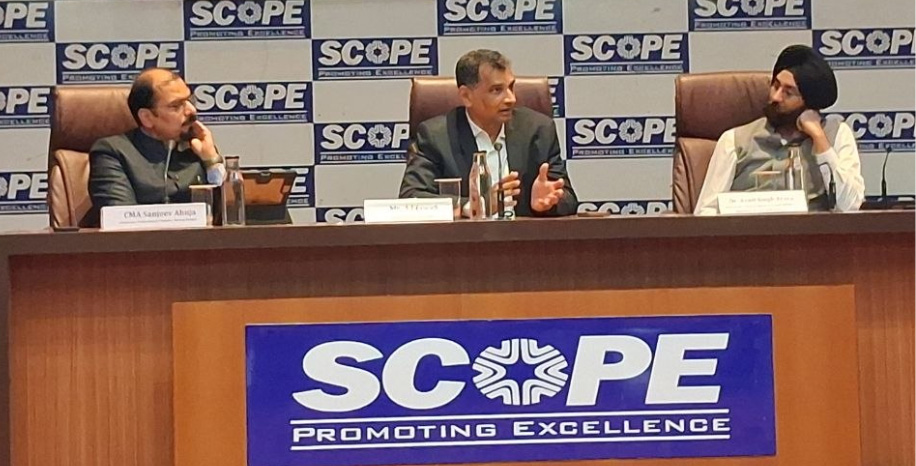
[In picture from left to right: Mr. Sanjeev Ahuja, Mr. A.J. Jawad, and Mr. Avnit Arora]
In a panel discussion moderated by Mr. Sanjeev Ahuja, President, IMF, the panellists, namely, Mr. A.J. Jawad, CEO and Registrar, IAMC, and Mr. Avnit Singh Arora, Director, Department of Legal Affairs, Government of India, engaged in a thought-provoking conversation on the Act, the role of MCI, the need to move mediation beyond a largely part-time or pro bono model, the role of private mediation institutions, and the possibility of integrating mediation and arbitration within a structured dispute resolution framework.
Perspective, stakeholder engagement and collaborative approach to mediation: Mr. Sanjeev Ahuja
Opening the session, Mr. Sanjeev Ahuja reflected on the importance of moving from discussions to concrete action and developing a collaborative approach among stakeholders. He observed that although different participants and institutions might be working towards similar objectives, their efforts were fragmented and confined to separate silos. He emphasised the need to bring stakeholders together and develop a cohesive approach to strengthen the mediation ecosystem.
Discussing the importance of perspective in dispute resolution, Mr. Ahuja cautioned against the tendency to reach conclusions or judge situations prematurely. He observed that what is visible from one perspective may not necessarily represent the entire situation, and that an understanding of the other side is essential before arriving at a conclusion. According to him, mediators and other stakeholders must appreciate the possibility that the parties may perceive the same situation differently.
He further highlighted the importance of maintaining balance in mediation, observing that the meaning of balance may differ depending on the individual and the context. He emphasised that the process requires an appreciation of the parties’ respective perspectives and the circumstances in which a dispute has arisen.
Mr. Ahuja also underlined the importance of recognising all stakeholders within the mediation ecosystem. He observed that lawyers, parties and other participants have an important role to play in developing the system and that the discussion should extend beyond the mediator’s perspective.
He reiterated that parties themselves must remain central to the mediation process and acknowledged the need for continued engagement among stakeholders to address the challenges confronting the mediation framework.
What does the Mediation Act envisage: Mr. Avnit Singh Arora
Responding to a question concerning the operationalisation of the Mediation Council of India (MCI), Mr. Avnit Singh Arora explained that the Mediation Act, 2023 (the Act), envisages the participation of several stakeholders and seeks to establish an institutional framework for mediation in India. He opined that the success of mediation should not be assessed merely by the number of cases referred to the process but rather by the number of disputes successfully settled through mediation. However, achieving this objective would require the various stakeholders to work together and strengthen the mediation ecosystem.
Explaining the institutional structure contemplated under the Act, Mr. Arora referred to three important components: the Mediation Council of India, mediation service providers, and mediator training institutions. He emphasised that training was essential to developing mediators who could inspire trust and credibility among parties and other participants in the dispute resolution market.
On the regulatory role of the MCI, he explained that the MCI would not just be a regulator but also a standard-setting body, as it would be required to formulate regulations concerning the recognition of mediation service providers (MSPs) and mediation service institutions (MSIs), along with the optional registration of mediators. He clarified that registration of mediators was not intended to be mandatory under the Act, recognising that parties should retain the autonomy to appoint a mediator of their choice, including a mediator who was not registered with the MCI. He further explained that the MCI would prescribe the norms governing registration for those mediators who wished to obtain recognition.
Mr. Arora observed that the establishment of the MCI was an important step towards enabling the formulation of the necessary regulations. Once the regulatory framework was notified, the system would be better positioned to develop recognition standards and other institutional requirements.
Regarding whether MSPs and MSIs would need to be mutually exclusive, he responded that there was no such bar in the Act. Even in the absence of formulation of the granular details, he opined that if there was transparency in how training and services were being provided, there would not be any difficulty in one institute carrying out both activities.
Management of MCI and greater participation of practitioners: Mr. A.J. Jawad
Regarding the practical implications of the establishment of the MCI, Mr. A.J. Jawad, at the outset, welcomed the establishment of the IMF and emphasised the importance of collective participation by mediation institutions and other stakeholders in strengthening the mediation framework and representing the interests of mediators.
He observed that the MCI presented an important institutional development, particularly because mediation in India was still at a formative stage. He noted that the profession was yet to develop a sufficiently established body of mediators, supporting professionals, and common standards of practice. He questioned whether a professional council like the MCI should ultimately be administered by bureaucrats or professionals engaged in the relevant field.
He observed that, in the absence of an adequately developed professional mediation community and established standards, the present administrative arrangement could be understood as a transitional approach. However, once the mediation profession reached a critical level of development, he suggested that the MCI should increasingly be managed by professionals practising mediation, like a Mediation Bar.
Mr. Jawad also emphasised the importance of stakeholder engagement while formulating regulations. According to him, mediation institutions and practitioners should be consulted to determine whether the proposed regulations adequately address the requirements of the mediation community or whether modifications are necessary. He suggested that collective engagement among institutions could facilitate coordination with the MCI.
Mediation as a dispute-resolution mechanism rather than an extension of adjudication
Furthermore, Mr. Jawad drew a distinction between the resolution of disputes and the administration of justice. Referring particularly to commercial disputes, he observed that not every disagreement necessarily requires an adjudicatory determination of who is right or wrong or delivery of justice. In many instances, a dispute may be better understood as a problem requiring a practical resolution.
He stated that matters capable of being negotiated or settled should not necessarily proceed to courts, which are already clogged. In his view, mediation could play a significant role in resolving such disputes and reducing the burden on the judicial system.
He further argued that mediation should develop as a full-time professional activity rather than continue predominantly as a part-time or pro bono engagement. He observed that the growth of mediation would require professional mediators, structured institutional support and an effective mechanism for delivering mediation services.
Mediation and arbitration within a hybrid dispute-resolution framework
Mr. Jawad proposed that mediation needed to be a part of a hybrid dispute-resolution mechanism wherein mediation and arbitration could operate hand-in-hand. He suggested that commercial disputes should first be referred to mediation and proceed to arbitration if no settlement is reached.
According to him, institutions capable of providing both mediation and arbitration services could facilitate this approach. Such institutions would be able to create a dispute resolution ecosystem. This would also create opportunities for professional mediators and arbitrators to provide services within an institutional framework. He clarified that this approach was not intended to replace Court-annexed mediation centres. Rather, such centres could continue to serve parties who required accessible or court-supported mediation services.
Jawad also raised concerns about the appointment of mediators in complex disputes referred by courts. He observed that retired judges were frequently appointed in such matters and emphasised the importance of ensuring that the person conducting the mediation was appropriately trained. Referring to his experience before mediators who were not adequately trained in mediation, he stressed that the mediator’s role and the limits of that role must be properly understood.
He further observed that mediation should not be used as a process for protecting or evaluating evidence in the manner of adjudicatory proceedings. In his view, the presence of a trained mediator could help ensure that the process was conducted appropriately.
Thus, Mr. Jawad emphasised the need to establish training and accreditation standards for mediators under the Act. Although registration was not mandatory, he suggested that appropriate qualifications should be prescribed for mediators seeking registration with the Council.
He observed that such qualifications would help parties understand the professional competence of the person they were engaging, particularly in commercial disputes. The development of clear standards would also contribute towards building confidence of parties in mediation as a professional dispute-resolution service.
Dichotomy between promoting mediation and infringing on party autonomy: Mr. Sanjeev Ahuja
Taking the conversation further, Mr. Ahuja mentioned how experienced mediators had been mediating in a court-annexed scenario and were now experiencing the rise of private mediation. He questioned whether mediation’s definition had become outdated and required regulatory interference to redefine how it ought to be.
He questioned whether the conventional understanding of mediation, which emphasises confidentiality, voluntariness, time-effectiveness and cost-effectiveness, accurately reflects the realities of the process, particularly in court-annexed mediation. He observed that confidentiality generally protects the mediation process, but does not necessarily extend to the parties’ intentions or their decision to opt for mediation.
He further questioned the 120-day time limit under the Act, arguing that imposing a deadline may undermine party autonomy and the voluntary nature of mediation, especially when parties require more time to settle. He highlighted the inconsistency between seeking to promote mediation as a means of reducing the burden on courts and imposing restrictions on the parties’ freedom to determine the process.
Accordingly, Mr. Ahuja called for a contemporary understanding of mediation that places greater emphasis on collaboration, party autonomy, flexibility, creativity, finality, and the strength of the process, rather than relying on conventional descriptions that may no longer reflect its practical realities.
Routes to mediation, Section 12A and the 120-day limit: Mr. Avnit Singh Arora
Giving his views on Mr. Ahuja’s concerns, Mr. Arora agreed that mediation could emanate from a mediation agreement, in which case it rests purely on party autonomy. In contrast, in court-annexed mediation, the court nudges the parties to go for mediation. The Act recognises different routes to mediation, including mediation arising from an agreement between parties, voluntary pre-litigation mediation, and court-referred mediation at any stage of judicial proceedings under Section 6. Party autonomy remains the underlying principle, while the Act enables courts to encourage parties to consider mediation. The Act also allows private mediation service providers to participate in court-annexed mediation centres, thereby potentially bridging the gap between court-annexed and private mediation.
Addressing the effectiveness of pre-litigation mediation under Section 12A of the Commercial Courts Act, 2015 (CC Act), he observed that its limited success could partly be attributed to the quality and training of mediators. The Act seeks to address this by enabling mediation service providers, in addition to Legal Services Authorities, to conduct such mediations, with the expectation that greater professionalisation will improve the quality of the process.
On the issue of timelines, Mr. Arora explained that the 120-day limit was intended to ensure that mediation proceeds in a focused and time-bound manner. Drawing an analogy with Section 29A of the Arbitration and Conciliation Act, 1996 (Arbitration Act), he noted that statutory timelines had helped reduce the duration of arbitrations. The practical operation of the mediation timeline, including whether parties may mutually extend the process or undertake a fresh mediation, would become clearer through implementation and regulatory guidance.
He also highlighted the need for mediators to devote adequate time to each matter, particularly in Section 12A proceedings. Referring to instances where parties merely marked their attendance without meaningfully engaging in discussions, Mr. Arora stressed that sufficient time and genuine deliberation are essential for mediation to have a realistic opportunity of achieving settlement.
Need for institutional mediation: Mr. A.J. Jawad
Adding to what Mr. Arora said, Mr. Jawad argued that institutional mediation should be encouraged, as they could strictly monitor the mediation process. This could also be an opportunity to cease pro bono or part-time mediation work as the profession evolves.
Drawing a comparison with practices at the Singapore International Mediation Centre, he observed that mediation sessions in India are often not conducted for the entire day. A similar concern was raised regarding arbitration, where proceedings are frequently scheduled over weekends and divided into short sessions, resulting in fragmented hearings. He argued that an institutional framework could address these practices and create a more professional dispute resolution ecosystem.
Mr. Jawad further observed that the Act, along with the proposed amendments to the Arbitration Act, could significantly transform India’s dispute resolution framework. Referring to the experience of Italy, where at least one mediation session is mandatory, he noted that such an approach had encouraged parties to continue with mediation in a substantial number of cases. However, the development of an adequate institutional framework is a prerequisite for introducing mandatory mediation in India.
Highlighting the role of the MCI, he reiterated the importance of prescribing uniform standards for mediator training, assessment and accreditation to prevent the proliferation of institutions offering inconsistent training programmes. He expressed concern that completing a short training programme, without any assessment of competency, should not automatically qualify an individual to practise as a mediator.
Mandatory participation, not compulsory settlement: Mr. Sanjeev Ahuja
Mr. Ahuja observed that the debate surrounding mandatory and voluntary mediation needed to be reconsidered in light of the lack of awareness about mediation in India. He drew a parallel with the introduction of the Insolvency and Bankruptcy Code, 2016, observing that the insolvency framework was introduced even though there were initially no insolvency professionals available. The system subsequently developed mechanisms for professional qualification and examination.
Drawing from this experience, he questioned why the mediation ecosystem should be hesitant to evolve despite the presence of experienced mediators. He suggested that mediators should be subject to feedback and performance evaluation to enable parties to assess the quality of services received.
Clarifying his position on mandatory mediation, Mr. Ahuja argued that the mandatory element should relate to the attempt to mediate and not the requirement to settle the dispute. Referring to the example of Greece, where parties are required to attend a Mandatory I Mediation Session (MIMS), he suggested that parties could be required to attend one or two sessions, depending on the applicable framework, while retaining the freedom to withdraw if they did not wish to continue.
He also criticised the practical implementation of pre-institution mediation under Section 12A of the CC Act. According to him, the provision had faced difficulties partly because the requirement of urgent interim relief was frequently invoked to bypass mediation. He observed that parties and lawyers often treated the requirement as a procedural obstacle rather than an opportunity to explore settlement.
Referring to instances where parties merely attended mediation at different times to mark their presence without engaging in any meaningful discussion, Mr. Ahuja stated that such practices defeated the purpose of mediation. He emphasised that requiring parties to attend an initial session would allow them to understand the process and hear the mediator explain its potential advantages and limitations. The parties could then decide whether to continue or pursue litigation or arbitration.
Mr. Ahuja further questioned the argument that mandatory participation would necessarily delay proceedings. He observed that parties generally retained the freedom to withdraw from mediation and that, where one party was unwilling to continue, the other party could proceed with the available legal remedies. In his view, the concern that mediation would become a delaying tactic was therefore not entirely consistent with the voluntary nature of the settlement process.
Distinguishing mediation from arbitration, he cautioned against drawing a direct comparison between the timelines applicable to the two mechanisms. Arbitration involves an adjudicatory process in which a third party delivers an award, which may subsequently be challenged under Sections 34 and 37 of the Arbitration Act. Mediation, by contrast, requires the parties themselves to determine whether a settlement is possible. Accordingly, where parties believe that further discussions may lead to a resolution, they should be allowed sufficient time rather than being subjected to an inflexible deadline.
He urged stakeholders to continue deliberating on these issues before the relevant provisions were notified, suggesting that the regulatory framework should reflect the practical requirements of the Indian mediation ecosystem.
Mediation Act seeks to balance party autonomy with the development of the mediation ecosystem: Mr. Avnit Singh Arora
Responding to the discussion on mandatory mediation, Mr. Arora clarified that there was no disagreement regarding the distinction between mandatory participation and compulsory settlement. He stated that the mandatory element, wherever contemplated, was intended to require an attempt at mediation rather than compel parties to reach an agreement.
He explained that the original Mediation Bill, when introduced in Parliament, had contemplated mandatory mediation. The proposal for two mediation sessions had drawn inspiration from the experience under Section 12A of the CC Act, with the intention of bringing consistency between the two legislative frameworks. However, following extensive public consultation and deliberations before the Parliamentary Committee, the proposal was reconsidered.
Mr. Arora stated that one of the principal concerns was the absence of sufficient infrastructure and trained mediators to accommodate the large number of civil disputes being adjudicated by courts in India. In view of the difficulties already experienced under Section 12A, it was considered impractical to require parties to undergo two mediation sessions at the first instance without having the necessary institutional capacity.
He further referred to the concern that an inadequately conducted mediation could adversely affect the dispute resolution ecosystem. Thus, the decision to make mediation voluntary was a conscious outcome of public consultation, considering the existing infrastructure, the availability of trained professionals, and the principle of party autonomy.
Mr. Arora added that the development of the mediation ecosystem could create opportunities to reconsider the framework in the future. He also encouraged stakeholders to participate in building awareness about mediation among disputing parties and other participants in the justice delivery system.
Mediator remuneration and recognition of mediation as a profession
Mr. Ahuja subsequently raised the issue of mediator remuneration, observing that mediation continued to be treated largely as an occasional pro bono service rather than a full-fledged profession. He questioned why mediators should not receive appropriate and adequate compensation for the time, skill, and effort involved in resolving disputes. He argued that mediation required professional recognition and economic viability, and that treating it merely as an additional service performed alongside other professional responsibilities would not allow the field to develop sustainably.
Responding to Mr. Ahuja’s concerns, Mr. Arora agreed that mediation must become economically viable for individuals who wish to pursue it as a profession. He stated that mediators should receive appropriate compensation for their skills and services and that the profession could not develop without adequate financial incentives. He opined that increased recognition of mediation, greater awareness among parties and a higher volume of cases would help improve the financial position of mediators. As successful mediations became more visible, parties would increasingly recognise the value of the process and the professionals conducting it.
However, Mr. Arora distinguished between commercial and family disputes while discussing mediator fees. He observed that commercial mediation could justify higher remuneration, whereas family disputes involved different considerations, including the emotional circumstances of the parties. He suggested that, in family disputes, mediators might also derive professional satisfaction from preventing disputes from escalating into prolonged litigation.
On the regulatory framework for mediator remuneration, he acknowledged that the Act contemplated the specification of costs through regulations. He stated that the issue would require consideration while framing the relevant regulations and indicated that different categories of disputes might require different approaches to remuneration.
Participation of court-annexed and private mediation institutions
Mr. Ahuja also raised the possibility of greater coordination between the judiciary and private mediation service providers, particularly in view of the substantial pendency of cases before Indian courts. He questioned whether the mediation community could assist in addressing the backlog by expanding the availability of mediation services beyond the existing court-annexed framework.
Responding to this, Mr. Arora stated that the Mediation Act had substantially removed the distinction between court-annexed mediation centres and private mediation service providers for the purposes of the framework envisaged under the legislation. He explained that parties would have the freedom to seek mediation outside court-annexed centres as well.
Mr. Ahuja observed that this could change the way courts refer disputes to mediation. Instead of directing parties exclusively to a court-annexed mediation centre, a judge could encourage them to explore mediation more generally, including through private mediation service providers. He considered this a significant development that could be beneficial once the Act was fully implemented.
Learnings from arbitration: Dos and Don’ts
According to Mr. Arora, a major learning would be the involvement of more professionals in the process, which could only happen with the greater inclusion of all stakeholders.
Mr. Jawad discussed the development of arbitration in India and identified the absence of an institutional framework as one of the principal shortcomings of the arbitration ecosystem.
He observed that, following the enactment of the Arbitration and Conciliation Act, 1996, the framework remained largely focused on ad hoc arbitration. In the absence of an institutional arbitration clause, a party seeking to invoke arbitration often had to approach the court under Section 11 for the appointment of an arbitrator. Then, he referred to the 2015 amendments to the Arbitration Act, which introduced timelines for completing arbitration proceedings and filing pleadings, drawing upon the recommendations of the 246th Law Commission Report.
He explained that, before the 2019 amendments, arbitral institutions were often understood merely as venues where parties could hire a hall and conduct arbitration proceedings. The amendments sought to give greater recognition to institutional arbitration. However, several important changes were not implemented, including the establishment of the Arbitration Council of India.
Mr. Jawad contrasted this experience with the Act, which expressly recognises mediation service providers and places institutional integration within its framework. He considered the involvement of professional mediation service providers an important lesson drawn from the shortcomings experienced in the development of institutional arbitration.
He also called for a broad-based policy framework for dispute resolution in India considering the goal of Viksit Bharat 2047, emphasising that the ease of doing business and the country’s ability to attract foreign investment were closely connected with the efficiency of its dispute resolution mechanisms. He proposed the development of an institutional ecosystem in which every State would have a professionally managed mediation and arbitration institution. These institutions should receive financial support from the Government while functioning autonomously, with their own procedural rules and case management systems. He further proposed the inclusion of an institutional mediation clause in contracts, before initiation of arbitration or litigation.
Mr. Jawad suggested beginning with commercial disputes rather than extending the framework immediately to all civil disputes. Under his proposed model, every commercial dispute arising out of a commercial contract should first be referred to mediation before the designated institution. If mediation fails, the dispute could proceed to arbitration. He further proposed that courts should also refer commercial disputes to these institutions, including where the court was exercising its power to refer matters to mediation. The objective would be to create a structured process in which mediation and arbitration operate as complementary stages of dispute resolution.
He also advocated for hybrid Med-Arb models, under which parties would first attempt mediation and, if no settlement was reached, proceed to arbitration. He observed that mediation could help parties identify the strengths and weaknesses of their respective positions, thereby narrowing the issues that would eventually require adjudication in arbitration.
According to him, such a framework could reduce the time and cost involved in dispute resolution and enable businesses to resolve disputes amicably. He emphasised that the primary purpose of a business was to conduct business rather than spend time litigating disputes.
Settlement of public sector disputes and protection of government officials
Addressing the difficulties faced by government officials in settling disputes through mediation, Mr. Jawad referred to a training programme conducted for government officials at the Supreme Court. He explained that government officials could recognise that a dispute was unlikely to succeed in further proceedings and that settlement might be the more appropriate course. However, apprehensions about subsequent scrutiny and audit objections could prevent them from taking a settlement decision.
Jawad proposed that the high-level committee constituted under the 2024 Office Memorandum1 should scrutinise settlement agreements in public sector disputes. Once the committee approved a settlement as genuine and appropriate, the officials responsible for implementing its recommendations should receive protection against subsequent questioning for having taken that decision. He also suggested that the committee should examine arbitral awards and provide its opinion on whether they should be challenged. Officials who decided not to challenge an award or to settle the matter in accordance with the committee’s recommendation should similarly receive protection.
Mr. Jawad considered such safeguards important to encourage government departments to settle disputes where settlement was the appropriate course.
Mediation as a serious process and the role of lawyers
Mr. Jawad also criticised the practice of treating mediation as a procedural formality, including situations where junior representatives were sent merely to mark attendance without being properly instructed or authorised to participate in settlement discussions. He argued that lawyers needed to advise their clients appropriately and engage meaningfully in mediation rather than viewing the process as a threat to their professional revenue. He linked the shortcomings in dispute resolution with the broader economic consequences of prolonged litigation and referred to the figure of 1.25% of GDP being spent on account of case pendency.
He further questioned the continued preference for ad hoc arbitration and called for greater support for institutional arbitration. In his view, institutions could provide closer supervision of proceedings and help protect the integrity of the dispute resolution process.
Training, assessment and opportunities for young professionals
Mr. Jawad emphasised that professional training and assessment should be made mandatory for both mediation and arbitration. He called for appropriate evaluation and institutional empanelment to ensure that professionals possessed the necessary skills to conduct proceedings effectively.
He also highlighted the need to create opportunities for younger professionals and women in arbitration. Referring to the limited diversity traditionally associated with the field, he questioned why arbitration should remain concentrated among older male professionals when younger practitioners were already participating in mediation.
Thus, he stressed that a clear policy framework and meaningful stakeholder engagement were necessary to develop a more inclusive and professionally managed dispute resolution ecosystem.
Conclusion
The discussion concluded with the panellists reiterating the need for sustained engagement among mediators, legal practitioners, regulators, institutions, and parties to strengthen mediation in India. The speakers highlighted the importance of distinguishing mandatory participation from compulsory settlement, ensuring appropriate remuneration for mediators, improving professional training and assessment, and developing institutional mechanisms for both mediation and arbitration.
The panellists also underscored the need to move beyond treating mediation as an occasional or procedural exercise and to establish it as a credible, professionally managed, and economically viable dispute resolution mechanism.
SCC Times is the official Information & Documentation Partner for the event. Read more about the Indian Mediation Federation’s ‘An Evening with Mediators’ here: