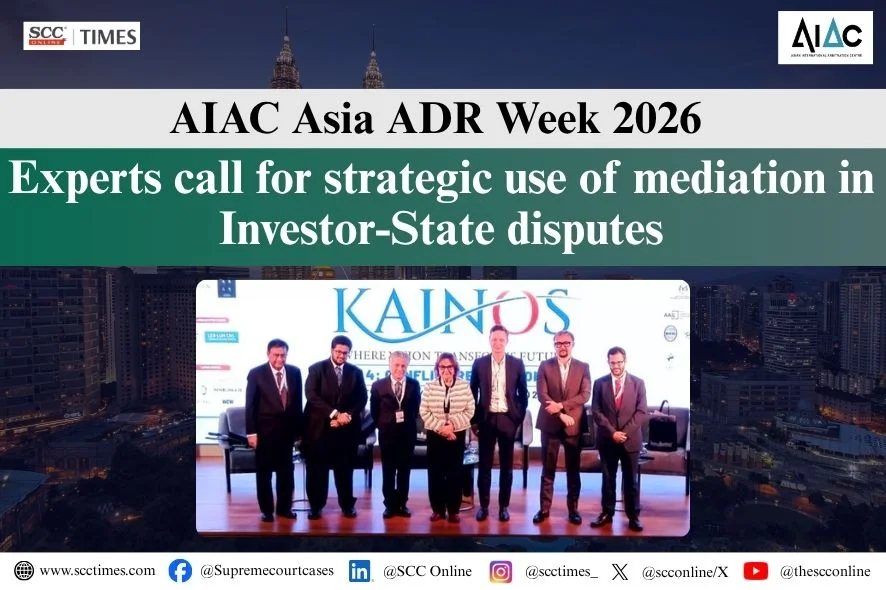
Organised by the Asian International Arbitration Centre (AIAC) on 15 October 2026, as part of Day 4 of AIAC Asia ADR Week 2026, the session titled “From Alternative to Strategic Tool: Mediation in Investor-State Disputes” examined how mediation can become a more effective mechanism for resolving disputes between foreign investors and host States. The discussion focused on overcoming institutional barriers to settlement, integrating mediation into investment treaty frameworks, addressing concerns over government accountability, and exploring the role of the Singapore Convention on Mediation and the International Centre for Settlement of Investment Disputes (ICSID) Mediation Rules 2022.
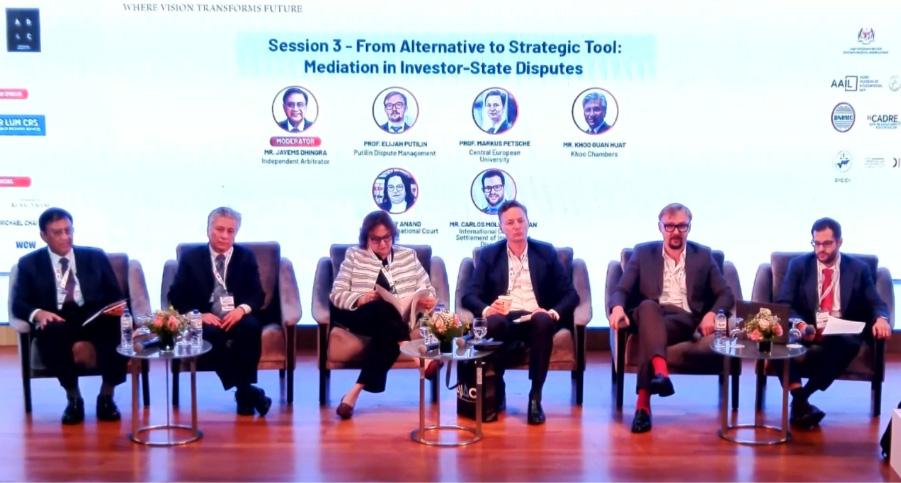
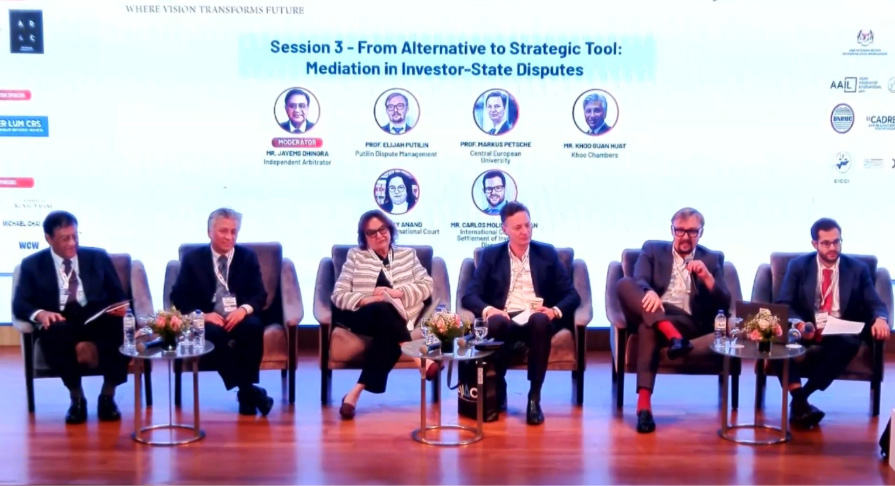
[From left to right: Jayems Dhingra, Guan Huat Khoo, Pinky Anand, Markus Petsche, Prof Elijah Putilin and Carlos Molina Esteban]
The session was moderated by Jayems Dhingra, International Chartered Arbitrator (CIArb.) and Principal IP and ADR Consultant at Tiberias Management Consultants. The panellists were:
-
Guan Huat Khoo, Partner at Khoo Chambers;
-
Pinky Anand, Senior Advocate and FCIArb1;
-
Markus Petsche, Professor at Central European University;
-
Prof Elijah Putilin, Independent Arbitrator; and
-
Carlos Molina Esteban, Legal Counsel at ICSID.
Mediation must move beyond its traditional role as an alternative
Opening the discussion, Jayems Dhingra questioned the conventional characterisation of mediation as merely an alternative to arbitration. He argued that mediation should instead be viewed as appropriate dispute resolution, particularly in investment disputes where arbitration, challenges to awards and subsequent court proceedings can prolong the resolution process.
He observed that mediation could offer investors and States a more direct route to settlement, reducing the time and resources spent on lengthy proceedings. The objective, he explained, was to encourage policymakers, treaty drafters, investors, courts and legal practitioners to consider appropriate dispute resolution mechanisms.
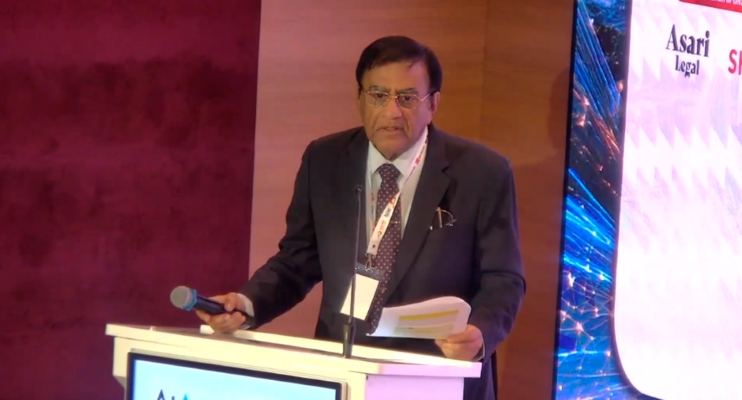
Jayems Dhingra stated, “That means mediation is not an alternative dispute resolution forum. I would like to name it as an appropriate dispute resolution forum.”
Power imbalance and accountability remain barriers to settlement
Guan Huat Khoo identified several obstacles to the adoption of mediation in investor-State disputes. Unlike ordinary commercial disputes, investment disputes may involve fundamentally different parties, with a State exercising public authority and an investor seeking to protect its commercial interests. Disagreements involving nationalisation, expropriation or other State measures can make it difficult for the parties to understand each other’s position and identify a mutually acceptable outcome.
He also highlighted the perceived imbalance in financial resources between a State and an investor. An investor may be reluctant to engage in mediation if it believes that the State has significantly greater financial capacity to sustain negotiations.
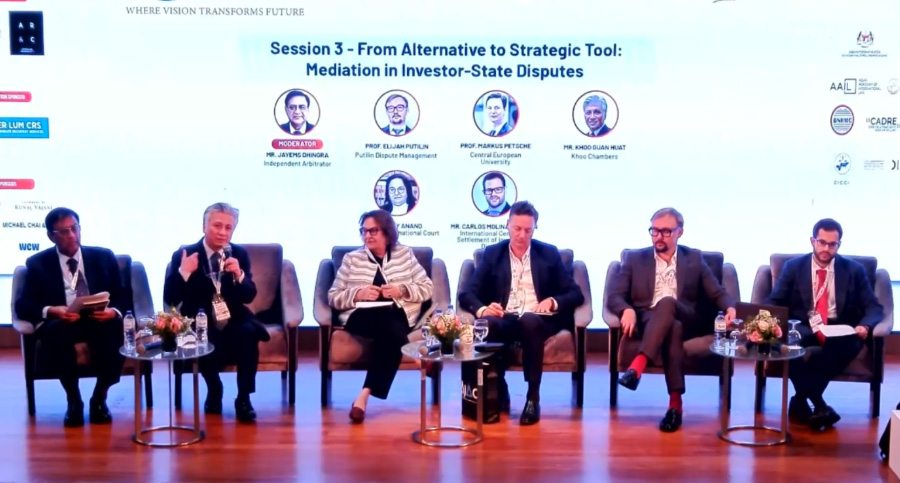
Another concern is whether the parties will negotiate in good faith. Guan Huat Khoo noted that mediation could become ineffective if one party uses the process to delay resolution rather than genuinely pursue settlement. In addition, State representatives may lack authority to settle immediately or may hesitate to exercise their authority because a negotiated settlement could subsequently attract public or political scrutiny.
These concerns, he explained, may encourage officials to prefer arbitration, allowing an independent tribunal to determine the dispute rather than requiring the officials themselves to take responsibility for a negotiated settlement.
Mediation can preserve flexibility while addressing investor-State interests
Pinky Anand emphasised that mediation is increasingly relevant to international dispute resolution, particularly as States and investors seek faster and more flexible ways to resolve disputes. She referred to the development of the Singapore Convention on Mediation, the ICSID Mediation Rules 2022 and India’s Mediation Act 2023 as part of the broader movement towards institutionalising mediation.
However, she cautioned that investor-State disputes cannot be treated in the same manner as ordinary commercial disputes. They frequently involve sovereignty, legislation, taxation, public policy and the exercise of regulatory powers. Consequently, a settlement must account for the interests of the investor as well as the State’s obligations towards its citizens and the broader public interest.
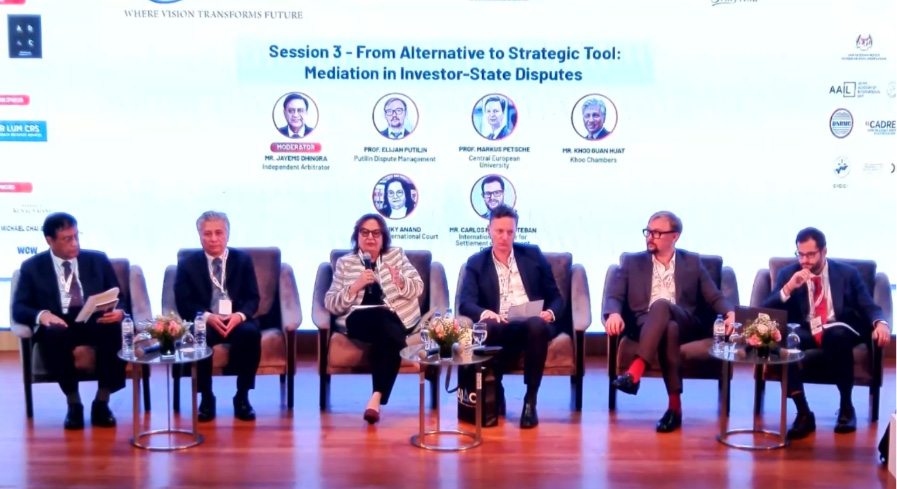
Pinky Anand suggested that mediation could be incorporated into the cooling-off periods found in investment treaties, allowing parties to explore settlement before or alongside arbitration. She also discussed hybrid dispute resolution mechanisms, including mediation followed or preceded by arbitration, as ways of combining negotiated solutions with formal adjudication.
She observed that mediation might not resolve every issue in an investor-State dispute but could help settle particular aspects while leaving questions requiring a binding determination to arbitration.
Limited use of mediation highlights the need for institutional change
Markus Petsche placed the discussion in an empirical context, highlighting the limited use of mediation in investment disputes. Referring to ICSID statistics, he stated that 62 arbitrations and one conciliation proceeding were filed in 2025, while no mediation proceedings were filed during that calendar year. He further noted that only seven mediation cases had been filed with ICSID since the adoption of its Mediation Rules in 2022.
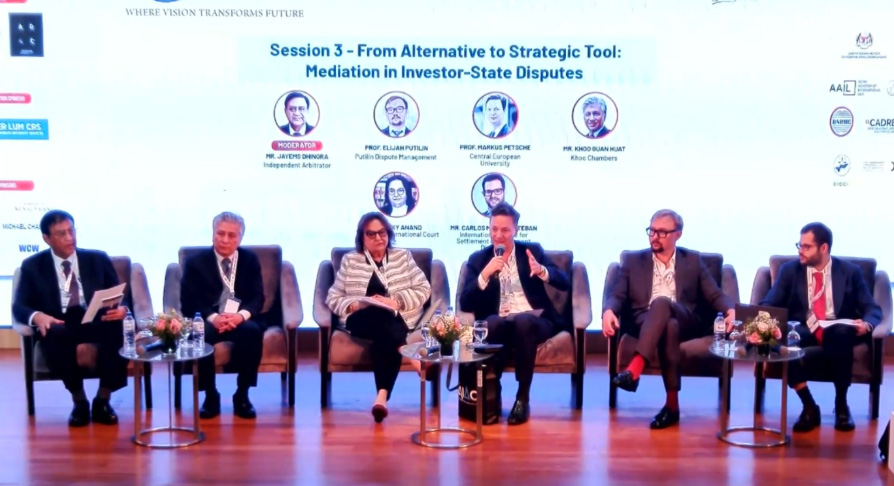
Markus Petsche argued that the barriers were not necessarily insurmountable. States could establish clearer domestic procedures for settlement negotiations and designate government officials with the authority to negotiate and approve mediated settlements. Independent agencies could also be considered to review proposed settlements and address accountability concerns.
He identified a more structural difficulty in the limited incentives for lawyers and government counsel to pursue mediation when their professional practices and experience are predominantly centred on arbitration. Raising awareness alone, he suggested, might not be sufficient without changes to the way investment disputes are managed.
Markus Petsche also proposed that investment treaties consider making mediation a mandatory preliminary step, provided that the process is designed to avoid unnecessary costs and delay. Referring to a 2020 Queen Mary University of London survey, he stated that 64% of the investors interviewed viewed the introduction of mandatory mediation regimes in investment treaties favourably.
Investment treaties can provide a more prominent place for mediation
Prof Elijah Putilin explained that investor-State dispute settlement (ISDS) allows foreign investors to bring claims against host States for alleged breaches of international obligations, where the State has consented to the relevant proceedings. Such consent may be found in bilateral or multilateral investment treaties or domestic investment legislation.
He observed that arbitration remains the more established mechanism, while investment treaties continue to make limited provision for mediation or conciliation. Referring to a 2025 study covering approximately 33,000 treaties, Prof Elijah Putilin stated that only about 1% mentioned mediation or conciliation as a dispute resolution mechanism.
Nevertheless, he pointed to developments in the Asian region, where more recent investment treaties have begun to recognise mediation as an optional stage of dispute resolution. He also referred to treaty provisions that permit a host State to require an investor to participate in mediation, thereby moving beyond a framework in which the choice of dispute resolution mechanism rests primarily with the investor.
ICSID Mediation Rules 2022 allow mediation throughout the investment lifecycle
Carlos Molina Esteban outlined the role of ICSID in facilitating the resolution of investment disputes. Established under the ICSID Convention in 1966, ICSID provides facilities and procedural rules for resolving disputes between foreign investors and States. He explained that ICSID introduced a standalone set of mediation rules in 2022, in addition to its established administration of arbitration and conciliation proceedings.
He noted that the rules provide considerable flexibility in designing the mediation process and were developed through the participation and approval of ICSID member States. They are also aligned with the formal requirements of the Singapore Convention on Mediation, facilitating the potential enforcement of resulting settlement agreements where the Convention applies.
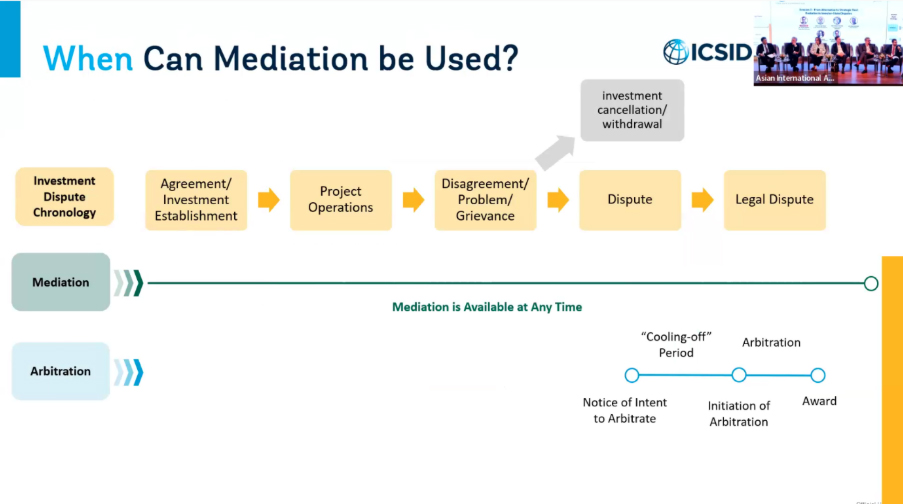
Carlos Molina Esteban explained that ICSID mediation can be available where a dispute involves a State or regional economic integration organisation, relates to an investment and is supported by the parties’ written consent. The agreement to mediate need not necessarily exist before proceedings are initiated, as the rules permit one party to request mediation and the other to accept.
Unlike arbitration, which becomes available once a dispute arises, mediation may be used at different stages of an investment’s lifecycle. The rules also permit mediation and arbitration to proceed in parallel, allowing parties to explore settlement without necessarily suspending the arbitral process.
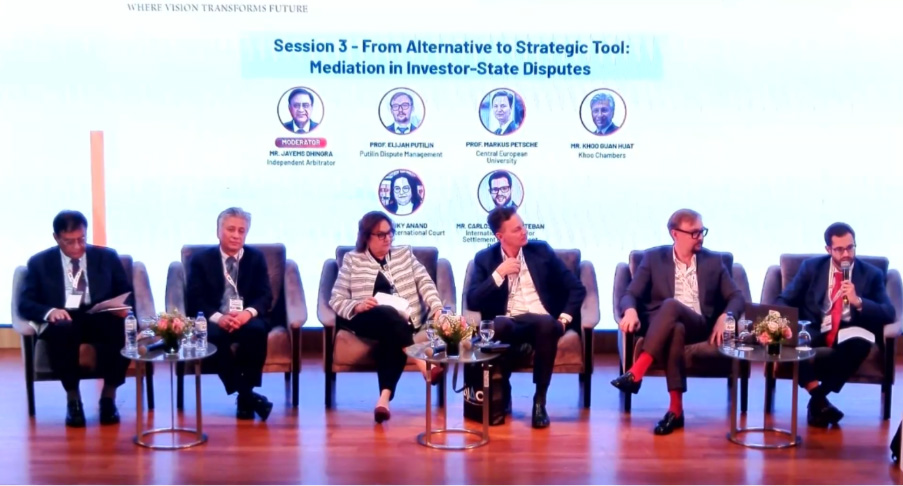
Carlos Molina Esteban stated, “Mediation can be used at any point of the life cycle of the investment.” He identified willingness to negotiate, the stage of the dispute, the need for interim relief, the desired degree of procedural flexibility, cost and time as relevant considerations when assessing whether mediation is appropriate.
Singapore Convention and the enforceability of mediated settlements
The panel also considered the relationship between investor-State mediation and the United Nations Convention on International Settlement Agreements Resulting from Mediation, commonly known as the Singapore Convention on Mediation.
During the discussion, Prof Elijah Putilin pointed out that some States have made reservations excluding settlement agreements to which a State or a government agency is a party, unless the parties agree otherwise. Where such an exclusion applies, a settlement arising from investor-State mediation may fall outside the Convention’s enforcement framework.
This qualification is significant because the prospect of cross-border enforcement may encourage parties to consider mediation, but its availability cannot be assumed for every investor-State settlement. The applicable treaty provisions, the relevant State’s position under the Convention and the terms of the settlement remain important considerations.
Accountability safeguards can encourage States to settle
Addressing the reluctance of public officials to approve mediated settlements, Pinky Anand highlighted the need for institutional safeguards that would allow government representatives to pursue settlements without bearing the entire burden of individual responsibility for the outcome.
She referred to structured settlement schemes, settlement funds and review mechanisms involving committees or an ombudsman as possible approaches. Such arrangements could establish transparent parameters for settlement and ensure that decisions are subject to appropriate oversight rather than being left to the discretion of a single official.
The discussion also recognised the need to distinguish legitimate negotiated outcomes from settlements that might improperly favour an investor or compromise public interests. Mediation in investor-State disputes must therefore account for public accountability, sovereignty and regulatory considerations alongside the goal of reaching a commercially workable resolution.
Mediation requires political will and genuine willingness to negotiate
Markus Petsche expressed caution about the prospects of substantially increasing the use of mediation, referring to the disappointing experience of efforts to promote mediation in international commercial disputes in Europe. He argued that including mediation in an institution’s list of services does not necessarily demonstrate a genuine commitment to making it a central dispute resolution mechanism. Its wider adoption, he suggested, would depend on political will and the incentives of those managing disputes.
In response to a question on the potential of the AIAC Mediation Rules 2026 in investor-State disputes, Prof Elijah Putilin stated that the rules were suitable for such disputes because of their procedural flexibility, notwithstanding the absence of provisions specifically tailored to investor-State mediation.
Carlos Molina Esteban reiterated that the willingness of the parties to negotiate is fundamental to determining whether mediation is likely to succeed. Where the dispute is at an early stage, parties may have greater scope to preserve their relationship and develop a mutually acceptable resolution. Conversely, a dispute that has progressed significantly or requires interim relief may be better suited to arbitration.
Early engagement can improve the prospects of settlement
Before concluding the session, the moderator, Jayems Dhingra, invited questions from the audience. Shanti Abraham, Member of AIAC Court of Arbitration and Chair of the Investor-State Mediation Taskforce at the International Mediation Institute, offered her observations on the discussion. She emphasised that effective mediation depends on the willingness of all stakeholders, including States, to seek a resolution before positions become entrenched.
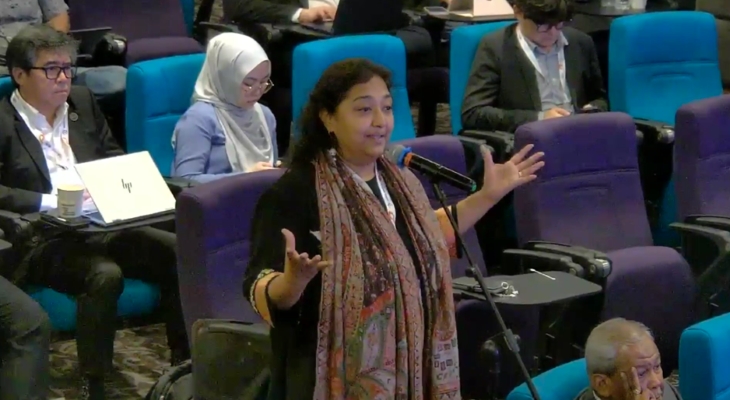
She observed that mediation need not wait until a notice of arbitration has been issued. By that stage, parties may have already committed substantial resources to the dispute, reducing their inclination to pursue a shorter and less expensive process.
Shanti Abraham also stressed that not every issue in an investor-State dispute is suitable for mediation. Commercial aspects may lend themselves to negotiated solutions, while disputes involving taxation or other matters of sovereignty may require adjudication. Separating these issues could enable parties to pursue settlement where appropriate without compromising a State’s regulatory responsibilities.
She concluded that mediation requires better-established practices and mechanisms through which investors and States can engage meaningfully in finding solutions.

The session underscored that mediation’s potential in investor-State disputes depends on more than the availability of procedural rules. Wider adoption will require States to establish clear settlement procedures, investment treaties to give mediation a more meaningful role, and investors and government representatives to engage before disputes become entrenched. While mediation cannot replace arbitration in every case, the panellists highlighted its potential to complement formal proceedings, reduce costs and delay, and preserve investment relationships where a negotiated resolution is feasible.
SCC Times is the official media partner for AIAC Asia ADR Week 2026. Read more reports from the week.
1. Fellow of International Chartered Arbitrator