


Supreme Court: In an application arising from a previous judgment concerning Front-of-Package Labelling (FOPL) for packaged foods and a proposed regulatory framework for the same, the Division Bench of J.B. Pardiwala and K. Vinod Chandran, JJ., directed that,
“The Union in consultation with the experts may arrive at the decision on visual appearance (coloured indicators, interpretive words, numbers, letters or symbols, numerical information, percentage) of the FOPL.”
Background and Proceedings till now
The present proceedings arise from Writ Petition (C) No. 437 of 2024, filed in public interest under Article 32 of the Constitution, concerning FOPL for packaged foods. The writ petition was disposed of by order dated 9 April 2025, pursuant to the Union’s response regarding the proposed regulatory framework for Front-of-Package Nutrition Labelling (FoPNL).
By order dated 9 April 2025, the Court directed the Expert Committee to prepare its recommendations and submit a report at the earliest, so that, relying on the report, the necessary amendments could be given effect to. The exercise was directed to be completed within 3 months, with the matter to be listed thereafter for reporting compliance.
The Union of India thereafter sought further time for preparation of the Expert Committee’s report. By order dated 15 July 2025, the Court granted a further period of 3 months, observing that appropriate steps in accordance with law would follow in case of non-compliance.
By order dated 20 January 2026, the Court noted that the Expert Committee appeared to have filed its final report and that the Committee had made certain recommendations and suggested a way forward in relation to the purpose for which the writ petition had been filed. The Court directed the Union of India to place the subsequent developments on record by way of an affidavit, fairly indicating what the Expert Committee had considered, the recommendations made by it, what it proposed to do further and what the Union proposed to do further pursuant to the Committee’s report.
The Court, while considering Food Safety and Standards Authority of India (FSSAI’s) compliance affidavit, noted FSSAI’s statement regarding the Draft Food Safety and Standards (Labelling and Display) Amendment Regulations, 2025, including the receipt and examination of public comments and consideration of the Scientific Committee’s suggestions and draft notification by the Food Authority.
The Court also noted FSSAI’s proposal to undertake further research, systematic mapping of packaged foods, consumer surveys, periodic review of global Front-of-Pack Nutrition Labelling (FoPNL) trends and wider stakeholder consultation before taking further steps. The Court prima facie observed that the exercise undertaken so far had not yielded a positive result and noted that the PIL concerned an important issue relating to the right to health of citizens.
By order dated 10 February 2026, the Court noted the suggestion that pre-packaged food products should carry warnings in the form of FOPL. Observing that FOPL is internationally prevalent, the Court directed the authority to revert within 4 weeks.
The Union thereafter sought 6 more weeks to file the Committee’s report. The learned ASG submitted that a report had been filed with the Registry on the preceding day. As neither the Court nor the learned counsel for the petitioner was aware of the contents of the report, the Court directed the Registry and the learned ASG’s counsel to furnish a copy of the report to the learned counsel for the petitioner. The matter was directed to be listed on 13 August 2026.
Also Read: Food Safety Enforcement in India: Misbranding & Courts | SCC Times
Court’s 13 August Order
During the hearing, counsel for the applicant/petitioner referred to the Minutes of the 46th Meeting of the Food Authority held on 7 March 2025. The Minutes recorded the Chairperson’s direction for wider and frequent consultations with relevant stakeholders, including ground-level participants and Micro, Small and Medium Enterprises (MSMEs), before publication of any draft or final regulation.
The learned ASG appearing for the Union of India submitted that the suggestion made by the Court regarding FoPL could not be considered, stating that it was difficult to proceed on the basis of international standards relating to packaging.
The Court reiterated that its concern was with the health of the citizens of the country, particularly growing children, and stated that this had been made clear during the hearing.
“Front-of-package labelling (FOPL) is an assistive device for the consumers to make an informed decision about food purchases and healthier dietary choices. Its purpose is simple, to place conveniently the relevant and readily understood nutrition information on the packaging, at the exact moment a purchasing decision is made.”
Public Health Concerns
The Court noted that obesity is a public health challenge in India and referred to the NFHS data in this context. The Court highlighted the health risks associated with unhealthy diets and lifestyles, including consumption of processed foods, particularly foods high in sugar, fat and sodium. The Court emphasised the importance of a balanced, nutrient-rich diet for children’s growth, development and overall well-being.
The Court further noted the risks associated with refined sugar, refined flour and trans-fat, including heart disease, obesity and other adverse effects, particularly in children. The Court also highlighted the scale of children’s exposure to packaged foods and referred to the UNICEF Child Nutrition Report 2025, including the reported increase in overweight school-age children and adolescents from 2 per cent—10 per cent between 2000 and 2022.
The Court noted a telling contrast in children’s immediate food environment: while around 80 per cent of the food and beverages available within schools are freshly cooked meals, nearly 80 per cent of what is available in the vicinity of schools consists of packaged snacks.
The Court noted the contrast between the food available within schools and that available in their vicinity, observing that packaged snacks constitute a significant proportion of the food available around schools. It also referred to studies indicating that children’s exposure to particular foods can shape their dietary preferences.
Economic Survey and Front-of-Package Labelling
The Court referred to the Economic Survey 2025-2026, which recorded a substantial increase in India’s ultra-processed food market between 2009 and 2023, alongside an increase in obesity. The Survey’s policy response included recommendations concerning FoPNL, including consideration of warning labels, restrictions on marketing to children and stronger regulation of ultra-processed foods.
The Court referred to the Economic Survey 2025-2026, which recorded that India’s ultra-processed foods market had increased by more than 150 per cent between 2009 and 2023, the same period during which obesity reportedly doubled among both men and women.
FOPL as a Tool for Informed Choice
The Court then connected these concerns to the utility of FOPL. The Court observed that the environment surrounding consumers, particularly children, can influence their habits and that a standard labelling format could reduce confusion and make it easier for consumers to make informed purchasing decisions.
The Court emphasised that the value of FOPL lies not merely in disclosure of nutritional information, but in clarity, distinguishing between a consumer merely being given information and a consumer actually being informed.
International Models on Front-of-Package Labelling
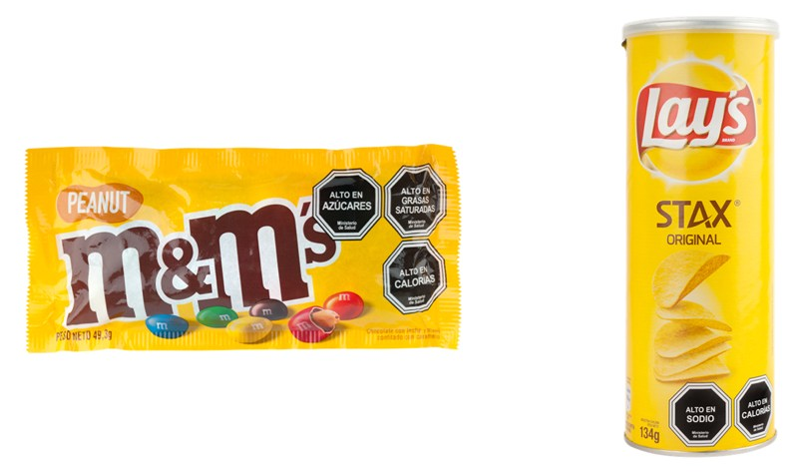
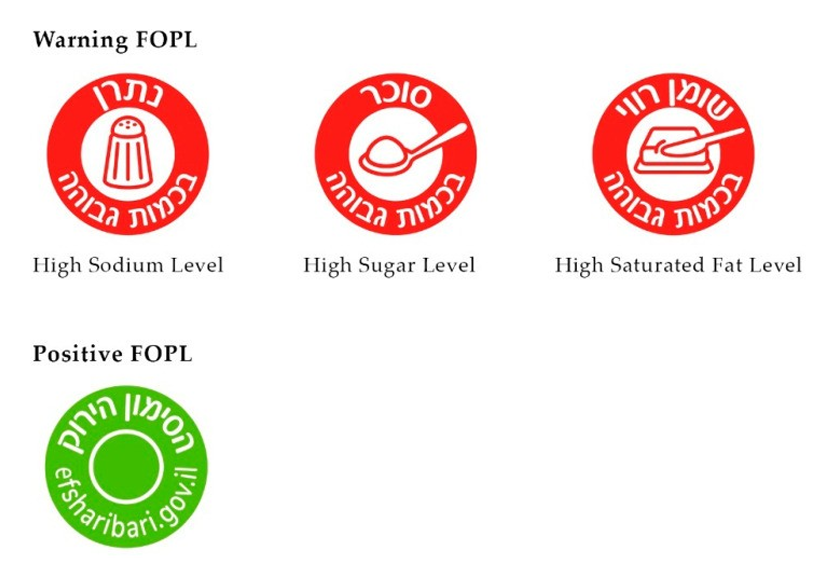
The Court referred to countries such as Chile, Israel and Canada, observing that India could take inspiration from their experience. The Court particularly discussed Chile’s phased changes to food labelling, noting that the thresholds for identifying products as having high sugar content were progressively reduced in a phased manner: a product was labelled as having “high sugar content” if it contained more than 22.5 g of sugar per 100 g under Phase 1 in 2016, a limit lowered to 10 g per 100 g by Phase 3 in 2019. The Court observed that the change resulted in a substantial reduction in consumer appetite, across socio-economic groups, for products high in salt, sugar, saturated fat and calories.
The Court also referred to Canada’s introduction of Front of Package Nutrition Symbols in 2022, which was intended to assist consumers in making informed dietary choices and encourage manufacturers to reformulate products. It noted that the Canadian framework also provided for categorisation and exemptions to account for differences between products.
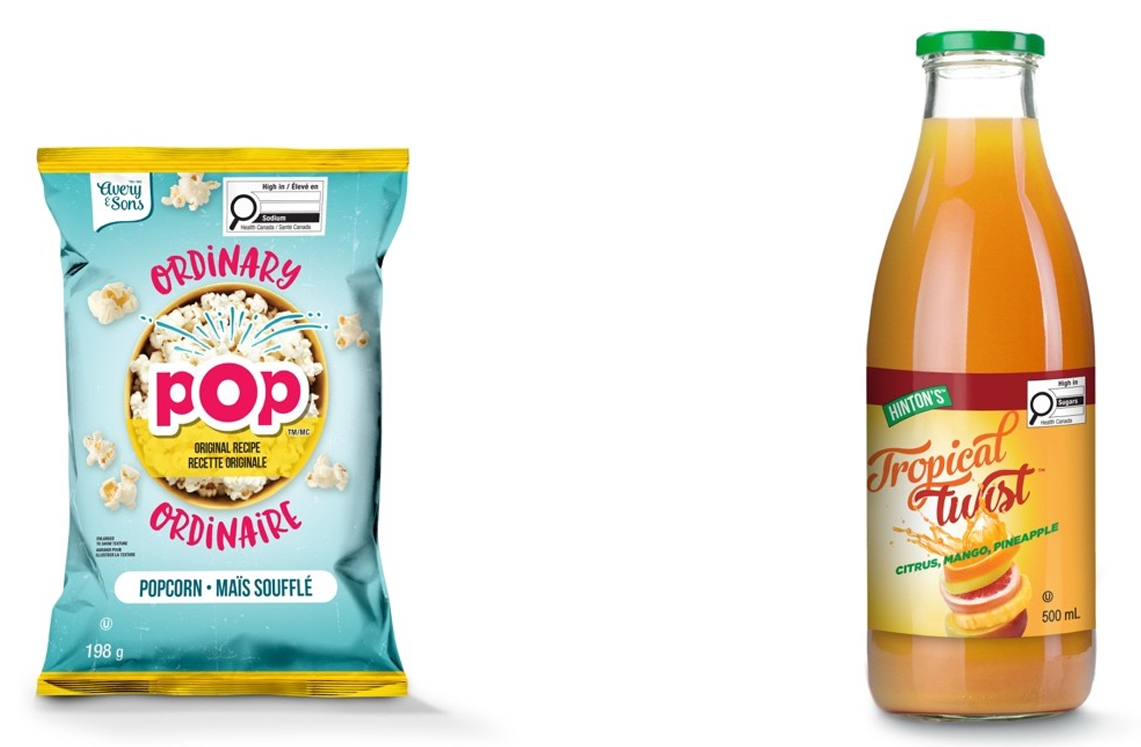
The Court clarified that these illustrations were only suggestive and were intended to demonstrate that developing as well as developed countries had adopted international standards of packaging.
The Court left the visual appearance of FOPL to the Union, in consultation with experts, indicating possible formats including coloured indicators, interpretive words, numbers, letters or symbols, numerical information and percentages.
The Court considered the issue from the constitutional perspective, observing that,
“The right to life under Article 21 encompasses the right to health. When the Constitution guarantees this right, it casts a corresponding duty on the State to not only refrain from actions that impair the health but also to take affirmative steps to protect it. Furthermore, Article 47 of the Constitution casts a duty on the State to improve public health as its primary duty.”
The Court also stated that it did not approve of the Union’s stance that it was not possible to match international standards, particularly those adopted by developed countries.
“We do not approve the stance of the Union when it says that it is not possible to match with international standards, more particularly, developed countries. Should India remain as an underdeveloped country? That’s the question we are putting forward for the Union to consider.”
Directions to the Union
The Court was of the view that the Union would not face any difficulty in implementing changes as regards FOPL, since the issue was already on its notice, as evident from the Economic Survey suggestions referred to by the Court.
The Court impressed upon the Union, particularly the Committee, to seriously consider its suggestions and take an appropriate decision at the earliest. The Court granted the Union 2 weeks to place its final decision on record, while stating that, if the Union did not act on its own, the Court would proceed to issue further directions.
The Court also stated that it did not approve of the Union’s stance that it was not possible to match international standards, particularly those adopted by developed countries.
“The World should know that India is very much concerned about the overall health of its citizens, more particularly the growing children.”
The matter was directed to be listed on 10 September 2026.
Also Read: Bombay HC: Same Food Safety Standards for Government Canteens and Private Hotels | SCC Times
[3S and Our Health Society v. Union of India, 2026 SCC OnLine SC 1656, ordered on 13-8-2026]
Advocates who appeared in this case:
For the petitioner: AOR Rajiv Shankar Dvivedi, Arti Dvivedi, S.K. Sarkar, Sugandha Bhardwaj, Bhushan, Priya, Snigdha Singh, Priyanka Parmar, Sweta Singh, Advocates
For the respondents: A.S.G. Brijender Chahar, AOR Madhulika Upadhyay, Anmol Chandan, Bhuvan Kapoor, Bhakti Vardhan Singh, Gopi Chand, Karan Chahar, Shubham Saxena, Vaishnav Kirti Singh, Adv
AOR Sudarshan Lamba,
Senior Advocate Devadatt Kamat, AOR Harpreet Singh Gupta, Mr. Srajan Jain, Advocates
Plr Chambers and Co., Senior Advocate Maninder Singh, Harsh Hiroo Gurshani, Suhaan Mukerji, Shubhank Patel, Advocates
AOR Nishanth Patil,
AOR Kumar Dushyant Singh, Rohit Sharma, Nikhil Purohit, Jatin Lalwani, Advocates





