








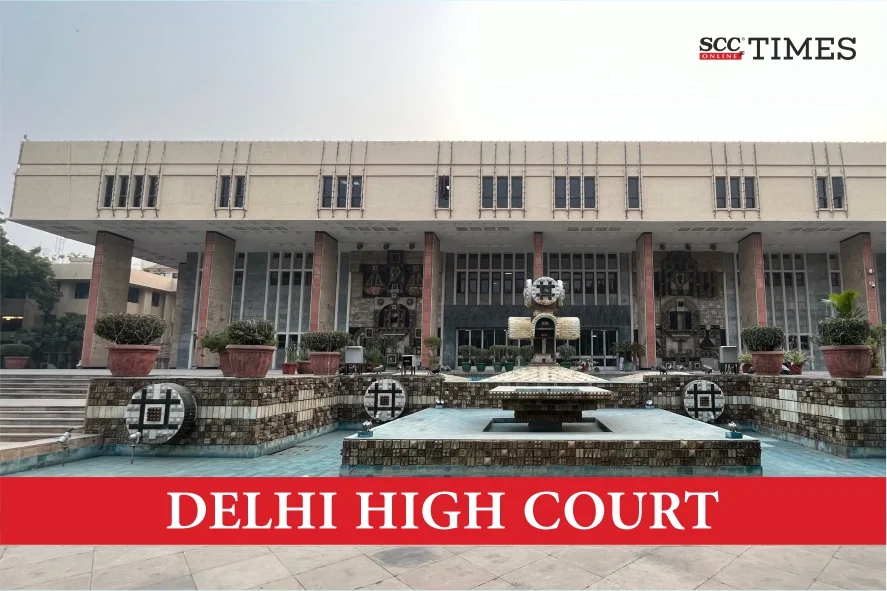
Delhi High Court: The present set of petitions were filed by GAIL India Limited (petitioners) under Section 12 of the Contempt of Courts Act, 1971, read with Article 215 seeking issuance of an appropriate action against the respondents for the deliberate and wilful disobedience of the order dated 30-01-2015 passed by the Court relating to the renewal of bank guarantees (ABGs) by the respondents. Dharmesh Sharma., dismissed the petition on the grounds that there was no intentional, wilful or contumacious neglect on the part of the respondents in complying with the directions of this Court dated 30-01-2015.
The present petition arises from a contractual dispute between the petitioner, a Central Public Sector Undertaking (PSU) under the Ministry of Petroleum and Natural Gas, and respondent 1, a consortium led by Tecpro Systems Ltd. and AMK VIGAZ from Russia. The petitioner, incorporated under the Companies Act, 1956, plays a pivotal role in the transportation of petroleum and natural gas, commanding over 70% of the market share in gas transmission. It initiated the Kochi-Koottanad-Bangalore-Mangalore Pipeline Project, aimed at transporting regasified liquefied natural gas (RLNG) across seven districts in Kerala and Tamil Nadu, ultimately connecting Kochi with Bangalore and Mangalore. Following the floating of e-tenders, the respondent 1 submitted a successful bid for completing certain sections of the project, leading to a contract agreement executed on 20-01-2012, which detailed the scope, terms, and financial arrangements, including the furnishing of Performance Bank Guarantees (PBGs) and Advance Bank Guarantees (ABGs) by the respondent.
As the project progressed, respondent 1 faced significant delays and failed to meet its contractual obligations, prompting the petitioner to grant a moratorium on the recovery of the mobilization advance. Despite these concessions, respondent 1’s non-performance persisted, leading the petitioner to issue a letter on28-01-2014 for the encashment of the ABGs. In response, the respondent filed petitions under Section 9 of the Arbitration and Conciliation Act, seeking injunctions against the encashment of the bank guarantees. The Court granted an ex parte interim injunction, which restrained the petitioner from invoking the guarantees until the conclusion of arbitration proceedings, during which the respondent was obligated to keep the guarantees valid. The petitioner later sought clarification and ultimately filed the present petition to challenge the orders restricting the encashment of the guarantees, asserting that the respondent failed to comply with its obligations to maintain the guarantees considering the ongoing arbitration.
The Court noted the essential requirements for establishing contempt, which include deliberate knowledge of the court’s order and intentional non-compliance. It referred to precedents establishing that contempt proceedings should not be a substitute for execution processes and that a party should exhaust other remedies before seeking contempt relief. The Court recognized that the respondents, while key figures in the companies, were not directly named in the initial arbitration petitions and thus could not be held personally liable for the consortium’s obligations.
The Court further acknowledged that while corporate liability can often extend to the individuals in management, the circumstances surrounding the initiation of CIRP and the declaration of the company’s accounts as non-performing assets (NPA) significantly affected the respondents’ ability to fulfill their obligations. The Court also discussed the implications of lifting the corporate veil and attributed responsibility for the non-renewal of the guarantees to the company rather than the individuals.
The Court concluded that the contempt proceedings could not be sustained emphasizing that the respondents had made reasonable efforts to comply with the Court’s orders, depositing ₹8 crores and seeking to fulfill their obligations within the constraints imposed by their insolvency status.
Thus, the Court ruled that the failure to renew the ABGs was not solely attributable to the respondents’ willfulness but was significantly impacted by external factors, including the CIRP process and the company’s financial distress. As a result, the contempt petition was dismissed, underscoring the legal principle that not every failure to comply with a court order constitutes contempt, especially when justifiable circumstances are at play.
[Gail India Limited v. Joseph P Philip, 2024 SCC OnLine Del 7401, decided on 22-10-2024]
Advocates who appeared in this case :
Mr. S. V. Raju, Sr. Adv. with Mr. Ashwin Katria & Mr. Samrat Goswami, Advocates for petitioner
Mr. Rajshekhar Rao, Sr. Adv. with Mr. Ankit Sibbal, Mr. Rohit Kumar Yadav, Mr. Nikhil Saron & Mr. Tanishq Pathak, Advs. Mr. Rishi Dwan, Advocate for respondent









0 replies