








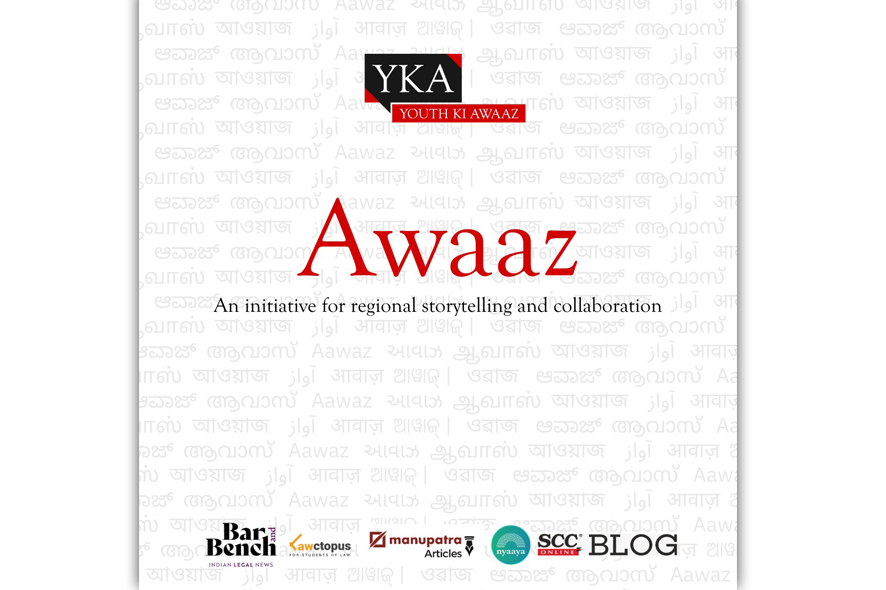
Awaaz, an initiative for regional writers, editors, and readers to collaborate and share their stories, ideas, and experiences in their own language, has been launched on 21st February, celebrated as “International Mother Language Day.” The platform aims to exponentially increase the discourse around socio-legal issues in regional languages and give equal representation to these languages and stories in the national discourse.
Conceptualized by Rohit Sharma, Awaaz aims to bring regional language communities together as a collective which is led Youth Ki Awaaz and is supported by an ever-expanding network of partner organizations, including Bar and Bench, Lawctopus, Manupatra, Nyaaya, and SCCOnline.
The initiative has created “Regional Language Citation Standards” in 12 regional languages: Assamese, Bengali, Gujarati, Hindi, Kannada, Malayalam, Marathi, Odia, Punjabi, Tamil, Telugu and Urdu. This citation standard is a culmination of two years of effort by around 35 authors. This is accompanied by a thought-provoking note written by Professor Upendra Baxi, currently a professor at the University of Warwick and Jindal Global Law School.
The reliance on mainstream Indian languages has led to the invisibilization of stories and issues of communities speaking other languages. This has resulted in a lack of agency for these marginalized communities. Awaaz aims to give equal representation to these languages and stories in the national discourse to be heard and to ultimately imagine a nation where language is no barrier to speaking up.
” This effort is a small tribute to my guru Shamnad Basheer, an Indian legal scholar and pioneer who worked on making legal education accessible for underprivileged students,” said Rohit Sharma, founder of Awaaz Initiative. “By creating a platform that brings regional language communities together, we hope to give these communities the agency they deserve and create a more inclusive national discourse.”
If any writer/author wants to submit a piece in your language, send it to awaaz@youthkiawaaz.com, with the language mentioned in the email’s subject. The themes included for the purpose of publication are Culture, Human Rights, Identity Rights and Education. You can submit your pieces till the 10th of April, 2023.
For more information about Awaaz, please visit https://www.youthkiawaaz.com/awaaz/.
To Know More, refer Regional Language Citation Standards 1st Edition








0 replies