








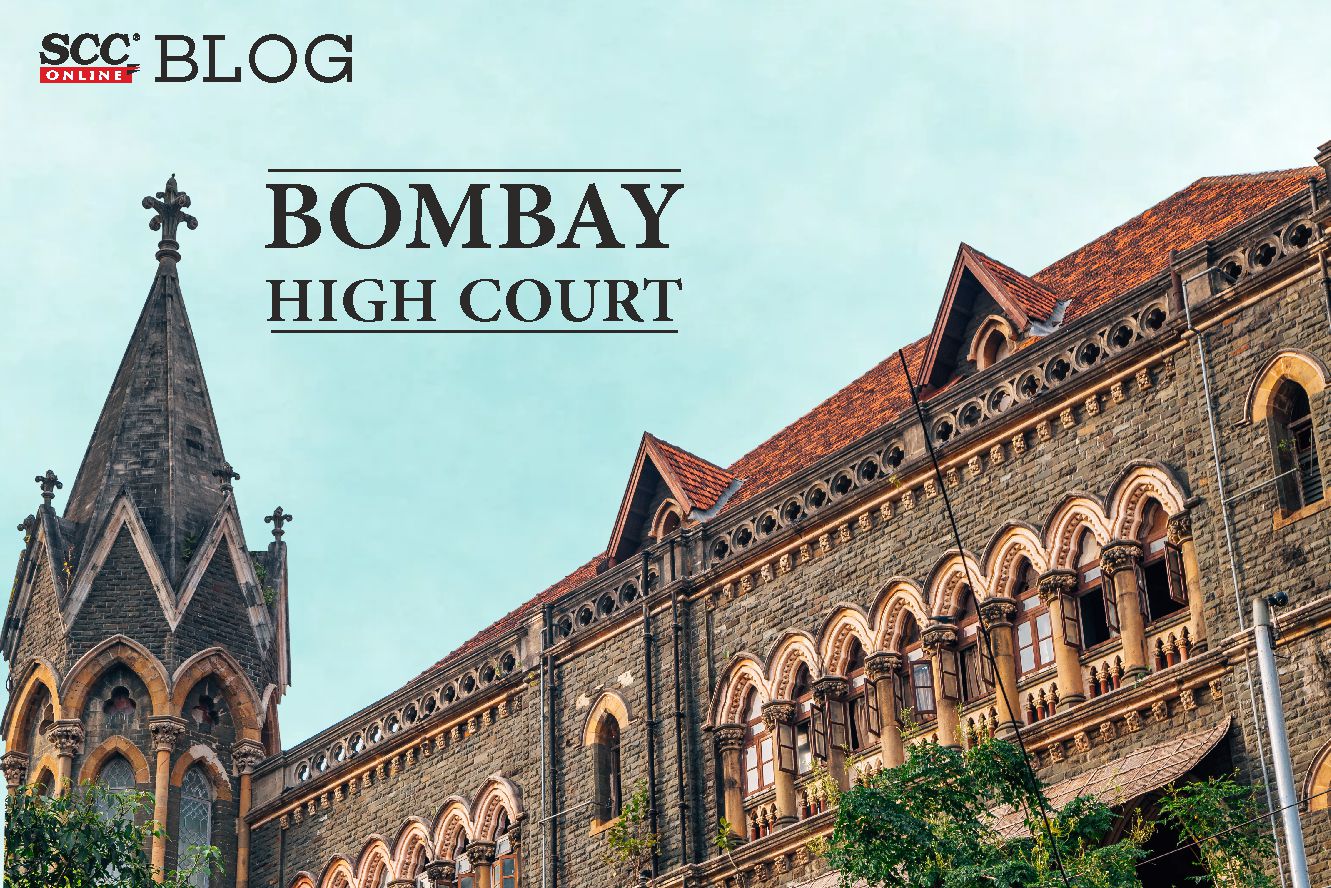
Bombay High Court: The Division Bench of Sadhana S. Jadhav and Milind N. Jadhav, JJ., allowed an appeal which was filed against the conviction of the appellant for the offence punishable under section 302 of Penal code, 1860 wherein he was sentenced to suffer R.I. for life and fine of Rs.5,000.
On 18-10-2010, a report was lodged by Laxman Daji Bhoye (witness 1) alleging therein that one person from Sawarpada informed him that on 17-10-2010 Suresh Bhagat had killed his wife. He went to the spot to verify the same and saw Suresh Bhagat (‘the present appellant’) seated besides the dead body of his wife who was lying in a pool of blood. On enquiry he disclosed that when he returned home from the house of his relatives after watching television, he knocked on the door but there was no response so he entered the house through the window. He noticed that his wife was in deep sleep. He assaulted on her head and back and thereafter, paid no attention to her. In the morning, at about 6.00 am, he realized that his wife has passed away. According to the prosecution, there is an extra-judicial confession by the accused. The prosecution had examined five witnesses to bring home the guilt of the accused amongst which witnesses 1, 2 and 3 were declared hostile.
The question before the Court was as to what is the evidence as against the accused which would lead to a necessary inference that the accused is the author of the injuries sustained by the deceased.
An accused can be convicted only in the eventuality that the investigation places on record such material which could be converted into admissible evidence and can be read in evidence.
The Court believed that in the present case, in view of the nature of the evidence adduced by the prosecution, it would be difficult to act upon the supposition that the fact of homicidal death at the hands of the accused is proved.
Counsel for the appellant submitted that this was a case of no evidence in the eyes of law and hence, the accused deserved to be acquitted of the charge levelled against him.
APP submitted that it was incumbent upon the accused to offer an explanation as contemplated under section 106 of the Indian Evidence Act and the very fact that the dead body was found in the house of the accused and he had not put forth any plausible explanation was sufficient to convict the accused for an offence punishable under section 302 of IPC. It was further submitted that there was an extra-judicial confession before Witness 1 which goes to the root of the matter and pointed towards the culpability of the accused.
The Court explained that it is a settled principle of criminal jurisprudence that an accused has a right to maintain silence and it is for the prosecution to prove its case beyond reasonable doubt. As far as extra-judicial confession was concerned, the Court reiterated that the same was not reliable for the simple reason that the person to whom the purported extra-judicial confession was made had resiled from his earlier statement and had been declared hostile by the prosecution.
Placing reliance on State of Rajasthan v. Raja Ram, (2003) 8 SCC 180 where it was held that “an extra-judicial confession, if voluntary and true and made in a fit state of mind, can be relied upon by the Court. The confession will have to be proved like any other fact. The value of the evidence as to confession, like any other evidence, depends upon the veracity of the witness to whom it has made. The value of the evidence depends on the reliability of the witness who gives the evidence.” the Court stated that an extra-judicial confession is a weak piece of evidence and can be relied upon provided, it is voluntary and is made in a fit state of mind.
The Court while allowing the appeal held that this could be a case of no evidence and thus, falls in the category of disproved. Judgment and order of conviction was quashed and set aside and the appellant was acquitted of the offence punishable under section 302 of the IPC.
[Suresh Ladak Bhagat v. State of Maharashtra, Criminal Appeal No.9 of 2014, decided on 19-04-2022]
Mr Samir Arunkumar Vaidya, Mr Hare Krishna Mishra: Advocates for the Appellant.
Ms M.M. Deshmukh: APP for the Respondent – State.
*Suchita Shukla, Editorial Assistant has reported this brief.









0 replies