








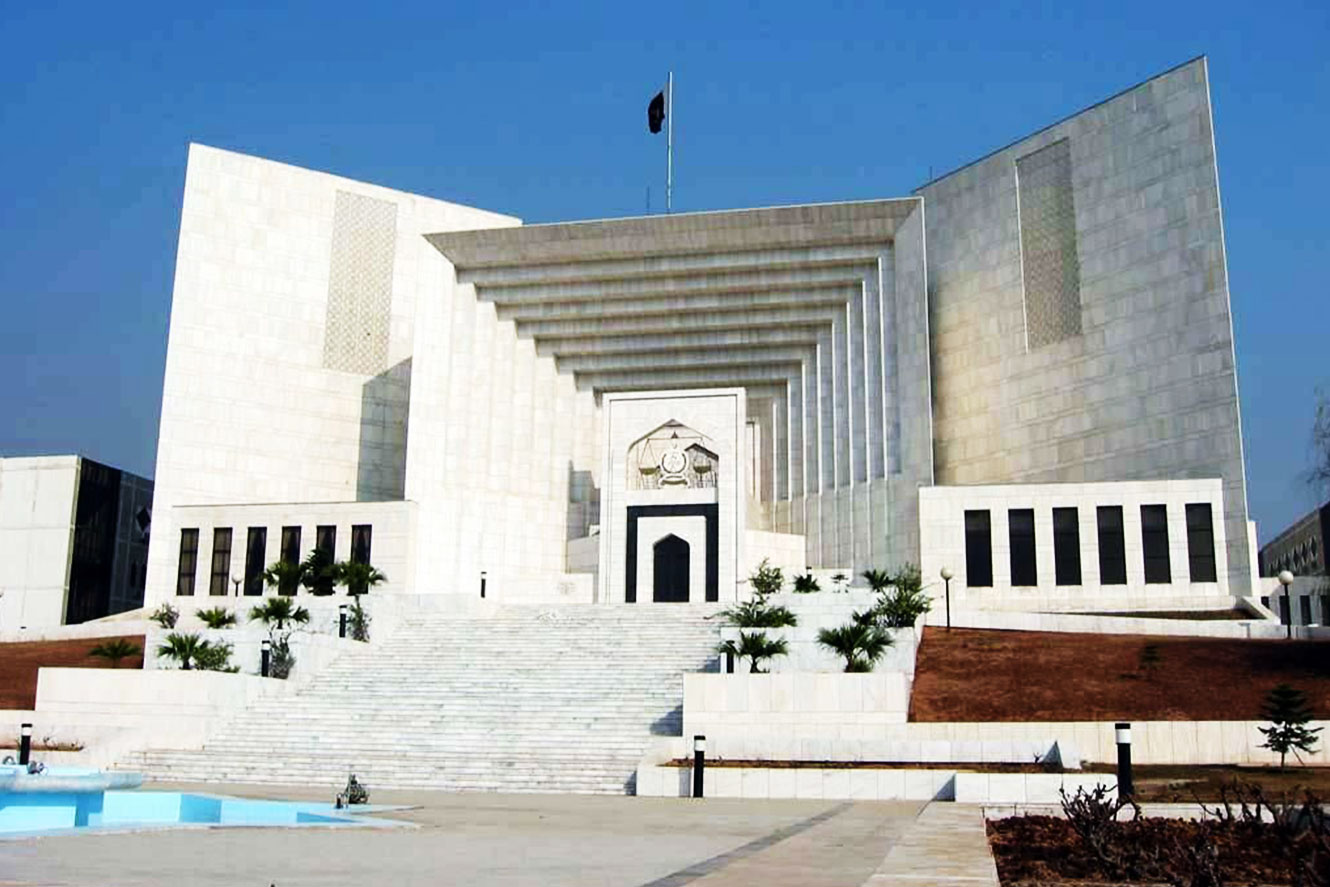
Supreme Court of Pakistan: A 3-Judge Bench comprising of Gulzar Ahmed, Qazi Faez Isa, and Sajjad Ali Shah, JJ. while hearing a criminal appeal against conviction of a minor, pulled up the Trial Court and High Court for indulging the prosecution despite its failure to establish case beyond reasonable doubt.
The instant appeal was directed against the judgment of Lahore High Court convicting appellant under Section 9(c) of the Control of Narcotic Substances Act, 1997. Police recovered narcotic drugs from the vehicle of appellant and his brother and arrested the appellant, but his brother absconded. At that time, appellant was not even a teenager. The Trial Court found him guilty and High Court confirmed his conviction. Aggrieved by these orders, the appeal was preferred before the Supreme Court.
It was observed that as a Juvenile Court under Section 4 of the Juvenile Justice System Ordinance, 2000, trial court was obliged to protect the interests of the appellant. However, questions for determination of relevant factual issues were not formulated. Despite submission of police report after two years, Trial Court did release the appellant on bail as per Section 10(7) of the Ordinance. The High Court, while exercising appellate jurisdiction, perpetuated these errors.
The Bench noted several loopholes in the prosecution case such as poor investigation, prosecution’s admission of spoiling the case, no arrest warrant for the co-accused and incomplete witness accounts. The prosecution, having completely failed to establish its case against the appellant, let alone having established it beyond a reasonable doubt, appeal was allowed directing the appellant to be released.
The Court expressed anguish over the fact that due to inept investigation, a child remained incarcerated for over eleven years and attained majority in jail. Though the Juvenile Justice System Ordinance did not stipulate the period within which trials/ appeals should be concluded, but its stated purpose is to ‘provide for protection of children’. Considering the provisions of the Ordinance and Article 25(3) of the Constitution of Islamic Republic of Pakistan which envisages ‘protection of women and children’, the Court directed that trial of juveniles be concluded without delay and appeals against their conviction be prioritized and expeditiously decided. [Muhammad Adnan v. State, Criminal Appeal No. 90-L of 2017, decided on 13-09-2018]









0 replies