








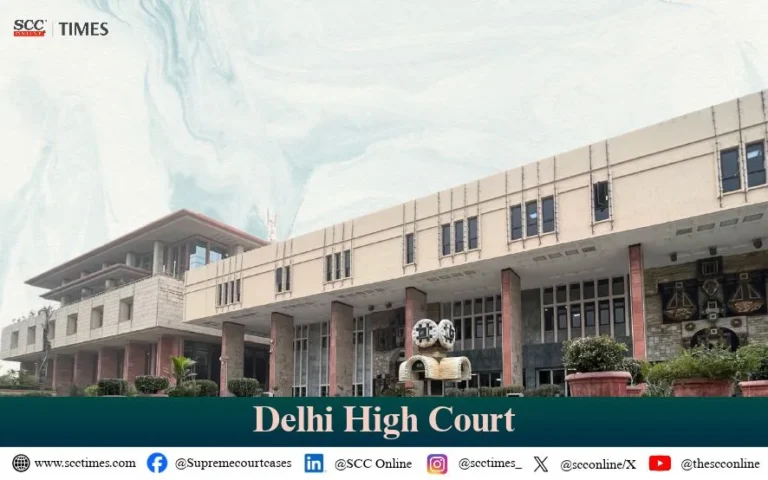
Delhi High Court: A Bench comprising of Vipin Sanghi, J. has dismissed the chamber appeal filed by the defendants against the order passed by the Joint Registrar (Judicial), in which the defendants were directed to produce on oath certain documents.
The original suit was regarding the telecast of a news programme and publication of an article by the defendants, which the plaintiff challenged as defamatory. Plaintif moved an application under Order XI Rule 14 CPC to seek production of the original news programme telecasted and the article published by the defendants on the premise that the originals of the said documents are in the power and custody of the defendants. This application was allowed by the Registrar, and the defendants filed an appeal against the same.
The defendants contended that the onus to prove the defamation lies upon the plaintiff. He should produce his copy of the telecast and publication. The defendants cannot be called upon to produce evidence which may be used by the plaintiff against them. The Court observed that a plain meaning of Order XI Rule 14 is that a party to a suit, who is in possession or power of a document, may be directed during the pendency of the suit to produce the same. The documents which the plaintiff seeks production, are in the power and possession of the defendants, since they are the authors of the said works, and have telecasted/published the same. The Court observed that there is no dispute between the parties regarding the telecast/publication of the news programme/article as the defendants didn’t deny the same. Therefore, there is no need for the plaintiff to lead evidence regarding the telecast and publication. Plaintiff is only obliged to lead evidence regarding what was telecasted and published, by leading the original document. Since this evidence is in the power and possession of the defendants, they can be required to produce the same. Consequently, the appeal was dismissed by the Court. [Naveen Jindal v. Zee Media Corporation Ltd, 2017 SCC OnLine Del 8209, decided on 08-05-2017]








0 replies