








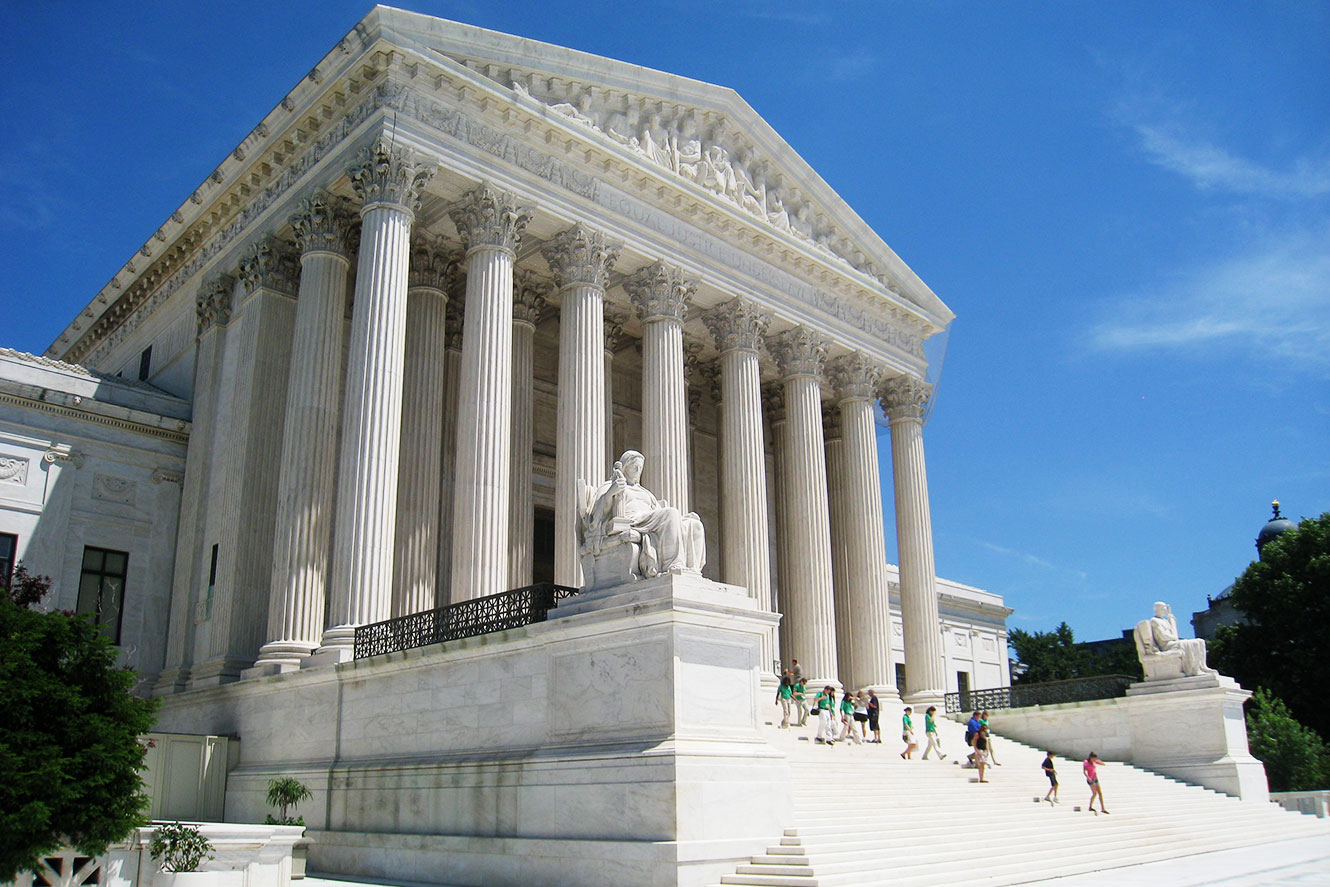
Supreme Court of United States: Ruling that prosecutors in Georgia violated the Constitution by striking every black prospective juror in a death penalty case against a black defendant, the Court by a majority of 7 to 1 reversed the order of the Georgia Supreme Court and held that the prosecutors of the State were motivated in substantial part by race when they struck the jurors from the jury 30 years ago. The Court further concluded, ‘considering all of the circumstantial evidence that bears upon the issue of racial animosity, we are left with the firm conviction that the strikes of the two jurors were motivated in substantial part by discriminatory intent’. Thomas, J., filed a dissenting opinion.
In the instant case the petitioner was convicted of capital murder and sentenced to death in a Georgia court. During jury selection at his trial, the State exercised peremptory strikes against all four black prospective jurors qualified to serve. Petitioner argued that the State’s use of those strikes was racially motivated, in violation of the decision in Batson v. Kentucky, 476 U. S. 79 (1986). The trial court and the Georgia Supreme Court rejected petitioner’s Batson claim. Petitioner then sought a writ of habeas corpus from the Superior Court of Butts County, Georgia, renewing his Batson objection. That court denied relief, and the Georgia Supreme Court declined to issue the Certificate of Probable Cause necessary under Georgia law for Foster to pursue an appeal. Hence the present appeal.
Roberts, C.J., delivering the opinion of the Court, held, the decision given by the courts above that the petitioner failed to show purposeful discrimination was clearly erroneous. The Court further observed that evidence that a prosecutor’s reasons for striking a black prospective juror apply equally to an otherwise similar nonblack prospective juror who is allowed to serve tends to suggest purposeful discrimination. Such evidence was compelling with respect to the two jurors and, along with the prosecution’s shifting explanations, misrepresentations of the record and persistent focus on race, leads to the conclusion that the striking of those prospective jurors was “motivated in substantial part by discriminatory intent.” [Foster v. Chatman, 578 U. S. ____ (2016), decided on 23.05.2016]





Shocking to read then even in an advanced democracy like the USA soecially the Georgia Supreme Court, decided a case on racial duscrimination n the All White jury impised death penalty on the Defendant who happened to be a Black. Suck mindset to say the least. Kudos to the jury of Supreme Court for having rectified the blunder.
In jury selection for death penalty cases, if a person is against the imposition of death penalty, he/she is struck off the list. This is fair enough because logically, a person not choosing-for ideological reasons- the option of death penalty if that is the sentence warranted following conviction for a death eligible offence should not serve on the jury. A defendant’s race should have nothing to do with the process. But in reality, blacks, women, Democrats and Catholics are more likely to be struck off. The net outcome is that the jury mostly comprises of whites, males and Republicans. Such a jury is more likely not only to return a verdict of guilty but also to impose death sentence on the convict,especially so if he/she is black.