








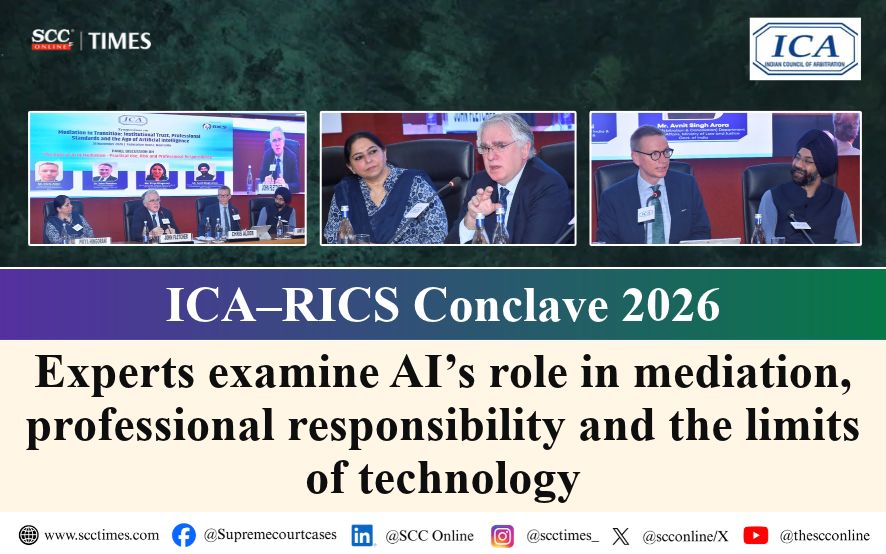
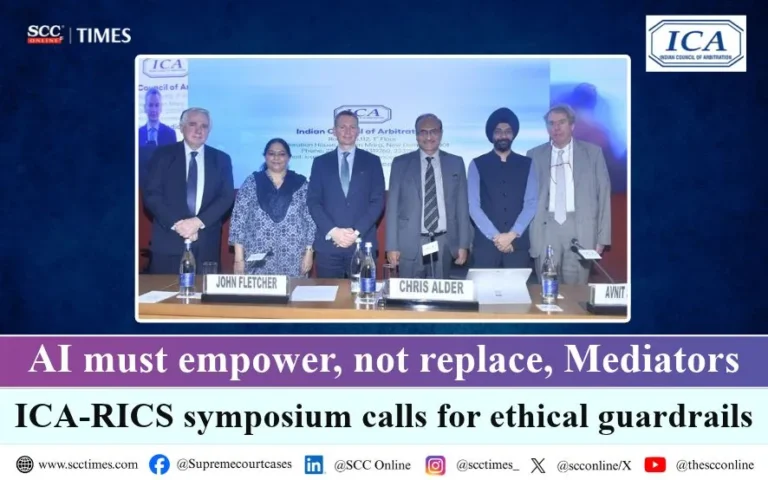
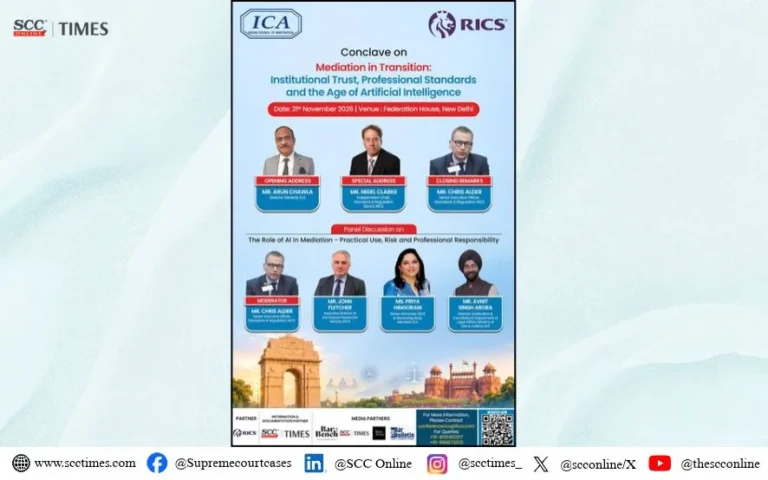
The Indian Council of Arbitration (ICA), in association with the Royal Institution of Chartered Surveyors (RICS), held a conclave titled “Mediation in Transition: Institutional Trust, Professional Standards and the Age of Artificial Intelligence” on 21 November 2026 at Federation House, New Delhi. A key session at the conclave was the panel discussion on “The Role of AI in Mediation: Practical Use, Risk and Professional Responsibility”.
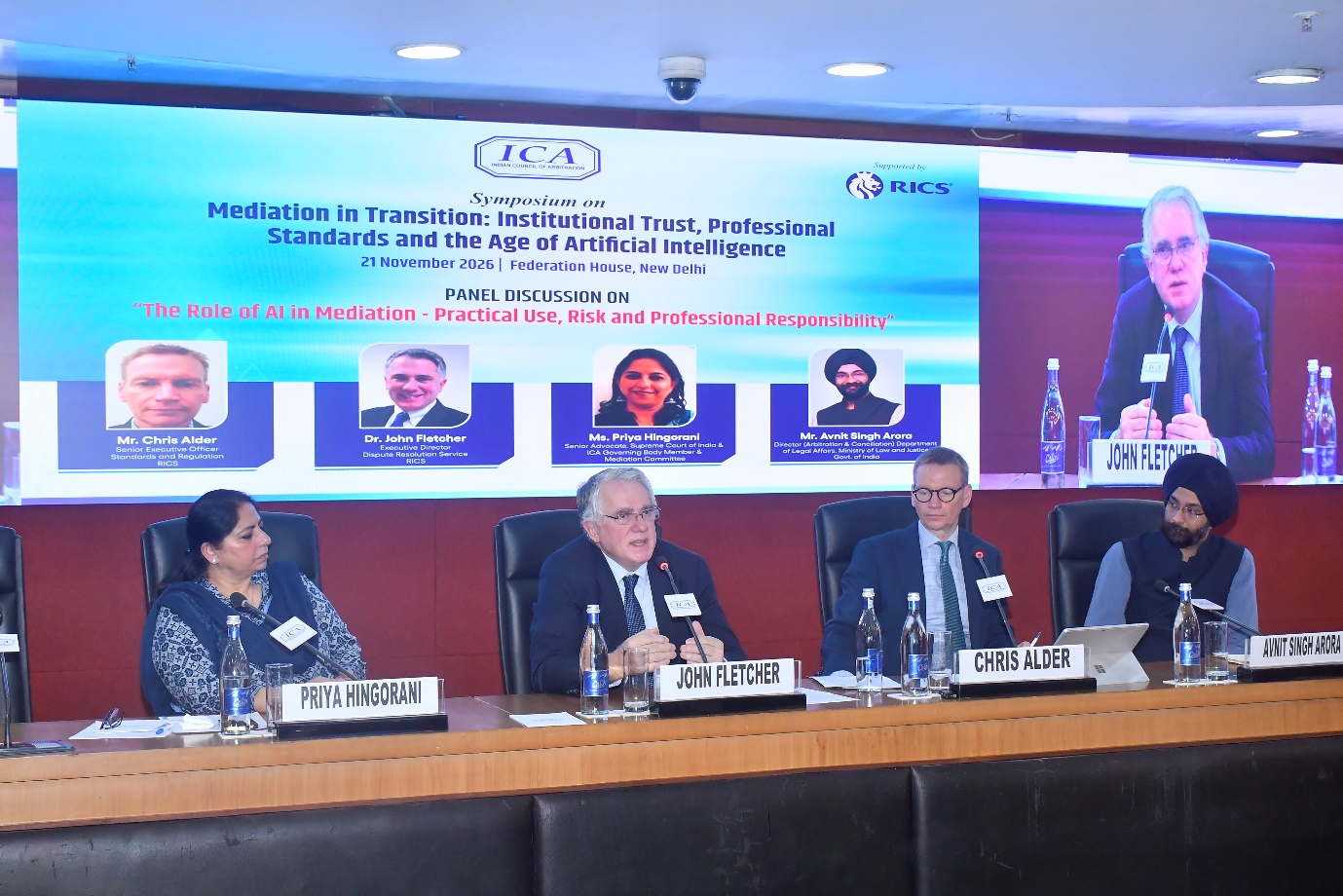
[In picture from left to right: Ms. Priya Hingorani, Dr. John Fletcher, Mr. Christopher Alder and Mr. Avnit Singh Arora]
Moderated by Mr. Christopher Alder, Senior Executive Officer, Standards and Regulation, RICS, the discussion featured Dr. John Fletcher, Executive Director, Dispute Resolution Service, RICS; Ms. Priya Hingorani, Senior Advocate, Supreme Court and Governing Body Member, ICA; and Mr. Avnit Singh Arora, Director (Arbitration and Conciliation), Department of Legal Affairs, Ministry of Law and Justice, Government of India.
The panellists considered the practical applications of AI across the mediation process, from pre-mediation preparation and assessment of party positions to document review, confidentiality, settlement negotiations and mediator training. They also examined the risks posed by inaccurate AI-generated material, predictive assessments and the disclosure of sensitive information to external platforms. A recurring theme was the distinction between using AI to support the mediation process and allowing it to influence or replace the judgement of the parties and the mediator.
AI in pre-mediation preparation: understanding the dispute and the parties’ positions
Opening the discussion, Mr. Christopher Alder focused on how the principles surrounding responsible AI use could be translated into practical implementation, beginning with pre-mediation preparation and settlement strategy. He invited Ms. Hingorani to explain where AI could legitimately add value before a mediation commenced.
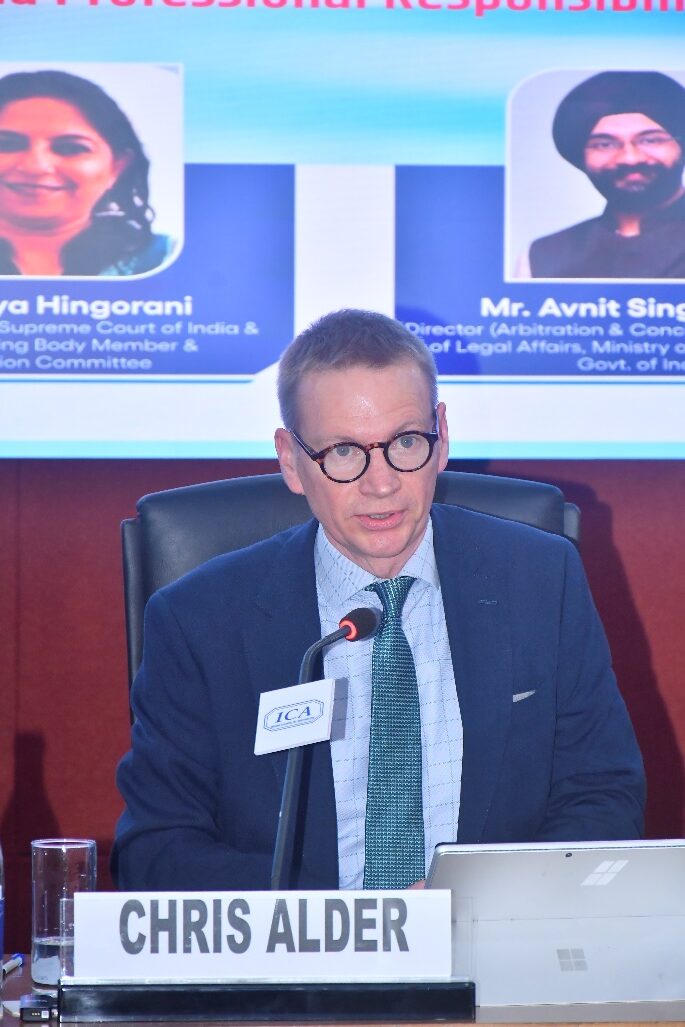
[In picture: Mr. Christopher Alder]
Ms. Priya Hingorani observed that the scope for using AI in India’s pre-litigation mediation framework remained limited, particularly because mediators were not ordinarily provided with a brief setting out the dispute before the proceedings began. Unlike certain other jurisdictions, where the mediator may receive information about the case in advance, a mediator appointed in a pre-litigation matter in India might have little understanding of the underlying dispute. She explained that this difficulty arose across different categories of disputes, including commercial, construction and property matters. Although parties could seek pre-litigation mediation through mediation centres, the mediator might not receive the material required to understand the dispute and prepare a strategy. She also referred to the developing institutional framework under the Mediation Act, 2023 (Mediation Act), and the need for the mediation ecosystem to evolve before the use of AI in preparation could be fully explored.
Mr. Avnit Singh Arora offered a broader framework, dividing mediation into consensual mediation arising from an agreement between the parties and pre-litigation mediation required under Section 12A of the Commercial Courts Act, 2015 (Commercial Courts Act). He further divided the process into three stages: pre-mediation, the mediation itself and its conclusion. In his view, the pre-mediation stage offered the greatest scope for AI because it involved preparation by three principal stakeholders: the mediation institution, the mediator and the parties. For mediators, AI could assist in analysing the dispute and understanding the issues involved. For parties, it could help them assess a mediator’s professional background and experience before making a selection. It could also assist in analysing litigation risks, particularly where parties were required to attempt pre-litigation mediation before pursuing a commercial suit. He explained that an assessment of the possible outcome of litigation could help parties understand the strength of their positions and decide how they wished to approach settlement negotiations.
In consensual mediation, AI could help parties test their existing positions, examine alternative strategies and consider possible approaches rather than entering negotiations with an unexamined or inflexible position. For mediation institutions, he identified administrative applications, including scheduling, selecting venues, determining language requirements and assisting parties in choosing a mediator. He considered that institutional use of AI could become increasingly relevant as the statutory mediation framework developed.
Dr. John Fletcher then drew attention to a distinction he considered fundamental to the use of AI in mediation: mediation is a negotiation, unlike litigation or arbitration, where parties prepare evidence and arguments to persuade a decision-maker. He explained that parties preparing for mediation should not focus exclusively on constructing the strongest possible case. They must also understand the weaknesses of their position and identify the issues on which they could compromise to secure outcomes that matter most to them. As he observed:
“When you go to mediation, you are going to a negotiation between the two parties. You are not going to a court, you are not going to an arbitrator, you are not preparing evidence to put in front of someone else to make a decision. You are therefore not trying to create the best possible case that you can make to put in front of a judge or an arbitrator.”
He considered AI particularly useful in this exercise because it could review extensive documentation, prepare timelines, identify strengths and weaknesses, and help parties prioritise their interests. However, the purpose of that preparation had to be understood: it was intended to improve the parties’ ability to negotiate, not merely to prepare a case for adjudication.
The mediator as a human decision-maker: AI as a support system
The discussion next turned to the mediator’s role when a party relies on an incomplete or unreliable AI assessment.
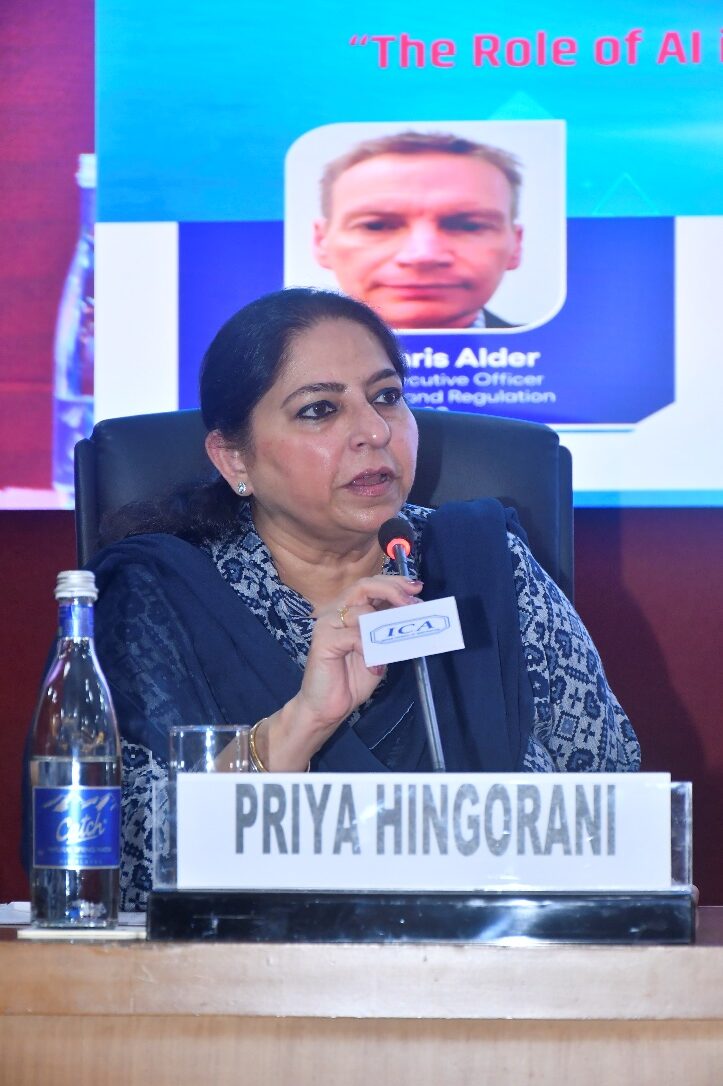
[In picture: Ms. Priya Hingorani]
Ms. Hingorani explained that, where the mediator had access to the case brief, AI could assist in analysing the dispute and developing a strategy. Drawing on her experience of conducting mediations regularly, she emphasised that mediation involved more than legal and factual analysis. It also required an understanding of human emotions, egos, confidentiality and the trust parties placed in the mediator. She described AI for a mediator as,
“…the support system, the legal researcher, the junior assistant.”
It could help organise the relevant material, identify legal strengths and weaknesses and assist in developing a strategy. However, the mediator had to retain control over the process. She also emphasised the importance of transparency. Where a mediator used AI to assess a dispute or consider possible solutions, the parties should be made comfortable with that use. She suggested that disclosure could be made during private caucus sessions, allowing the mediator to explain how AI-assisted analysis had informed the discussion without unnecessarily disclosing the underlying strategy. For Ms. Hingorani, trust and comfort were indispensable to mediation. Parties had to feel sufficiently comfortable with the mediator to speak openly about their concerns and interests. AI could not reproduce that relationship or replace the human contact through which a mediator developed an understanding of the parties.
Mr. Arora agreed that confidentiality and data privacy were central concerns. Referring to the growing availability of AI platforms and their reliance on large language models, he emphasised that mediators needed to examine the data protection and confidentiality safeguards offered by a platform before using it. He referred to the International Bar Association’s Guidelines on the Use of Generative AI in Mediation, published in June 2025, which address possible applications of generative AI by mediators, parties, their representatives and mediation institutions, alongside safeguards for managing associated risks. Mr. Arora identified three important safeguards: selecting a platform with appropriate data protection standards, cross-checking AI-generated outputs through independent human judgement, and making the relevant stakeholders aware of the limitations of AI-generated material. He cautioned that a mediator should not accept information generated by AI merely because it appeared persuasive or technically sophisticated. The mediator had to assess whether the material was accurate and whether its use could undermine the consensual nature of the process.
Dr. Fletcher approached the question of disclosure from the nature of mediation itself. He observed that parties were increasingly likely to use AI while preparing for litigation, arbitration or mediation. However, mediation was a commercial negotiation in which parties could bring forward information and arguments for discussion. He questioned whether safeguards developed for court proceedings should automatically be imposed on mediation, pointing out that the two processes had different purposes and obligations. At the same time, he identified categories of information that required particular protection, including information concerning minors, state security, highly confidential matters and sensitive commercial information. He cautioned that entering such material into an external AI platform without adequate safeguards could expose it beyond the intended users. He then identified a more fundamental danger: a party could rely on a persuasive but inaccurate AI-generated document to influence the other party’s negotiating position. This could result in a settlement that would not have been reached had the information been accurate. If the error were discovered after the settlement, the affected party might seek to challenge the agreement, potentially returning the dispute to litigation or arbitration. Dr. Fletcher considered that experienced mediators with relevant subject-matter expertise were particularly well placed to identify exaggerations, inaccuracies and overstatements in material presented by the parties.
Misleading the mediator or misleading the process?
The panellists then considered whether parties and their legal representatives should be subject to a specific obligation not to mislead the mediator through AI-generated material.
Dr. Fletcher distinguished the mediator’s role from that of a judge or arbitrator. A mediator does not decide the dispute, and the parties’ representatives do not owe the mediator the same primary duty that counsel owes to a court. He cautioned against creating a formal duty not to mislead the mediator that could blur the distinction between negotiation and adjudication. In his view, parties should be guided by general ethical obligations to act honestly, but the process should not be transformed into a judicial proceeding through excessive procedural safeguards.

[In picture from left to right: Ms. Priya Hingorani and Dr. John Fletcher]
Ms. Hingorani agreed that legal representatives had an important responsibility in this regard. Lawyers appearing with parties in mediation played a significant role in ensuring that clients did not make incorrect statements and that settlement terms were fairly and properly recorded. She also emphasised the mediator’s responsibility to recognise power imbalances. In commercial disputes, a stronger party might present documents or proposed terms that were disproportionately favourable to its own interests. A mediator with relevant domain expertise and experience could identify such issues, examine the documents independently and raise concerns during private caucuses. She emphasised that the mediator’s role was to facilitate the process, while the ultimate decision to settle remained with the parties, assisted by their legal representatives.
Mr. Arora developed this distinction further, explaining that the greater concern was not simply whether the mediator was misled, but whether the integrity of the mediation process was compromised. He differentiated between two forms of AI use. The first involved analysing documents and providing an overview of the dispute. The second involved predictive AI, which attempted to forecast the likely outcome of litigation or arbitration. In his view, predictive AI carried a greater risk because it could reinforce a party’s existing position or encourage it to adopt an even more rigid negotiating stance based on an anticipated litigation outcome. This could make settlement more difficult. He therefore considered that parties and mediators needed to exercise particular caution when relying on predictive assessments, especially where those assessments could influence the willingness of parties to negotiate.
Responding to inaccurate AI-generated material: the importance of reality testing
The discussion then addressed the practical response where a mediator identified an inaccurate summary, fabricated information or an unreliable AI-generated assessment.
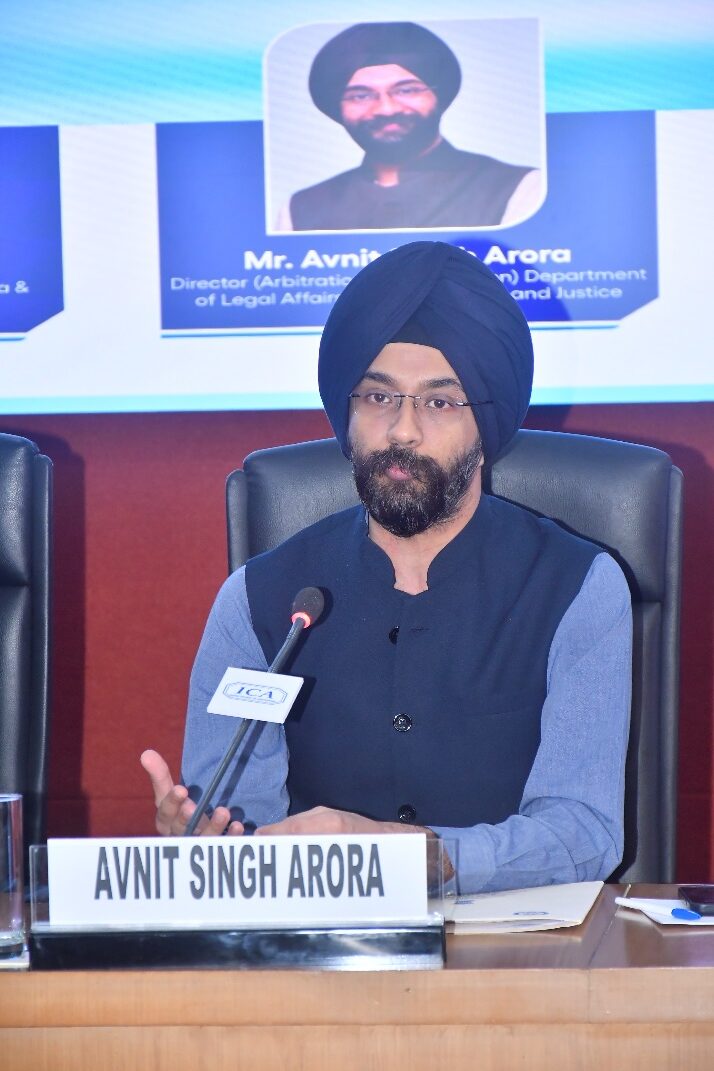
[In picture: Mr. Avnit Singh Arora]
Mr. Arora suggested that the mediator should consider addressing the issue privately rather than confronting the party in the presence of the other side. During a caucus, the mediator could explain why the material appeared unreliable and encourage the party to reconsider its position. The party could also be advised to test the analysis through another AI platform.
Dr. Fletcher agreed with this approach and referred to the use of reality testing during mediation. Where a mediator suspected that a document did not reflect the actual position, the mediator could discuss the concerns privately with the party that had produced it. If the document had already been shared, the mediator could also explore the other party’s response and reservations. He then drew attention to what he described as a significant aspect of mediation that had received insufficient attention during the discussion: the process must go beyond the evidence. He explained that parties generally approach mediation after they have been unable to settle their dispute on the basis of the evidence available to them. The mediator’s task is therefore not confined to analysing the documents or identifying weaknesses in the legal case. It involves understanding the parties’ wider circumstances, interests and needs, and exploring alternatives that could make settlement possible. He observed that an AI system could analyse only the information provided to it. It could not independently identify the personal, commercial or relational considerations that might motivate a party to settle. As Dr. Fletcher put it,
“Your job is to look beyond the evidence, to look beyond the papers, to talk to the parties, to find out what is driving them to try and reach a settlement and what other imaginative creative alternatives might allow them to get past the problem.”
He considered this ability to identify interests beyond the documentary record to be one of mediation’s greatest strengths and an area in which human mediators would continue to play an indispensable role.
Ms. Hingorani agreed, emphasising that mediators had to allow parties to express their emotions and concerns, particularly during private caucuses. She explained that parties often wished to discuss matters that they would not ordinarily place before a court or record in formal documents. She reiterated that AI could assist the mediator, but the mediator’s personal skills and ability to assess the parties’ positions remained decisive.
Preserving the human element and extending AI to mediator training
When invited to identify a practical principle for maximising AI’s effectiveness in mediation, Ms. Hingorani offered a concise formulation:
“…let the AI tools help us to see the dispute clearly. But let the parties decide how they want to go about it.”
She acknowledged that AI would significantly change the work of mediators, arbitrators and litigators. However, she maintained that mediation would continue to depend on human emotions, empathy and the mediator’s ability to guide parties through difficult conversations. She concluded that the process should be: “assisted AI, not AI led mediations”.
She also discussed the importance of training mediators to recognise emotions and respond with empathy. Referring to mediation training programmes conducted through ICA and court-annexed mediation centres, she explained that master trainers and judges emphasised the counselling and human engagement involved in the initial stages of mediation. She referred to a recent Samadhan Samaroh, 2026 organised by the Chief Justice of India, through which approximately 4,000 matters were settled through mediation involving legal services authorities and other mechanisms. She emphasised that mediation was not confined to commercial disputes; it also addressed family disputes, land disputes and cheque-bouncing matters. In smaller cities and district courts, she observed, the availability of AI remained limited. Mediators continued to rely on compassion, fairness, ethical conduct and the ability to build trust with parties.
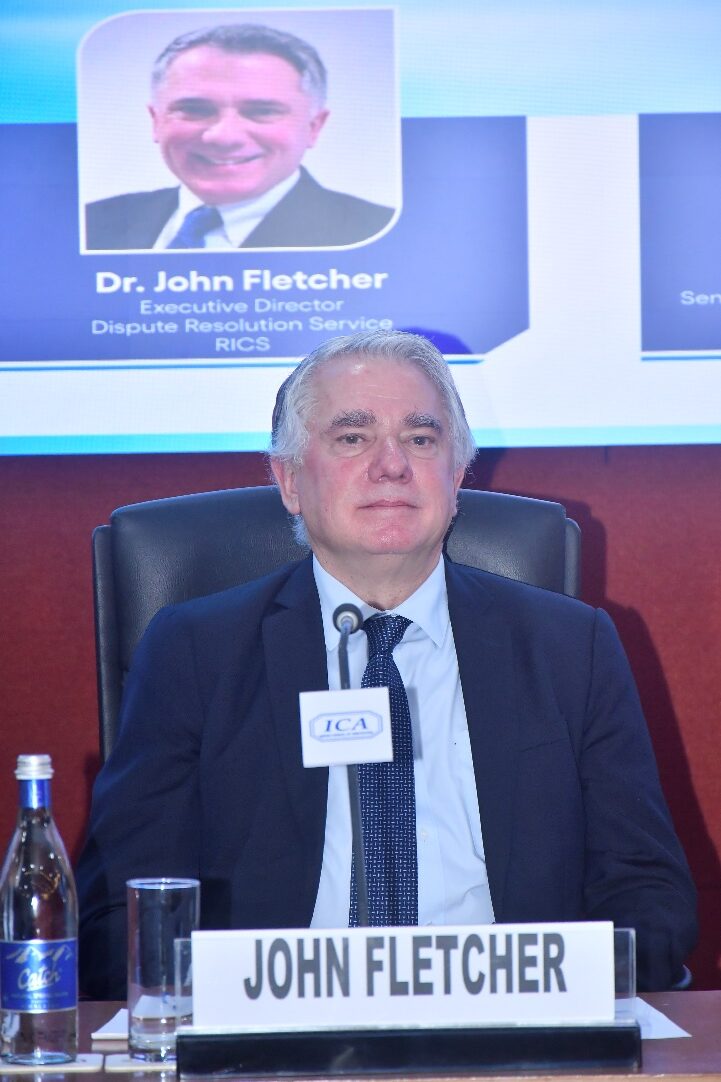
[In picture: Dr. John Fletcher]
Dr. Fletcher advised lawyers to use AI not merely to strengthen their clients’ arguments but also to identify weaknesses in their positions before entering mediation. He explained that parties were preparing for negotiation rather than adjudication. Accordingly, understanding the weaknesses of a case was as important as identifying its strengths, since this helped parties determine what they could realistically compromise.
Mr. Arora agreed that AI should assist parties, mediators and institutions rather than replace them. He also identified mediator training as an area where AI could contribute to the development of India’s mediation ecosystem. He suggested that AI-assisted mock mediation sessions could help train mediators and familiarise parties with the process. Such tools could expand training opportunities, particularly in Tier 2 and Tier 3 cities where access to experienced trainers remained limited. However, he emphasised that technology would need to operate alongside human trainers and professional guidance.
AI governance and professional standards: avoiding over-regulation
During the audience interaction, a question was raised on trust, accountability and the professional standards required to govern AI use in mediation.
Dr. Fletcher referred to the growing number of AI standards being developed internationally, including by RICS. He encouraged practitioners to examine the substance of these standards, observing that they contained important nuances concerning responsible use. He emphasised that AI should function as a tool for informing and analysing, rather than misleading parties or undermining confidence in the process.
Mr. Arora referred to the Mediation Act and the role envisaged for the Mediation Council of India in developing standards for mediators and the mediation process. He suggested that the use of AI could eventually be addressed through such professional standards. However, he cautioned against making those standards overly prescriptive. In his view, a distinction had to be maintained between setting professional standards and imposing detailed regulation that could restrict technological innovation.
Mr. Alder agreed that outcome-oriented standards could provide flexibility and allow innovation while maintaining accountability.
Section 12A pre-litigation mediation: party autonomy and the problem of non-starter proceedings
Another audience member questioned the practical effectiveness of mandatory pre-institution mediation under Section 12A of the Commercial Courts Act. The concern was that although a plaintiff was required to initiate the process, the opposite party could decline to participate, resulting in a non-starter mediation.
Responding to the concern, Ms. Hingorani acknowledged that non-starter proceedings remained a practical difficulty. However, she emphasised that mediation was fundamentally consensual and that parties could not be compelled to reach a settlement. She explained that the statutory requirement was intended to ensure that parties explored the possibility of settlement before approaching the court. She also referred to the confidentiality of mediation, explaining that mediators and judges were not expected to disclose the reasons why a mediation had failed or why a party had not participated.
Mr. Arora explained that the objective of Section 12A of the Commercial Courts Act was to bring parties to the negotiating table, while preserving party autonomy over whether to settle. He referred to the role of Legal Services Authorities in conducting pre-institution mediation and the possibility of a wider institutional framework improving the availability and quality of mediation services. He anticipated that greater participation by mediation service providers could improve institutional capacity and expand the options available to parties.
AI in construction disputes: analysing extensive documentary records
An audience member from the engineering and technology sector questioned how AI could meaningfully assist mediation when the information determining the parties’ positions was often confidential and unavailable in public databases.
Dr. Fletcher responded with an example from construction disputes. Such disputes could involve tens of thousands of pages of documents relating to delay analysis, supply chains, causes of delay and associated costs. He explained that AI could assist by analysing the parties’ own documentary records, including Scott Schedules and delay analyses, and generating summaries or alternative scenarios for consideration during negotiations. He clarified that this use did not depend on public databases. Rather, AI could streamline the analysis of extensive material already held by the parties, allowing them to focus their discussions on the issues that required negotiation. The distinction was important: AI’s value in mediation did not necessarily depend on predicting the outcome of a dispute from publicly available information. It could also lie in organising and analysing large volumes of private, case-specific documents.
Predictive AI, jurisdictional accuracy and international disputes
An audience member then raised questions about predictive AI, including how such systems should be trained and what safeguards were needed when they generated possible outcomes of disputes.
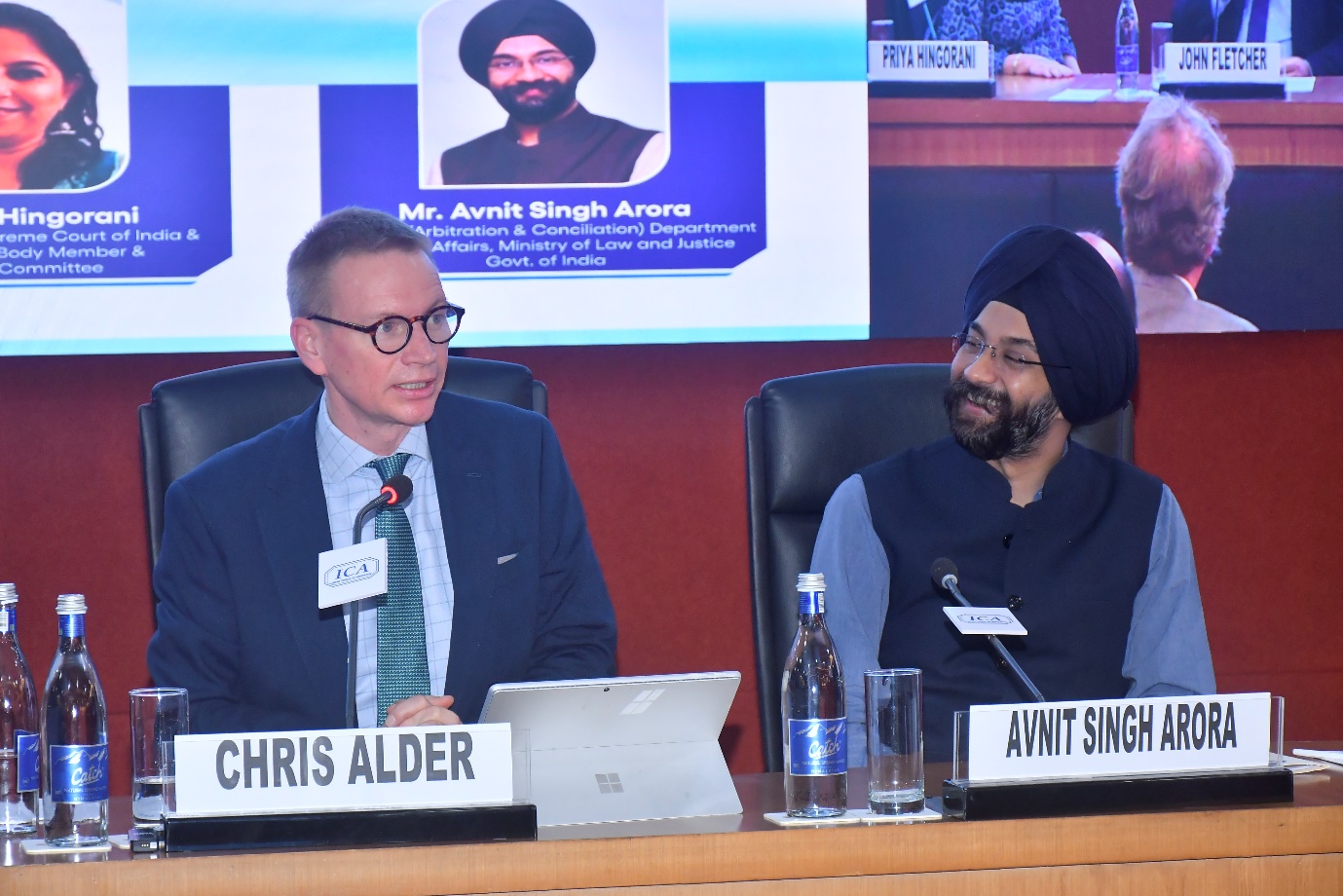
[In picture from left to right: Mr. Christopher Alder and Mr. Avnit Singh Arora]
Mr. Arora explained that predictive AI could be useful in assessing the likely outcome of adjudicatory proceedings, including litigation or arbitration. He referred to the use of outcome prediction in the context of online dispute resolution for Micro, Small, and Medium Enterprises (MSME) related disputes. He emphasised that any predictive system would need to be trained and configured with reference to the facts of the dispute, the applicable legal provisions and relevant judicial precedents. It would also have to be confined to the jurisdiction governing the dispute. He cautioned that a system relying on laws or judgments from another jurisdiction could produce misleading results. The platform would therefore need to ensure that the applicable legal framework and precedents were correctly identified before generating a prediction.
The discussion also touched upon mediation in international commercial disputes. Ms. Hingorani observed that Indian mediators were capable of handling disputes involving overseas parties, provided the parties agreed to participate and accepted the relevant jurisdictional arrangements. Mr. Arora referred to the recognition of international mediation in the Mediation Act and the growing consideration of mediation in investment treaty disputes. He noted that bilateral investment treaties may provide for an attempt at mediation before parties proceed to arbitration. He also distinguished the possibility of international mediation from the consensual nature of the process: parties must agree to mediate and participate in the process.
Trust, confidentiality and the limits of predictive intervention
Towards the end of the discussion, an audience member raised a concern that extensive reliance on predictive AI by a mediator could create a trust deficit, particularly in disputes involving family relationships, family-owned businesses and confidential personal information.
Ms. Hingorani explained that mediators did not ordinarily begin a mediation by using AI. In her experience, AI might come into the discussion when a party or its counsel introduced an AI-generated assessment during a caucus. A mediator could then consider whether it was necessary to examine the material independently. She emphasised that parties should be informed if the mediator had used AI to consider a possible solution or prediction. She also stated that mediators should avoid entering names, case details or identifying information into AI platforms when seeking assistance. She reiterated that trust was developed through the mediator’s interaction with the parties, particularly during the first few sessions, and that professional and ethical standards would be important as the mediation framework evolved.
The final question concerned whether AI could influence the outcome of mediation and whether algorithmic bias could undermine the mediator’s neutrality.
Mr. Arora responded that appropriate safeguards and clear limits on the use of AI were essential to preserve trust among parties and other stakeholders. He cautioned against allowing AI to become a mechanism for influencing the positions adopted by parties, emphasising that its use should remain within the boundaries of applicable professional standards.
Conclusion
The panel discussion examined the growing role of AI in mediation while drawing a clear distinction between technological assistance and the human judgement required to resolve disputes. The panellists identified practical applications in pre-mediation preparation, document review, litigation-risk assessment, mediator training and the administration of institutional mediation. At the same time, they highlighted the risks associated with confidentiality breaches, inaccurate summaries, fabricated or misleading material, predictive assessments and the possibility of AI-generated information distorting settlement negotiations.
The discussion underscored that mediation is not simply an exercise in evaluating evidence or predicting legal outcomes. It is a consensual process that requires an understanding of the parties’ interests, emotions, commercial priorities and willingness to compromise. AI can help parties and mediators understand the material before them, but it cannot independently identify the human considerations that often make settlement possible. The central message emerging from the session was that AI should strengthen the mediation process without displacing the mediator’s professional judgement or the parties’ autonomy. As the use of AI expands, the development of proportionate professional standards, effective confidentiality safeguards and human oversight will be essential to maintaining institutional trust.
SCC Times is the Official Information & Documentation Partner for ICA–RICS Conclave 2026. Read more about the event here.





0 replies