A contractor’s right not to be commercially penalised before a court has returned any finding of guilt on one side, and the State’s right to protect the public interest, on the other.
Introduction
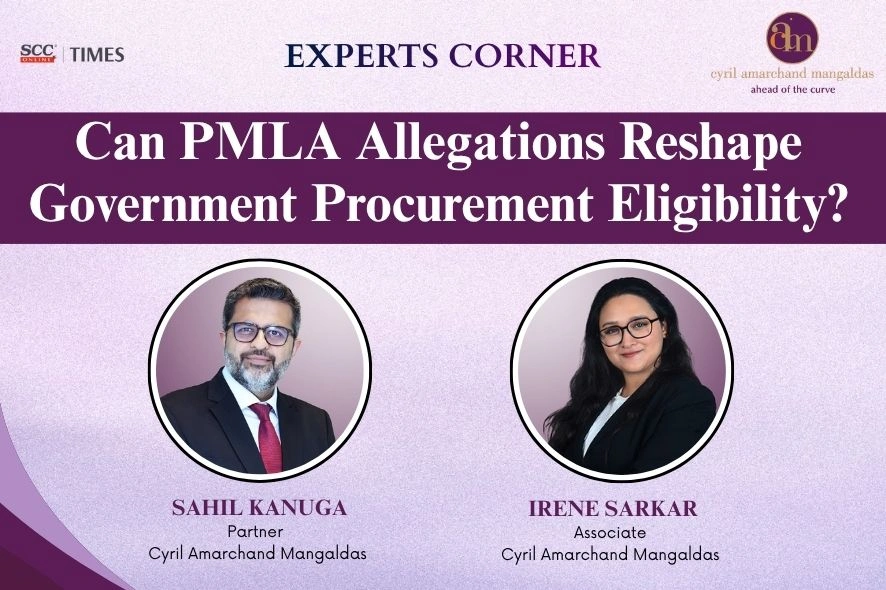
The Delhi High Court’s judgment in Dhanvine Engg. (P) Ltd. v. Delhi Jal Board (the judgment)1 sits at an uncomfortable intersection: A contractor’s right not to be commercially penalised before a court has returned any finding of guilt on one side, and the State’s right to protect the public interest, on the other. The Court’s decision prioritises the latter but leaves certain pertinent questions unanswered that may well be contested down the line. This piece examines the ruling from both sides, not to relitigate it, but to understand what it signals for contractors and entities navigating India’s public procurement landscape.
The case: Background contentions and holding
The Delhi Jal Board (DJB/respondent), responsible for sewage treatment and water supply in Delhi, floated a tender for the construction of four decentralised sewage treatment plants and sewage pumping stations. After a first round of bidding was withdrawn for technical reasons, bids were re-invited in January 2026 with a newly introduced eligibility condition vide Clause 16. Clause 16 disqualified any bidder, or any entity whose current or former Director or Key Managerial Personnel, was the subject of a registered first information report (FIR) or filed charge-sheet in connection with fraud, corruption, or economic offences arising from dealings with the DJB, or registered by a specialised agency such as the Anti-Corruption Branch (ACB), Central Bureau of Investigation (CBI), Enforcement Directorate (ED), or Economic Offences Wing. M/s Dhanvine Engineering Pvt. Ltd. and M/s Ayyappa Infra Projects Pvt. Ltd. (the petitioners), along with their Directors, were accused in the Prevention of Money-Laundering Act, 2002 (PMLA) case registered by the ACB in connection with an alleged scam involving the augmentation of ten sewage treatment plants valued at approximately Rs 1493 crores. Rendered ineligible under Clause 16, the petitioners approached the Delhi High Court challenging the same.
The petitioners argued that Rule 151, General Financial Rules, 2017 (GFR) — binding on autonomous bodies including the DJB — permits debarment only upon conviction, and only after affording a reasonable opportunity of representation; Clause 16, operating at the pre-conviction stage, was therefore without legal basis, and violated the presumption of innocence guaranteed under Article 21 of the Constitution of India. The petitioners contended that an FIR or a charge-sheet carries no evidentiary value and does not amount to a finding of guilt, as the former is not substantive and merely initiates an investigation whilst the latter reflects nothing more than the investigating officer’s opinion. They further submitted that the newly introduced eligibility condition effectively amounted to blacklisting, with grave and enduring civil consequences.
The respondent countered that a tender authority exercises full autonomy in deciding who it wants to do business with and is the best judge of its own requirements. Therefore, as long as conditions are not mala fide or tailor-made to target specific parties, courts must exercise restraint and not interfere in such tender processes. The respondent further contended that given the pendency of PMLA proceedings against the petitioners, it possessed sufficient material to conclude that the petitioners had engaged in criminal conduct in the execution of its contracts with the respondent, thereby justifying the impugned condition in the interest of a project with significant public ramifications. It urged that the condition created a legitimate and independent class of parties, facing criminal investigation arising from complaints filed by the respondent itself. It was the respondent’s case that judicial review cannot be used to shield private commercial interests at the expense of public interest.
The Delhi High Court dismissed both petitions, holding that Clause 16 was neither arbitrary nor mala fide and that there was a valid and rational basis for differentiation of the petitioners as a distinct and separate class of parties. The court held that the GFR sets only a basic standard, which procuring entities may supplement with stricter conditions. Additionally, it was held that the presumption of innocence operates only within criminal proceedings and not in the commercial context of tender eligibility. The court based this interpretation on Section 24 PMLA, which operates as a statutory presumption of guilt against a person charged with money laundering. As per the provision, the burden lies squarely on the accused to dislodge the presumption during trial. The court treated this inversion of the ordinary burden of proof as a meaningful contextual factor, thus lending further justification to the incorporation of Clause 16 as a bona fide, preventive measure adopted in the public interest — not a punitive one. In the court’s unequivocal view, where private commercial interest and public interest collide, the latter always takes precedence over the former.
The petitioners appealed to the Supreme Court, but the Supreme Court was not inclined to interfere with the judgment.
A dual-lens analysis: Petitioner and respondent perspectives
Viewed from the petitioner’s perspective, the judgment — however defensible on its facts — opens the door to a set of practical consequences that are difficult to ignore. We have analysed the practical ramifications under the following heads:
1. Pre-conviction exclusion effectively functions as punishment: Whilst the court characterises Clause 16 as preventive rather than punitive, the practical effect on a contractor facing protracted the PMLA and the Prevention of Corruption Act, 1988 proceedings, which routinely stretch over years, is indistinguishable from punishment. This means that a company might be commercially devastated by the mere act of investigation, regardless of the eventual outcome of trial.
2. The “not civil death” finding is difficult to accept in practice: The court’s comfort that the petitioners “can continue to carry on their business with other entities” does not engage with the practical reality facing a contractor whose pipeline is built almost entirely around government infrastructure projects. An exclusion by a body as prominent as the DJB does not operate in isolation; it signals to every other procuring entity conducting background checks, setting a precedent that others are likely to replicate and producing precisely the cascading commercial consequences the petitioners had warned against.
Contrarily, when examining the judgment through the respondent’s lens, the judgment is a timely affirmation that procuring authorities must retain the autonomy to protect the public interest without waiting for criminal courts to deliver their verdict. The most prominent aspects are analysed under the following heads:
1. The nature of the work demands the highest integrity: The public interest dimension here is not abstract — it is tangible, immediate, and constitutional. The work directly concerns the construction and long-term operation of sewage treatment infrastructure; any failure in the execution of which bears immediate consequences for groundwater quality and the pollution levels of the Yamuna River. The court acknowledged that maintaining adequate public health and sanitation infrastructure is a constitutional obligation of the State under Articles 21 and 47 of the Constitution of India. The contractor entrusted with such work must, accordingly, be a person of unimpeachable integrity.
2. The complaint was by the respondent itself: The FIR that triggered the PMLA proceedings, was registered on the basis of a complaint filed by the DJB’s own vigilance officer, preceded by technical audits, vigilance enquiries, financial scrutinies, and multiple analytical approvals. Hence, it was demonstrated that the DJB did not act on rumour or hearsay. This is not a case of a procuring entity acting on external noise — it had first-hand, documentary material establishing, to its satisfaction, that the petitioners had allegedly engaged in criminal conduct in the very contracts they had executed for the DJB. The condition was, therefore, grounded in institutional experience, not suspicion.
3. “Preventive governance” as a legitimate risk management tool: Public procurement contracts are executed in a fiduciary capacity, and it is well within the rights of a procuring authority to adopt principles of preventive governance2 and make decisions based on credible risk assessment. To ignore active PMLA proceedings — themselves founded on material gathered by the DJB — and award a high-value, public-health project to the very entities under investigation, only to potentially face fraud again, would itself constitute a failure of governance.
4. There is no fundamental right to compel government to enter into commercial contracts: The petitioners’ attempt to invoke Article 21 as a gateway to tender participation fundamentally misconstrues the scope of that provision. It is settled law that participation in a tender or compelling the Government to enter into a business relationship with any entity, is not a fundamental right.3 Furthermore, the presumption of innocence operates only within the domain of criminal proceedings — it does not import itself into the commercial evaluation of tender eligibility. The court correctly drew a firm line between the two: who may bid for a government contract is a question of commercial law, not criminal law, and the two must not be conflated.
Final thoughts: What this judgment signals
Where a procuring authority possesses first-hand evidentiary material gathered through its own vigilance mechanisms — pointing to alleged criminal conduct by a contractor in the execution of its very contracts — it is difficult to fault that authority for exercising caution before inviting the same contractor back to the table. The court’s conclusion that such a condition is preventive rather than punitive, and that it reflects a legitimate exercise of preventive governance, is broadly consistent with the settled principles governing judicial review of tender conditions.
That said, the judgment is not without its tensions. The line between a condition that is “preventive” and one that is effectively “punitive” is, in practice, far thinner than the court’s reasoning suggests — particularly for contractors whose commercial existence is inseparable from government procurement. Additionally, the treatment of the GFR as a minimum standard capable of being freely supplemented, without more, carries the risk of a progressive erosion of the protections that Rule 151 was specifically designed to provide. Add to that, there is no answer as to what happens if, at the end of the trial, it emanates that the proceedings under PMLA were ill-founded.
What the judgment ultimately reflects is a broader judicial instinct, increasingly visible in public procurement jurisprudence — that where governance, public health, and institutional integrity are at stake, courts will afford procuring authorities considerable latitude. Whether that latitude, over time, is exercised with the discipline that public procurement demands remains to be seen.
For now, the scales have tipped. And as the court made clear — in the contest between private commercial interest and the public interest, the latter trumps the former.
*Partner, Cyril Amarchand Mangaldas.
**Associate, Cyril Amarchand Mangaldas.
2. Central Vigilance Commission, Vigilance Manual (updated 2021).
3. Erusian Equipment & Chemicals Ltd. v. State of W.B., (1975) 1 SCC 70.