








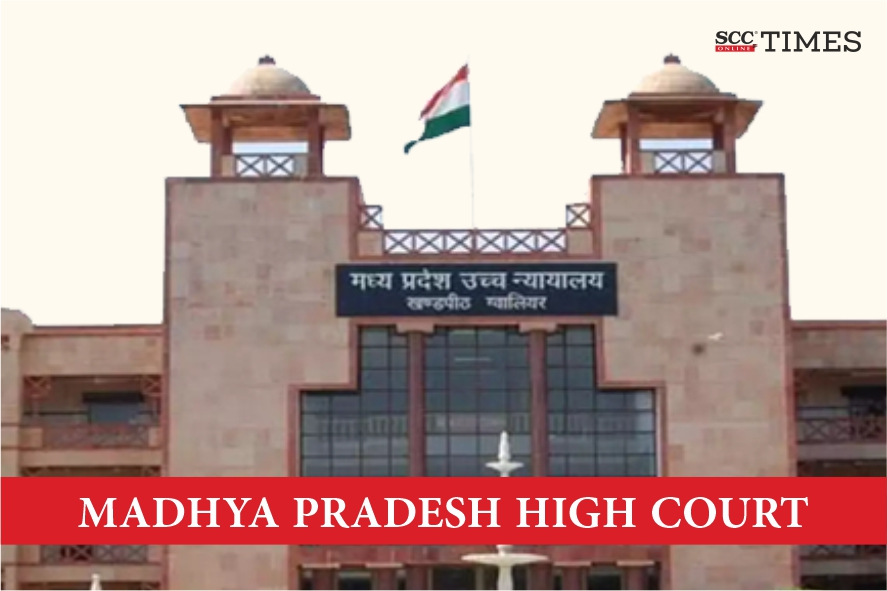
Madhya Pradesh High Court: In an anticipatory bail application filed under Section 482 of the Bhartiya Nagarik Suraksha Sanhita, 2023 (BNSS), and Section 438 of CrPC, a single-judge bench of Devnarayan Mishra, J., granted anticipatory bail to the applicant with strict conditions, including cooperation with the investigation and submission of digital evidence.
The instant matter pertains to crime registered at Mahila Thana, District Bhopal, for the alleged offence under Section 376(2)(n) of IPC. The applicant and the victim have known each other since 2006 and were in a consensual relationship from 2010 to 2018. In 2018, the applicant moved to Bangalore for work, and there was no further communication between them. The FIR was lodged on 10-12-2024, alleging that the applicant had violated the victim’s privacy under the false pretext of marriage. The victim contended that the applicant repeatedly promised to marry her over 8-10 years and later refused, leading to the registration of the case.
The applicant contended that the applicant and the victim were in a long-term consensual relationship. It was contended that no allegations of privacy violation were reported until the FIR was lodged in December 2024. It was argued that the delay in filing the FIR raises questions about the genuineness of the allegations. It was stated that since both parties are adults and professionals, no case is made out against the applicant.
However, the respondents opposed the bail application and contended that applicant misled the victim into a relationship by falsely promising marriage for nearly a decade. It was alleged that the applicant not only violated the victim’s privacy punishable under Section 376(2)(n) IPC but also shared her photographs within his friend circle, necessitating custodial interrogation.
The Court noted that both the applicant and the victim were in a consensual relationship from 2010 to 2018. The Court noted that no allegations of privacy violation were made until the FIR was filed in December 2024. The Court further noted that the FIR was filed after a significant gap of six years, raising concerns regarding the credibility of the allegations. The Court also noted that both the applicant and the victim are adults and professionals, which is a relevant factor to be considered in the=is decision.
Without commenting on the case’s merits, the Court deemed it appropriate to grant anticipatory bail on conditions that —
-
The applicant is to furnish a personal bond of Rs. 50,000/- with one surety of the like amount.
-
The applicant must appear before the investigating officer and cooperate with the investigation.
-
The applicant must submit all documents and intimate photographs of the victim in his possession to the investigating agency and the victim.
-
The applicant must hand over all electronic devices, including mobile phones and laptops, along with social media passwords like Facebook, Instagram, WhatsApp etc., to the investigating agency.
-
If any objectionable material is found, it shall be handed over to the victim and the investigating agency.
-
The investigating agency must return the devices after extracting the necessary data.
-
The applicant is to comply with all conditions under Section 482(2) of BNSS.
[Tej Narayan Sharma v. State of M.P., 2025 SCC OnLine MP 975, Decided on 05-02-2025]
Advocates who appeared in this case:
Shri Qasim Ali, Counsel for the Applicant
Shri Pratyush Tripathi, Counsel for the Objector
Shri B.K. Upadhyay, Government Advocate, Counsel for the State







0 replies