Settlement demand extortion or negotiation? Bombay HC quashes FIR over demand of ₹25 lakh each by flat purchasers
The Court held that an exorbitant settlement demand, without an intentional threat or fear of injury, does not attract Section 385 IPC.

Bringing you the Best Analytical Legal News


The Court held that an exorbitant settlement demand, without an intentional threat or fear of injury, does not attract Section 385 IPC.
The complaint alleged that despite investing nearly ₹42 lakh and waiting over a decade, the homebuyers were handed an incomplete unit without an occupation certificate, while the builder also failed to honour its pre-EMI commitment, adversely affecting their financial credibility.

“We must take judicial notice of the fact that since times of yore until contemporary ones, a daughter’s pregnancy outside wedlock for an average Indian is a nightmare. It always invites uncontrollable reactions from parents, mostly violent, either for themselves or the daughter or the wrongdoer or both.”

“Though there was no progress in the trial and even the charge was also not framed and the applicant was incarcerated since 22-12-2021, however, the material on record prima facie showed the applicant’s involvement in the crime.”
“In cases of domestic violence, it is not prudent to look for independent corroboration for the evidence of a victim, particularly when the incidents of domestic violence including ill-treatments and harassments often occur within the confines of a house.”

The suicide note has no date, creating doubt about when it was written. It neither spells out any circumstance, which can be labelled as abetment on the part of wife and her brothers, nor does it disclose any proximate reason for the suicide.
“Compromises in heinous crimes are not in the interest of the society since it will then be easy for the accused persons to get the consent of such informants by putting pressure or using money power.”
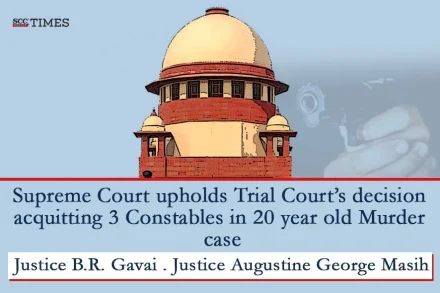
“It must be established that all the accused had preplanned and shared a common intention to commit the crime with the accused who has actually committed the crime.”
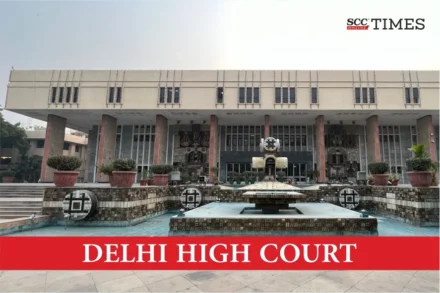
Delhi High Court affirmed that Explanation-II of Section 44(1)(b) of the PMLA applies retrospectively

“In dealing with circumstantial evidence, there is always a danger that conjecture or suspicion lingering on mind might take the place of proof and therefore, the Court has to be watchful and ensure that such thing should not take place.”
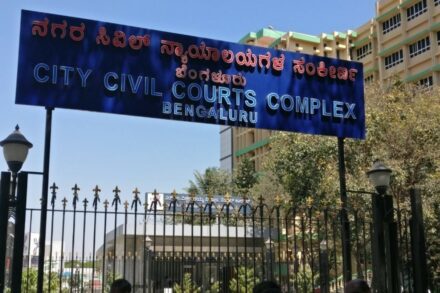
Court of 30th Additional Chief Metropolitan Magistrate, Bengaluru: I.P. Naik, 30th ACMM, addressed a case wherein a pillion on a bike harassed

Supreme Court: Drawing an interesting analogy to explain the scope of Section 34 of IPC, the bench of Sanjay Kishan Kaul and

Calcutta High Court: A Division Bench of Joymalya Baghi and Suvra Ghosh, JJ., partly allowed a criminal appeal against the order of the

Supreme Court: The Bench comprising of Navin Sinha and K.M. Joseph, JJ., while addressing a criminal appeal regarding assault committed during a
Kerala High Court: A Single Judge Bench of Raja Vijayaraghavan J., decided a bail application filed under Section 483 of the Code

Madhya Pradesh High Court: A Division Bench comprising of Rajendra Kumar Srivastava and S.K. Gangele, JJ. allowed the appeal and acquitted the