Allahabad HC: No Right to Conduct Regular Religious Congregation on Public Land; Private Use Also Subject to Regulation
“Freedom, in a constitutional society, is always accompanied by responsibility towards others.”

Bringing you the Best Analytical Legal News


“Freedom, in a constitutional society, is always accompanied by responsibility towards others.”
In the flood plains, people cannot be allowed to make their houses, tenements, sheds, etc., under the pretext of graveyard or for any other purpose.
“The petitioners are, undisputedly, encroachers and, therefore, no indulgence can be granted by this Court.”
The Court stated that for ascertaining the charges to be recovered from the encroacher, the land-owning authorities shall consider the area of encroached land, period for which the encroached land was illegally used, the market price or circle rate of the encroached area.
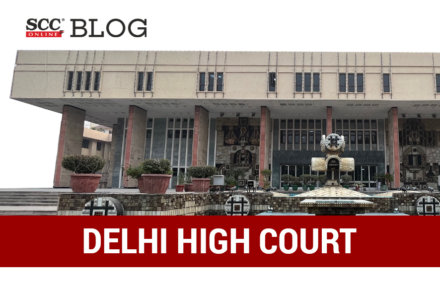
The Delhi High Court held that places of worship could not encroach on public land and therefore, permitted demolition of parts of Mandir and Masjid to make pedestrian pathway uniform.
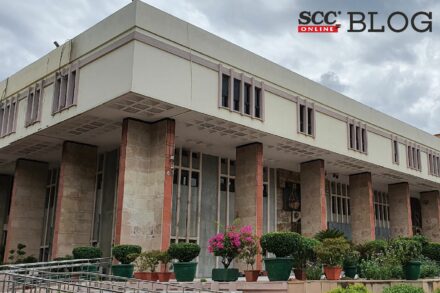
Delhi High Court: Expressing that, the mere fact that certain encroachments represent religious structure cannot possibly detract State from its obligation, Yashwant
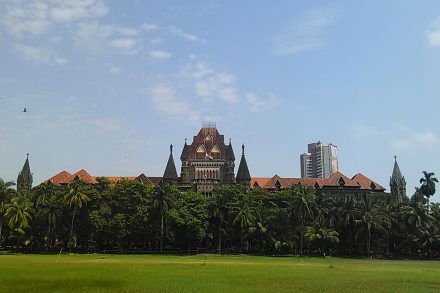
Bombay High Court: While emphasizing the aspect of encroachment of public land, the Division Bench of Dipankar Datta, CJ and G.S. Kulkarni,

Supreme Court of Kenya: The 5-Judge Bench of D. K. Maraga, CJ, P. M. Mwilu, DCJ, M. K. Ibrahim, S. C. Wanjala,