Delhi High Court: Disputes arising after execution of settlement agreement remain arbitrable
“Execution of a full and final settlement may not preclude a party from taking recourse to arbitration if a dispute arises from the settlement itself”
BPL Ltd., having knowingly entered into the bill discounting agreement, was bound by its terms. Since it defaulted on repayment for years, the stipulated 36% compound interest could not be considered burdensome or oppressive.
The respondent submitted that no arbitration clause existed in light of the IRDAI Circular dated 27-10-2023 and Gazette Notification dated 23-1-2024, which had de-notified and superseded arbitration clauses in fire insurance policies.
“At best, the letter consenting to appointment of sole arbitrator, was a conditional acceptance of the appointment of a sole arbitrator. The condition being that the sole arbitrator would adjudicate the disputes between the petitioner and both the respondents.”
“Such an order merely terminates the arbitral proceedings on account of the claimant’s default in filing the statement of claim and does not involve any adjudication or determination of the rights or obligations of the parties.”
by Arush Khanna* and Gurdev Singh Tung**
“The scope of the intervention of the court in arbitral matters is virtually prohibited, if not absolutely barred.”
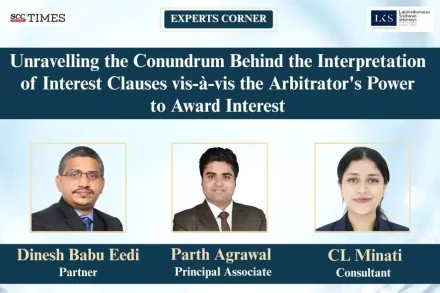
by Dinesh Babu Eedi*, Parth Agrawal** and CL Minati***
“When a party is unable to analyse, comment or argue on a contention raised by the other party, it will certainly be deemed as a breach of natural justice and thereby, also a violation of the most fundamental notions of justice.”
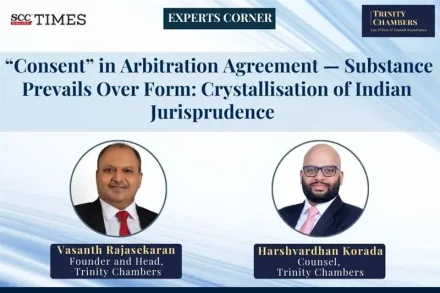
by Vasanth Rajasekaran* and Harshvardhan Korada**
by Saksham Mishra* and Kartikey Agrawal**
by Bhavana Chandak Dhoundiyal* and Shambhavi Upadhyay**
by Arush Khanna* and Akarsh Pandey**
by Avineet Chawla* and Piyush Raj**
The remedy under Section 9 is equitable, discretionary in nature and primarily exercised to preserve subject matter of arbitration or to prevent frustration of arbitral proceedings. Such power must be exercised cautiously, particularly where interim relief sought effectively amounts to grant of final relief or impinges upon statutory powers conferred under Companies Act, 2013.
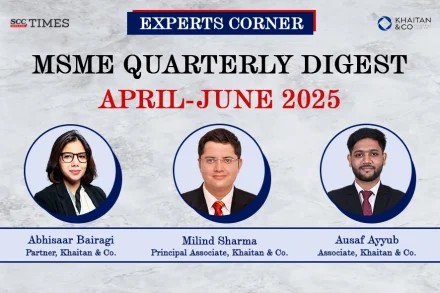
by Abhisaar Bairagi*, Milind Sharma** and Ausaf Ayyub***
“The issue of under-stamping is often weaponized in arbitral proceedings and used to trip up the adjudication of disputes by way of arbitration. Arbitrators, being private persons, tend to be timid and send the instruments to the Stamp Authorities despite being entitled to compute the stamp duty amount and penalty component themselves.”
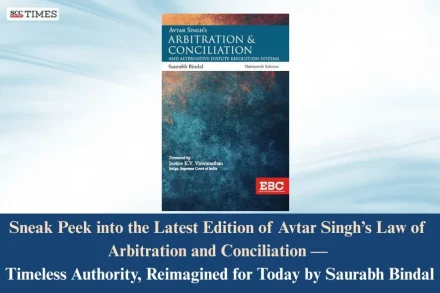
by Arin Chatterjee* and Aranya Chatterjee**
Vedanta is engaged in a product sharing contract with the government of India, for exploration, discovery, development and production of petroleum resources in relation to an onshore oil and gas block known as Rajasthan Block, since 1995.