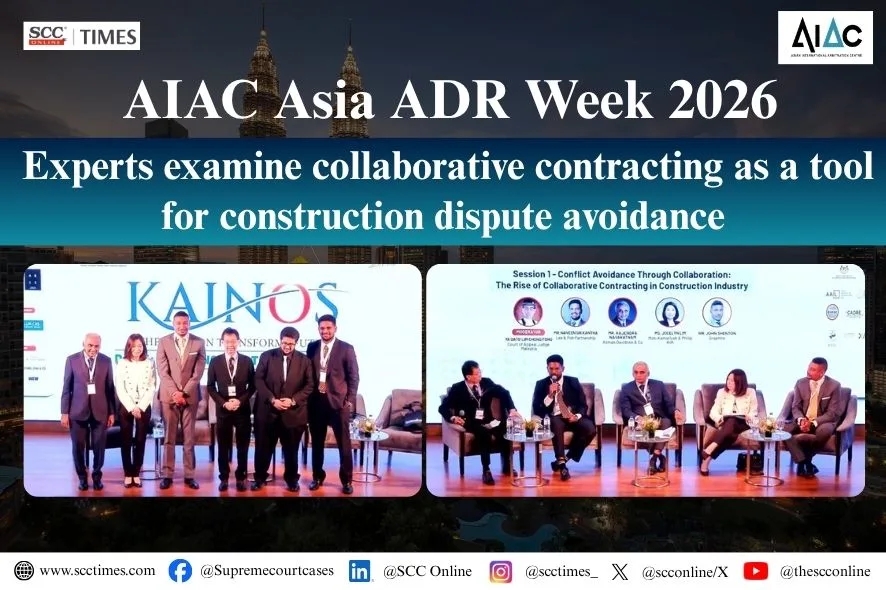
On 16 October 2026, Day 5 of AIAC Asia ADR Week 2026 featured the session titled “Conflict Avoidance Through Collaboration: The Rise of Collaborative Contracting in Construction Industry” at the AIAC Auditorium, Kuala Lumpur, Malaysia. The discussion examined whether collaborative contracting could help construction stakeholders identify risks earlier, share responsibility for project outcomes and prevent disagreements from escalating into formal disputes.
Moderated by Justice Lim Chong Fong, Judge of the Court of Appeal of Malaysia, the session featured:
-
Rajendra Navaratnam, Partner at Azman Davidson & Co.;
-
Naveen Sri Kantha, Partner at Lee & Poh Partnership;
-
John Shenton, Projects and Contracts Director at Graphite; and
-
Jocelyn Lim, Partner, Litigation & Dispute Resolution, at Mah-Kamariyah & Philip Koh.

[In picture, left to right: Justice Lim Chong Fong, Naveen Sri Kantha, Rajendra Navaratnam, Jocelyn Lim and John Shenton]
The discussion centred on the limitations of traditional adversarial contracting, the importance of trust and transparency, the practical implementation of collaborative contractual mechanisms, and experiences from Malaysia, Singapore and other jurisdictions. Audience contributions also examined accountability, mandatory contractual provisions and the escalation of disagreements towards mediation, adjudication and arbitration.
Collaborative contracting shifts the focus from allocating risk to managing it
Opening the discussion, Justice Lim Chong Fong observed that construction disputes frequently arise from what he described as the “four Ds”: design problems, defects, delays and determination of contracts, the latter often leading to payment disputes.
He noted that construction contracts have traditionally followed an adversarial, arm’s-length model, with substantial emphasis on allocating risk and contractors often bearing much of it. The session considered whether a different contractual approach could encourage the parties to work towards successful project delivery rather than concentrate primarily on protecting their individual legal positions.
Rajendra Navaratnam described collaborative contracting as a contractual philosophy underpinned by good faith, transparency and a shared commitment to project objectives. He explained that collaboration could be incorporated into the contract itself or emerge from the culture within which the parties operate. In his view, the latter remains a challenge in the Malaysian construction industry.
Naveen Sri Kantha compared collaborative contracting to a marriage, emphasising the need for trust, communication and an understanding that unforeseen circumstances may arise during a project. He distinguished contracts designed primarily to protect parties against breach from arrangements structured to solve problems as they emerge.

He explained that collaborative contracting combines a behavioural commitment to working together with contractual provisions that support that commitment. Rather than treating each problem as an opportunity to assign blame, the parties focus on resolving it and delivering the project.
As Naveen Sri Kantha put it, “if we make gains, we make gains together. And if we lose, we apportion these losses together.”
John Shenton drew a distinction between allocating risk and managing it. He observed that assigning a particular risk to an employer, contractor, or consultant does not make the risk disappear. Collaborative contracting, in his view, requires contractual and governance mechanisms that allow the parties to identify risks early, exchange relevant information and make decisions that can influence project outcomes.
His intervention highlighted that collaboration is not simply a matter of choosing a particular contract form. It also depends on how the project is administered and how effectively the parties respond to emerging risks.
Shared risk and reward offer an alternative to traditional procurement
Jocelyn Lim explained that collaborative contracting may represent a substantial departure from conventional procurement arrangements, particularly where parties are accustomed to allocating specific risks to individual participants.

She traced the development of collaborative contracting and project alliancing to 1990s oil and gas initiatives, including British Petroleum’s efforts to manage project costs. She noted that alliancing was subsequently adopted in Australia for oil and gas operations and major infrastructure projects.
Describing the approach, Jocelyn Lim referred to cooperation based on shared risks and rewards, good faith, and open-book cost accounting. Under such arrangements, the parties share the consequences of adverse outcomes while also participating in gains where project performance meets agreed objectives.
She explained that some contracts incorporate key performance indicators, linking the achievement of agreed targets to shared rewards. This approach requires a shift from treating difficulties as the responsibility of an individual party to treating them as problems that the project participants must address collectively.
Panellists identify reasons to reconsider adversarial contracting in Malaysia
Rajendra Navaratnam argued that collaborative contracting merits consideration in Malaysia because construction contracts can involve unequal bargaining power between employers and contractors. He observed that local contractors may focus on securing projects without fully appreciating the risks contained in the contracts they sign. When those risks materialise, contractors may face additional costs and insufficient funds to complete their obligations.

He also addressed the consequences of economic disruption and sudden increases in supply-chain costs. Under conventional arrangements, contractors may find themselves exposed to risks that they cannot readily absorb, particularly where payment is delayed or input prices increase unexpectedly.
Rajendra Navaratnam suggested that introducing collaborative elements could help reduce disputes and improve project delivery, including its timeliness and quality. He acknowledged that this would require a change in approach rather than merely a change in the contractual language.
John Shenton reinforced the importance of early warning mechanisms, a realistic baseline project programme and clearly defined decision-making processes. Referring to projects delivered by his firm in Kuala Lumpur, he attributed part of their success to stronger collaboration. He also drew on developments in Saudi Arabia and the United Arab Emirates, where he had observed improvements in project management and delivery practices.
He cautioned against equating collaboration exclusively with a particular contractual model. In his view, collaboration also reflects the way project teams identify issues and work together to resolve them.
Naveen Sri Kantha illustrated the challenge through an example from a contract advisory meeting. He explained that a project owner had asked how the contract could be drafted to give the owner a rigid, one-sided position in any future dispute.
For Naveen Sri Kantha, this illustrated how an adversarial approach can begin before a project has even started. He argued that an excessive focus on securing legal rights may distract from the broader objective of delivering the project successfully. He also observed that contractor insolvency during a project can lead to additional expenditure and further complications.
His remarks placed the emphasis on addressing the culture of contracting from the outset, particularly among project owners whose approach can influence the contractual arrangements adopted throughout the supply chain.
Unpredictable risks can make conventional risk pricing costly
Rajendra Navaratnam observed that contractors may incorporate contingencies into their prices to account for risks imposed by one-sided contractual terms. The employer may ultimately pay for those contingencies even if the anticipated risks never materialise.
He suggested that a fairer allocation of risk, including collaborative approaches, could potentially reduce overall contract costs. He also noted that this depends on the maturity of the construction market and the relative bargaining power of employers and contractors.
Jocelyn Lim added that risk pricing becomes particularly difficult when project risks are unpredictable. She referred to economic crises, geopolitical developments and weather-related risks as examples of circumstances that may be difficult to quantify in advance. Where contractors price for a wide range of potential risks, employers may bear additional costs regardless of whether those risks materialise.

To support the case for collaboration, Jocelyn Lim referred to a global study covering more than 1,000 industry professionals across the United Kingdom, Australia, Singapore, Hong Kong and Peru. As reported during the session, 76% of respondents considered collaborative contracts helpful in protecting their businesses, 74% associated them with improved project delivery times, and 71% said they reduced legal disputes.
Jocelyn Lim referred to published research in support of collaborative contracting, pointing to potential improvements in project delivery, time and cost control, and reductions in legal disputes.
Contractual frameworks must support collaborative working practices
Justice Lim Chong Fong referred to efforts to incorporate collaborative features into standard construction contracts, particularly joint project management and dispute avoidance. He noted that the extent to which these approaches had been adopted in Malaysia remained uncertain.
John Shenton discussed the use of NEC contracts in the London 2012 Olympic project. He noted that the project had a fixed opening date and that relatively few claims were reported. However, he cautioned against attributing the project’s success solely to the use of NEC. In his view, the project benefited from a culture in which delivery partners recognised risks and managed them collaboratively.

He explained that NEC3 had since been superseded by NEC4, while the underlying collaborative philosophy remained. He also observed that the framework provides mechanisms to address problems at the project site before they escalate to adjudication or other formal dispute resolution proceedings.
Rajendra Navaratnam observed that collaborative provisions alone may not change established contractual practices. He emphasised the need for changes in industry culture, supported by education, fairer risk allocation and greater awareness among employers and contract drafters of the potential benefits of collaborative contracting. He also highlighted the importance of incorporating collaborative principles into standard contractual frameworks to improve cost certainty and project delivery.
Drawing on the Japanese approach to long-term business relationships, Rajendra Navaratnam also highlighted the value of familiarity and trust between employers, contractors and subcontractors. He suggested that encouraging enduring project relationships, rather than selecting counterparties solely on the lowest price, could support better collaboration.
He further explained that where contractors assume substantial price risks, their bids may reflect the possibility of adverse price movements, even though the prices may instead fall. He therefore identified education, standard forms that support collaboration and practical evidence of successful implementation as important considerations.
Singapore experience demonstrates practical applications of collaborative contracting
During the audience discussion, Lay-Theng Kua, Partner at WongPartnership Singapore, shared examples of collaborative contracting in Singapore, including its adoption in public-sector projects and by major developers. She described arrangements involving shared risks and rewards and referred to reported improvements in cost and project schedules. She also highlighted the importance of government support in encouraging the adoption of collaborative approaches across the construction industry.
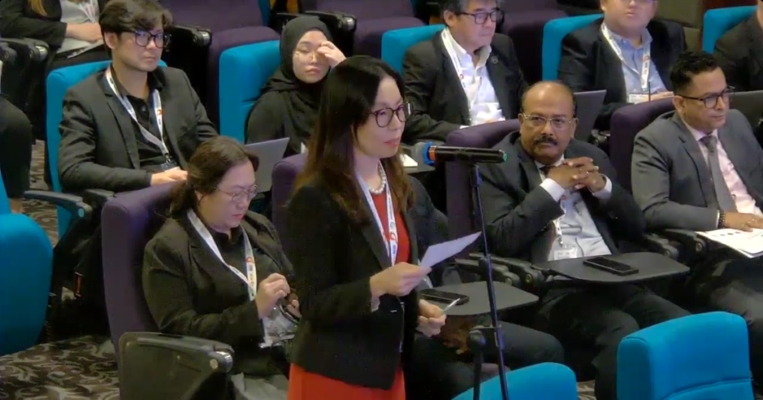
In response, John Shenton clarified that NEC Option C is a target-cost form of contract. He said it had been used successfully for the Olympic Stadium and Velodrome in London, while emphasising that Option C had not been used across the entire Olympic programme.
Collaboration does not eliminate accountability
During the question-and-answer session, Rahul Nanuhal, CEO of JustAct, an AI-powered online dispute resolution platform, asked how accountability could be maintained when a problem arises under a collaborative contract.

Rajendra Navaratnam responded that collaboration need not dilute accountability. Rather, transparency and real-time monitoring can help the parties identify problems as they develop. Referring to building information modelling (BIM), he observed that improved access to project information may enable participants to identify problems and respond earlier.
He cautioned against reverting immediately to an adversarial inquiry into who was right or wrong. In his view, the priority should be to identify the problem and determine how it can be resolved effectively. As Rajendra Navaratnam explained, “it’s about early sight of problems or awareness of problems and early action by all parties to collaboratively resolve it and not to point fingers because ultimately, it’s about sharing pain and sharing gain.”
Jocelyn Lim referred to dispute resolution boards (DRBs) under the CIDB Standard Form of Contract for Building Works (2022 Edition) and dispute board mechanisms under contracts issued by the International Federation of Consulting Engineers (FIDIC). She explained that these mechanisms enable parties to address disagreements during project implementation before proceeding to further dispute resolution.
Naveen Sri Kantha similarly rejected the idea that collaborative contracting necessarily means vague responsibilities or an absence of enforceable obligations. He pointed to early warning mechanisms and action plans that assign responsibilities to both parties. When these obligations are expressly incorporated into the contract, the framework can provide clearer accountability than a one-sided arrangement focused primarily on one party’s rights.
Moving collaborative contracting from aspiration to practice
Naresh Mahtani, Director at Adelphi Law Chambers LLC, questioned how collaborative contracting could move beyond an aspirational concept. Drawing a comparison with mediation, which he described as having become more practically established over time, he argued that commercial considerations and the immediate need for business survival may prevent parties from adopting collaborative practices voluntarily.

He asked whether mandatory provisions in NEC or other standard-form contracts could make collaboration more effective in practice.
John Shenton responded by highlighting the early warning notices used in NEC3 and NEC4. Referring to the London Olympics project, he said that more than 50,000 early warning notices had been issued. He acknowledged that project teams can be reluctant to raise such notices because they may be perceived negatively, but argued that treating them as a means of documenting and proactively managing events can support collaboration.
Rajendra Navaratnam maintained that adoption depended significantly on culture. Although collaborative provisions could help establish expectations of good faith and transparency, their presence alone would not necessarily change existing risk allocation. He argued that employers needed to recognise the potential commercial benefits of collaborative arrangements, including possible reductions in procurement costs and improvements in delivery.
Naveen Sri Kantha explained that collaborative contracting was not mandatory in Malaysia and that its implementation required the parties to embrace the approach. He also identified the coexistence of the CIDB Standard Form of Construction Contract 2022 with more widely used traditional forms, including PAM contracts, as a source of competing approaches. He considered that greater advocacy and awareness of collaborative contracting were needed in Malaysia.
Dispute escalation should be structured and proportionate
During the audience discussion, Prof. Dr. Naail Mohammed Kamil Dangigala, Deputy High Commissioner of Ghana to Malaysia and other ASEAN countries, asked how disagreements should be escalated before they develop into full legal proceedings. He drew attention to the inevitability of conflict and the need for mechanisms that facilitate its management within collaborative contracting.

Jocelyn Lim explained that escalation mechanisms depend on the parties’ agreement and the structure of the contract. Under collaborative arrangements, disagreements may first be referred to a designated dispute resolution body for a decision within a stipulated timeframe. Depending on the contractual framework, parties may then pursue further dispute resolution proceedings if they remain dissatisfied. Such mechanisms allow issues to be addressed during project implementation rather than proceeding immediately to litigation or arbitration.
Rajendra Navaratnam raised concerns about the cost of maintaining a standing dispute resolution board, noting that parties may be reluctant to incur the expense. If a board is appointed only towards the end of a project, it may also add a further stage before formal dispute resolution without achieving the intended early intervention.
As an alternative, he proposed considering a joint management board comprising representatives of the employer, main contractor, principal subcontractors and consultants. He suggested that representatives not directly responsible for day-to-day project management could help address disputes from the perspective of their respective organisations, rather than simply defend decisions already taken at site level.
Rajendra Navaratnam also discussed the arbitration-mediation-arbitration (Arb-Med-Arb) arrangement, referring to the model clause of the Singapore International Arbitration Centre (SIAC). Under the arrangement he described, an arbitral tribunal is constituted before the parties attempt mediation with a separate mediator within a specified period. If settlement is reached, it may be recorded as a consent award; if mediation fails, the arbitration resumes.
Conclusion
The session highlighted that collaborative contracting is not solely a question of contractual drafting. Its implementation also depends on how project participants approach risk, communicate with one another and respond to emerging problems.
The panellists discussed how early warning mechanisms, transparent project information, shared risk and reward, joint decision-making and structured escalation procedures could help manage disagreements before they develop into more extensive disputes. At the same time, they recognised that existing procurement practices, unequal bargaining power, cost considerations and resistance to change may limit adoption.

Collaborative contracting was discussed as a means of managing disagreements earlier, while retaining adjudication, arbitration and litigation as available mechanisms where disputes remain unresolved. The session examined how collaborative principles could complement established dispute resolution mechanisms by encouraging earlier engagement and more practical management of project issues. The experiences discussed from Malaysia, Singapore and other jurisdictions provided examples of approaches that stakeholders may consider when developing contractual frameworks suited to their projects.
SCC Times is the official media partner for AIAC Asia ADR Week 2026. Read more reports from the week.