








Constitution of India — Arts. 14 to 16, 341 and 342 — Reservation: Sub-classification of a reserved class including Scheduled Castes, held (per majority), permissible. Further held (per majority), creamy layer principle is also applicable to Scheduled Castes. Indra Sawhney, 1992 Supp (3) SCC 217, elucidated the following three principles with respect to subclassification: (a) Sub-categorisation within a class is a constitutional requirement to secure substantive equality in the event that there is a distinction between two sections of a class; (b) Sub-classification must not lead to the exclusion of one of the categories in the class. A model that provides sufficient opportunities to all categories of the class must be adopted; and (c) Sub-classification among a class must be on a reasonable basis. That the distinction between the categories must be substantial. Sub-categorisation must be reasonable, [State of Punjab v. Davinder Singh, (2025) 1 SCC 1]
SCC Weekly Cases Reported
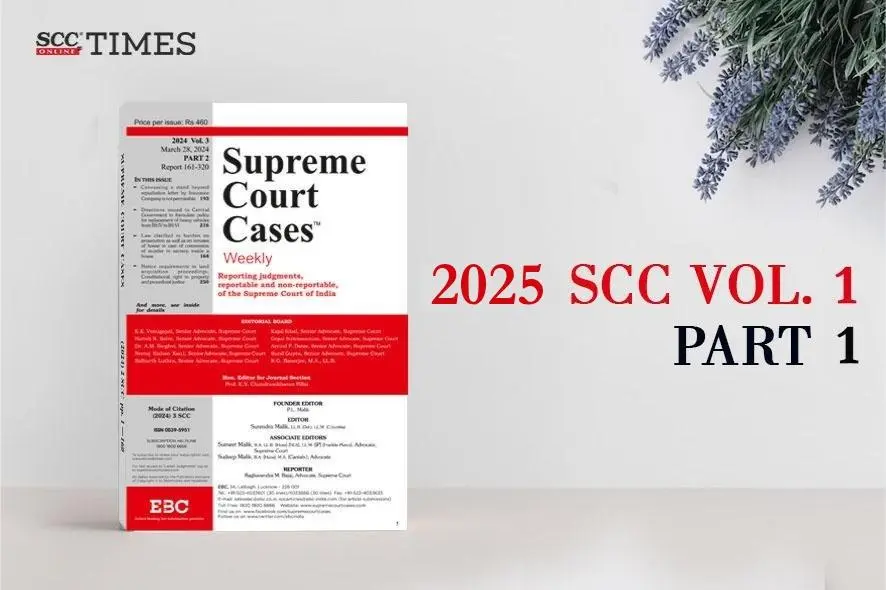
2025 SCC Vol. 1 Part 1
Constitution of India — Arts. 14 to 16, 341 and 342 — Reservation
Content reader
Listen to this article






If Hindu marriage act doesn’t give permission of biogamy then why and how second wife can ask for maintenance?
Application of creamy layer for SCs was an obiter. The court has not given any direction towards this. Therefore, it is premature to say that creamy layer is applicable within SC.