








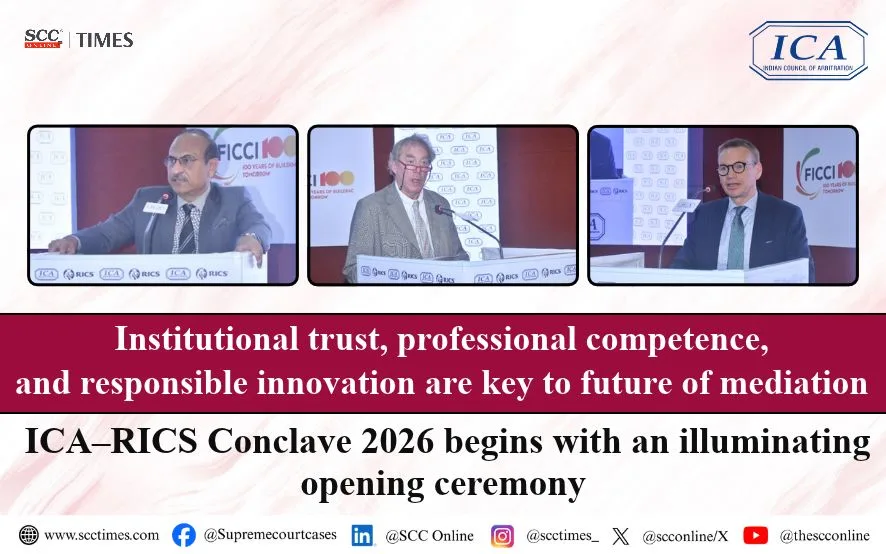
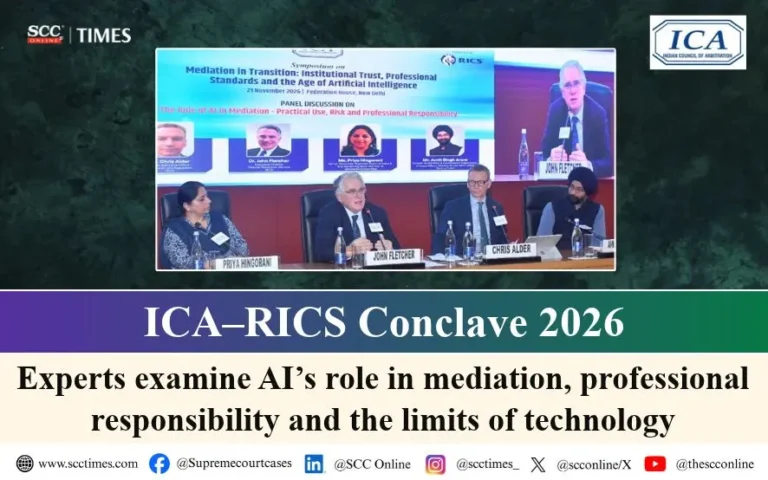
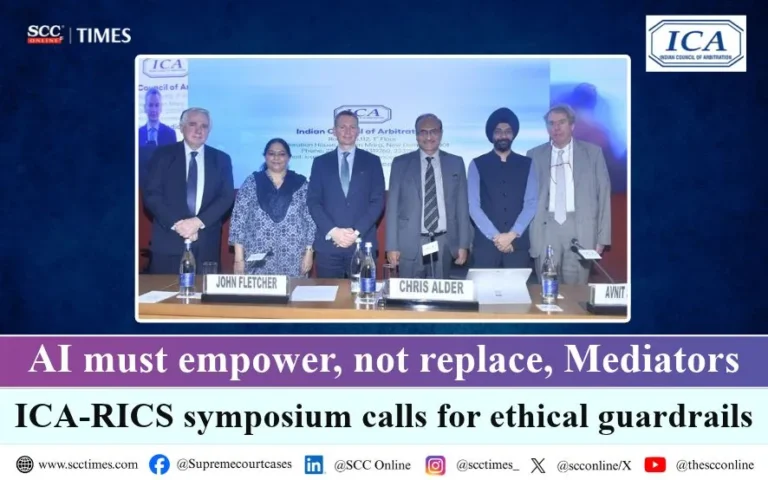
The Indian Council of Arbitration (ICA), in association with the Royal Institution of Chartered Surveyors (RICS), hosted the ICA–RICS Conclave on “Mediation in Transition: Institutional Trust, Professional Standards and the Age of Artificial Intelligence,” on 21 November 2026, at the Federation House, New Delhi.
Bringing together eminent legal practitioners, mediation professionals and institutional representatives, the Conclave aimed to facilitate meaningful dialogue on the intersection of institutional development, professional standards, and technological innovation in mediation.
The Conclave represents a continuation of the institutional partnership between ICA and RICS, building upon their previous engagement on Artificial Intelligence in the expert-witness domain and their subsequent collaboration on mediation training for the built-environment sector. Through this initiative, the two institutions seek to strengthen professional cooperation and contribute to a responsible and forward-looking mediation ecosystem, ensuring that technological advancements complement, rather than compromise, the trust, confidentiality and human judgement underpinning effective dispute resolution.
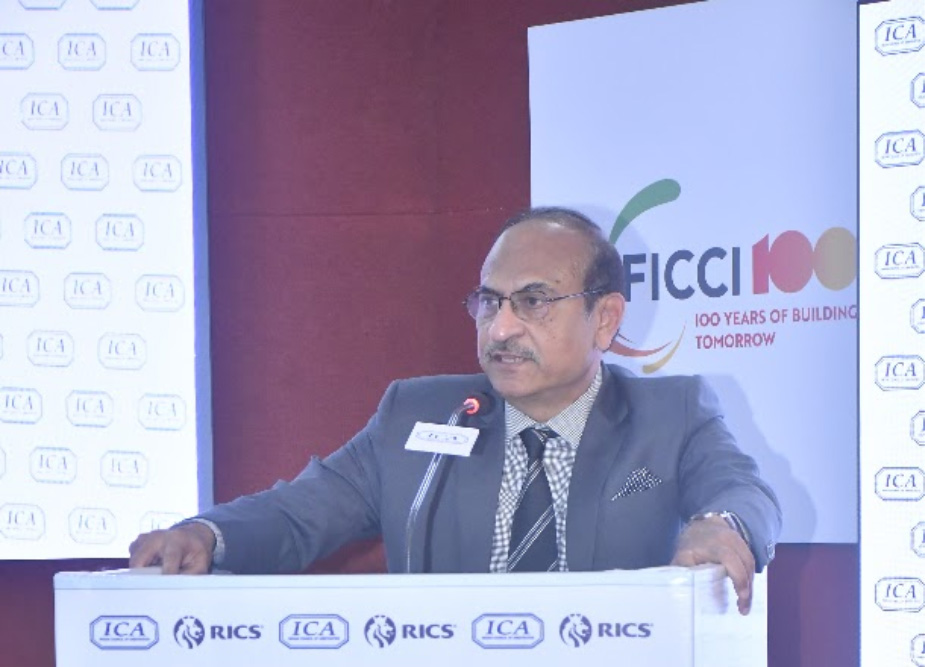
Opening Address: Mr. Arun Chawla
The Conclave opened with an address by Mr. Arun Chawla, Director General, ICA. He began by welcoming the audience, his colleagues from RICS, and the other dignitaries present.
At the outset, Mr. Chawla remarked that dispute resolution was historically viewed primarily through the prism of adjudication, i.e., identifying rights, determining liabilities, and declaring winners and losers. He stated that though adjudication remains indispensable, modern commerce demanded much more. Thus, he argued that in commercial disputes, mediation allowed the parties to shift the conversation from confrontation to collaboration, from legal positions to commercial solutions, and from winning disputes to preserving a relationship.
“The true strength of the justice system lies not only in its ability to decide disputes, but equally in its ability to prevent disagreements from destroying relationships and investments.”
Mr. Chawla explained that in sectors such as infrastructure, construction, and the built environment, mediation was particularly useful as disputes over delays, costs, or contractual obligations can hold up the entire project, disrupt investments, and affect numerous stakeholders. Timely resolution can preserve not only commercial relationships, but also capital employment and opportunity.
“Mediation is not only a simple alternative dispute resolution mechanism, but also an instrument of commercial continuity and economic efficiency.”
From Section 89 of the Code of Civil Procedure Code, 1908, and pre-institutional mediation under the Commercial Courts Act, 2015, to the Mediation Act, 2023 (Mediation Act), Mr. Chawla remarked that the legislative direction and the transformation of the Indian mediation landscape were evident. He argued that while there was an increase in pre-institutional mediation, legislation alone could not create a mediation culture, and a high proportion of the pre-institutional proceedings do not commence.
Thus, he stated that a credible mediation ecosystem requires more than trained mediators. It requires professionals who understand commercial realities, possess sector-specific knowledge, uphold ethical standards, and inspire confidence through their independence and competence. Parties must not only trust in the process but also the professionals conducting it and the institution administering it.
Underscoring ICA’s relationship with RICS, Mr. Chawla explained that the two institutions had sought to translate institutional cooperation into practical outcomes. ICA provides experience in institutional dispute resolution, while RICS provides internationally recognised expertise in professional standards and built environments. The partnership between ICA and RICS could make a meaningful contribution to the mediation ecosystem as they proposed to develop mediation practices that are technically informed, commercially responsive, and institutionally credible.
Speaking on AI, he stated that AI was rapidly transforming the entire professional landscape by changing how cases are reviewed, documents are analysed, risks are assessed, and information is processed. In large infrastructure and commercial disputes, AI’s ability to assist in reviewing complex documentation, identifying areas of disagreement, preparing chronologies, improving communication, and reducing administrative burdens could significantly improve efficiency.
However, he argued that the introduction of AI in dispute resolution posed some serious questions about overcoming lack of trust, understanding human emotions behind transactions, sensitivity of strained business relationships, confidentiality, data protection, algorithm bias, accountability, etc. He stated that technology must analyse, but building trust between disputing parties remains fundamentally human.
He remarked that technological innovation should strengthen the integrity of mediation rather than compromising it, as the objective is to empower and not replace the mediator with artificial intelligence. Technology must support professional judgement rather than substituting it.
Mr. Chawla outlined three principles that should guide the future of mediation:
-
Institutional Trust: Without confidence in the institution, even the best-designed process would struggle to succeed.
-
Professional Excellence: Mediation demands competence, independence, ethical integrity, and an understanding of the commercial realities underlying disputes.
-
Responsible Innovation: Technology must enhance accessibility and efficiency without compromising fairness, confidentiality, and the human character of mediation.
He stated that these were not competing priorities, but rather mutually reinforcing foundations of a modern dispute resolution system.
With a developing legislative framework, growing institutional capacity, and increasing recognition of the value of consensual dispute resolution, Mr. Chawla underscored that the next phase must inevitably focus on building credibility, enhancing professional standards, and creating an environment in which mediation becomes a preferred commercial choice, not merely a procedural requirement. This transformation cannot be achieved by governments or institutions acting alone; it requires collaboration amongst the judiciary, legal professionals, arbitral institutions, and industrial and technology experts.
He remarked that if institutions provide trust, professionals uphold standards, and technology delivers responsible innovation, mediation could become far more than an alternative to litigation. It could become a cornerstone of commercial confidence, investment security, and sustainable economic growth.
With this, Mr. Chawla concluded his address, stating that mediation was “not merely relevant to the future of dispute resolution, but fundamental to the future of commercial justice.“
Special Address: Mr. Nigel Clarke
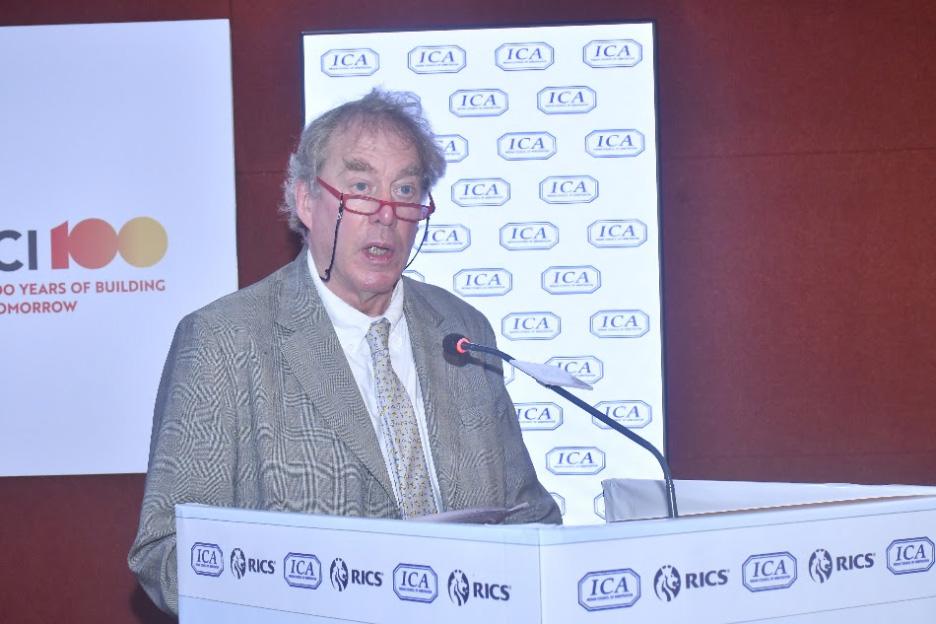
Mr. Nigel Clarke, Independent Chair, Standard and Regulation Board, RICS, began his special address by acknowledging the ICA for organising the Conclave and its continued collaboration with RICS. Recalling his previous address on construction arbitration and the emerging role of AI for expert witnesses, he noted that the discussions had progressed to focus on mediation, institutional trust, professional standards, and responsible use of AI. He observed that the evolving dispute resolution landscape raised an important question about embracing innovation while preserving trust, impartiality, confidentiality, and professional judgement.
He highlighted mediation as an important alternative to traditional dispute resolution, particularly in construction and infrastructure disputes, where complex contractual relationships frequently result in costly and prolonged disagreements. Referring to the Mediation Act as an important development in strengthening India’s mediation framework, he emphasised that the effectiveness of mediation did not merely depend on legislation or institutional arrangements; it required trust in the process, confidence in the competence and impartiality of mediators, and assurance that parties were treated fairly.
Speaking about RICS’s role in strengthening institutional trust, Mr. Clarke explained that, as the independent chair of the RICS Standards and Regulation Board, his responsibility was to ensure that RICS upheld professional standards, maintained public confidence, and regulated independently in the public interest. Through professional standards, independent regulation, and dispute resolution services, RICS sought to promote competence, integrity, impartiality, and accountability. He emphasised, “institutional trust cannot be established by rules alone. It must be reinforced through professional standards, ethical conduct, and consistent practice.”
Thereafter, he highlighted that RICS was celebrating the 50th anniversary of its Dispute Resolution Service (DRS), which had supported effective dispute resolution and avoidance through mediation, arbitration, adjudication, and other mechanisms for over five decades. He noted that the focus was increasingly shifting towards preventing unnecessary conflict through early intervention, professional expertise, and constructive engagement. He also highlighted the progress of RICS’s Dispute Resolution Service in India, particularly its mediation and arbitration training initiatives aimed at developing professional capability. He stated that the collaboration with ICA reflected a shared commitment to strengthening professional competence, institutional cooperation, and knowledge exchange.
In this regard, Mr. Clarke highlighted the RICS Women in Dispute Resolution Scholarship for India, describing it as an initiative aimed at promoting diversity and creating opportunities for women professionals to advance in international arbitration. The scholarship offers one funded place on the RICS Diploma in International Arbitration, an 18-month programme. He explained that the initiative was not limited to legal professionals but also extended to women working in construction, project management, quantity surveying, engineering, and related disciplines. The scholarship seeks to remove barriers to professional education, develop future leaders, and contribute to a more diverse and inclusive dispute resolution profession.
Thus, he encouraged eligible professionals to apply and urged those present to identify and encourage individuals who could benefit from the opportunity. He described the initiative as a practical example of how RICS and ICA could translate their shared objectives into meaningful professional development opportunities.
Speaking on the aspect of AI, Mr. Clarke observed that AI was increasingly influencing how information was analysed, decisions were supported, and professional services were delivered. In dispute resolution, AI could assist with document review, claims analysis, case preparation, administrative efficiency, etc. However, he cautioned that the use of AI had to be balanced against the need to preserve trust, confidentiality, impartiality, and professional accountability.
He referred to the RICS Professional Standard on the responsible use of AI in surveying practice, introduced in March 2026, which established expectations concerning governance, transparency, risk management, professional oversight, and accountability. Although the standard had been developed for surveying practice, he stated that its principles were equally relevant to the wider discussion on AI in dispute resolution, particularly concerning expert evidence, confidentiality and professional responsibility.
Furthermore, Mr. Clarke announced that RICS was developing new practice guidance on the use of AI in dispute resolution, addressing both its opportunities and associated risks. The draft guidance would be published for public consultation in early 2027, allowing dispute resolution professionals to contribute to its development.
He reiterated that AI could assist in professional analysis and decision-making but could not replace human judgement or professional accountability. Technological innovation should strengthen rather than undermine trust and confidence in mediation and dispute resolution. It could improve efficiency and assist professionals in managing complex information, but must not compromise fairness, confidentiality, or public confidence.
In conclusion, Mr. Clarke underscored RICS’s continued commitment to strengthening professional competence, promoting effective dispute avoidance and resolution, and working closely with institutions such as the ICA. He stated that their continued collaboration demonstrates the value of combining international professional experience with local expertise to build stronger and more trusted institutions.
Closing Remarks: Mr. Christopher Alder
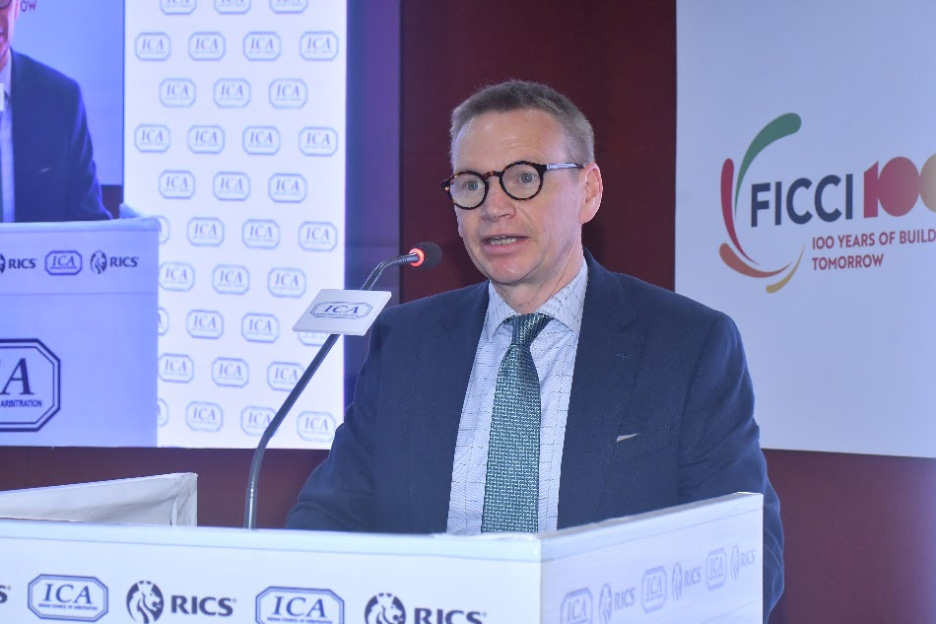
Concluding the opening session, Mr. Christopher Alder, Senior Executive Officer, Standards and Regulation, RICS, delivered his closing remarks wherein he acknowledged the organisers and participants for their commitment to the evolving mediation practice in India. Reflecting on the earlier remarks by Mr. Chawla, he highlighted mediation’s distinguishing feature within the dispute resolution landscape, i.e., its emphasis on collaboration, dialogue, and consensus-building between parties to achieve a fair resolution.
He drew a parallel between mediation and the developing partnership between ICA and RICS, stating that the role of RICS as a professional standard-setter, regulator, and international ADR specialist complemented ICA’s work. He identified trust, professional standards, and innovation as central themes for the symposium and the discussions that would follow.
On the aspect of AI, Mr. Alder observed that the question was no longer whether AI would become part of the ADR landscape or mediation, as it was already being used in professional practice. The more important question was how it could be utilised to make mediation more effective and efficient and, importantly, on what terms. AI could assist professionals in analysing large volumes of information, identifying issues, preparing cases, and testing possible outcomes.
Recalling his early career in legal practice, he remarked that he would have welcomed AI as a tool to avoid spending hours in libraries researching Halsbury’s Law and statutes. He noted that AI’s capabilities could be particularly significant in complex construction and infrastructure disputes. However, he cautioned that the same technology could generate inaccurate analyses, fabricated material, confidentiality risks, and an unjustified appearance of certainty or confidence that might not be supported by the underlying analysis.
He stressed the distinction between making mediation more efficient and using technology to make mediation more effective without compromising its trustworthiness. Mediation depended on parties’ confidence in the process, the impartiality and competence of the mediator, and the assurance that their information, interests, and autonomy were protected. Therefore, the institutional frameworks and professional standards were important, as well as the judgement exercised by individual professionals.
He observed that India, particularly in view of the Mediation Act, had an opportunity to shape a modern mediation ecosystem by integrating responsible use of technology from the outset, rather than merely adapting an established mediation system to AI.
He identified several questions that professionals needed to consider while assessing AI’s role in mediation: where AI could genuinely assist mediators, the areas in which caution was required, what information should never be entered into AI systems, particularly publicly available AI tools, what safeguards were necessary, and how professionals could verify the information and analysis generated by technology. He agreed that while AI could assist professional analysis and decision-making, it could not replace human judgement or professional accountability.
“Ultimately, however sophisticated the technology becomes, accountability cannot and must not simply be delegated to an algorithm.“
In conclusion, Mr. Alder stated that the speakers and panellists at the Conclave would demonstrate the practical value of AI while exploring the opportunities and challenges associated with its use.





0 replies