








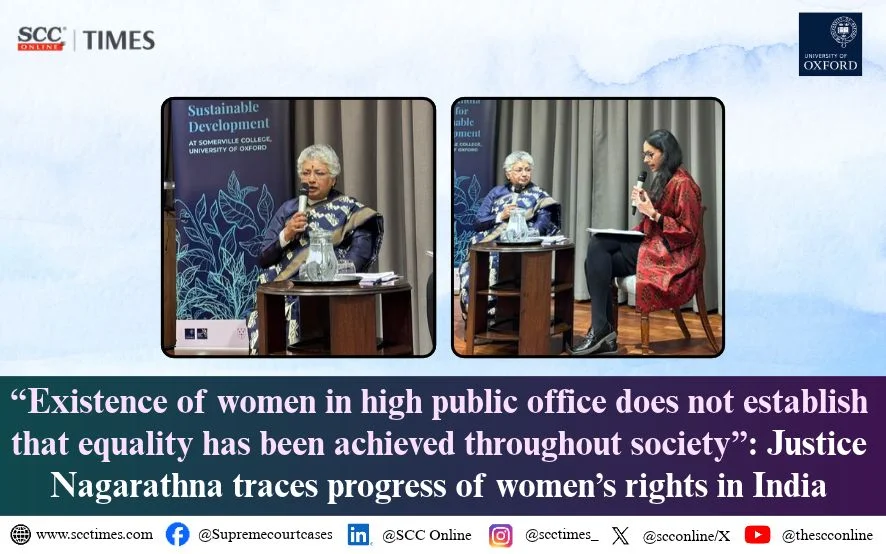
Justice B.V. Nagarathna, Judge of the Supreme Court of India, delivered the inaugural Cornelia Sorabji Memorial Lecture at Somerville College, University of Oxford, on 18 November 2026. Organised by the Oxford India Centre for Sustainable Development, the lecture was titled “The Doors She Opened: Cornelia Sorabji and the Progress of Women’s Rights in India”. The lecture commemorated Cornelia Sorabji’s legacy in the year marking her 160th birth anniversary.
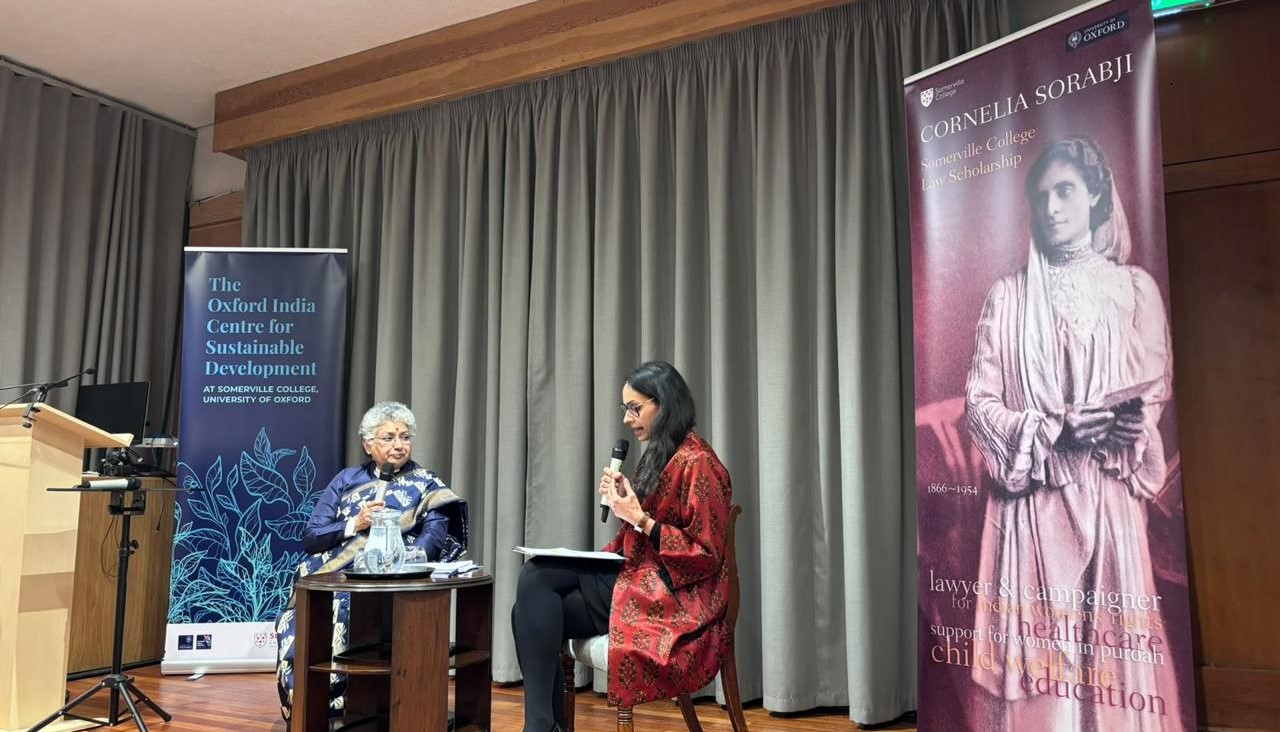
Reflecting on the historical and constitutional development of women’s rights in India, Justice Nagarathna identified three interrelated transformations: the movement of women from being persons whose rights were mediated through family, custom and community to individuals entitled to assert rights in their own names; the evolution of the Constitution from a guarantee of formal equality into an instrument for addressing structural disadvantage and gender stereotypes; and the expansion of the idea of justice from individual remedies to the reconstruction of social, economic and institutional relationships.
Cornelia Sorabji: Challenging barriers to education and the legal profession
Beginning with the life of Cornelia Sorabji, Justice Nagarathna recalled her pioneering journey to Oxford in 1889, where she became the first woman to study law at the University. Despite passing her examinations in 1892, Sorabji could not receive her degree until 1922, when women became eligible to graduate. Her academic distinction did not immediately translate into professional recognition in India.
Justice Nagarathna referred to the 1916 decision in In re Regina Guha1, in which a five-judge Bench of the Calcutta High Court rejected Regina Guha’s application for enrolment as a pleader under the Legal Practitioners Act, 1879. The legal barrier was subsequently removed through the Legal Practitioners (Women) Act, 1923, enabling women to enter the legal profession. Cornelia Sorabji thereafter became the first woman vakil in India.
Sorabji’s work also extended beyond her own professional advancement. She provided legal assistance to women, particularly pardanashin women whose seclusion and limited access to legal knowledge left them vulnerable to exploitation. Justice Nagarathna observed that while individual pioneers could break institutional barriers, inequalities affecting women as a class required structural remedies through constitutional guarantees.
Situating Sorabji’s contribution within a wider historical context, she recalled the intellectual and social agency of women across different periods of Indian history, including Gargi, Maitreyi, Andal, Akka Mahadevi, Mirabai, Gulbadan Begum and Nur Jahan. She also referred to successive social reform legislations, women’s organisations and the Indian Women’s Charter of Rights and Duties adopted by the All India Women’s Conference in 1946. These developments demonstrated that the movement towards equality had been shaped by sustained social mobilisation even before the Constitution was adopted.
Constitutional equality and the contribution of the founding mothers
Justice Nagarathna highlighted the contribution of the fifteen women members of the Constituent Assembly, including Hansa Mehta, Rajkumari Amrit Kaur, Durgabai Deshmukh, Dakshayani Velayudhan, Sarojini Naidu and Renuka Ray. Their interventions, she noted, addressed questions of equal citizenship, political participation, education, social reform and the position of women within the legal order.
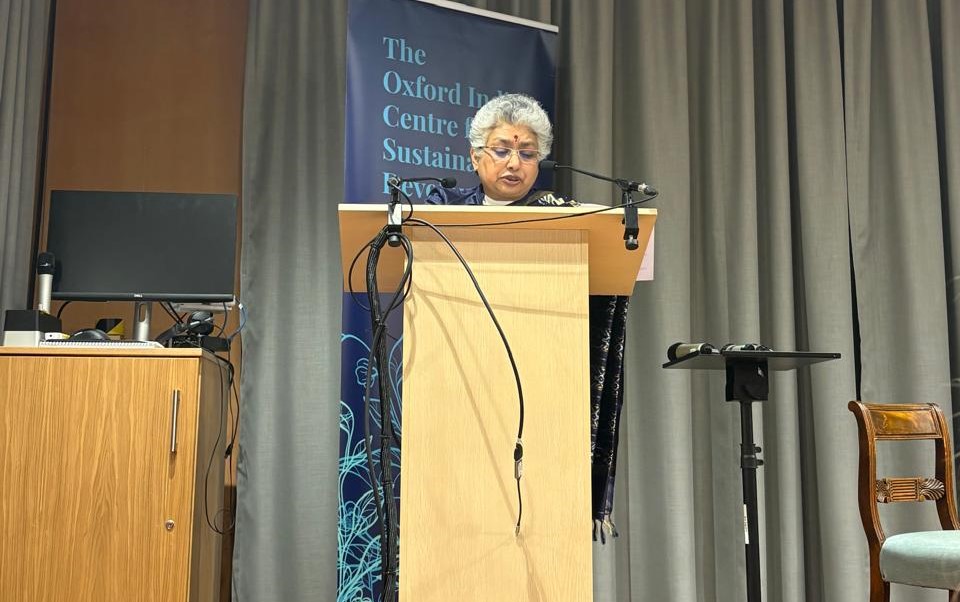
Turning to the constitutional framework, she emphasised that the Preamble’s commitment to social, economic and political justice, together with Articles 14 and 21 and the Directive Principles of State Policy, provides the foundation for examining and addressing gender inequality. The distinction between formal and substantive equality was central to her argument. Equality cannot be secured merely by extending identical legal treatment where women continue to face unequal conditions within families, workplaces, educational institutions and professional organisations.
The post-Independence legislative journey included reforms to marriage, inheritance, employment and economic rights. A significant development was the Hindu Succession (Amendment) Act, 2005, which recognised daughters as coparceners by birth, placing them on an equal footing with sons in joint family property. Referring to Vineeta Sharma v. Rakesh Sharma2, Justice Nagarathna noted that the Supreme Court clarified that a daughter’s right did not depend upon whether her father was alive on the date the amendment came into force.
Judicial interpretation: From formal equality to substantive rights
Tracing the evolution of the Supreme Court’s approach, Justice Nagarathna acknowledged that early constitutional jurisprudence did not consistently adopt an expansive understanding of gender equality. Some decisions continued to reflect prevailing assumptions about the roles of men and women. Over time, however, judicial interpretation increasingly recognised that liberty and equality must be meaningful in the actual conditions of women’s lives.
She highlighted Mohd. Ahmed Khan v. Shah Bano Begum (1985)3, in which the Supreme Court recognised a divorced Muslim woman’s entitlement to maintenance under Section 125 of the Code of Criminal Procedure, 1973. The subsequent decision in Danial Latifi v. Union of India (2001)4 preserved meaningful financial protection under the Muslim Women (Protection of Rights on Divorce) Act, 1986. Referring also to Mohd. Abdul Samad v. State of Telangana (2025)5, Justice Nagarathna noted that the Court clarified that the 1986 Act operated in addition to, and not in derogation of, Section 125.
Another important example was Vishaka v. State of Rajasthan (1997)6, where the Supreme Court laid down guidelines to address sexual harassment at the workplace in the absence of specific legislation. These guidelines remained operative until Parliament enacted the Sexual Harassment of Women at Workplace (Prevention, Prohibition and Redressal) Act, 2013. The judgment illustrated how constitutional adjudication could address a legal vacuum and pave the way for legislative protection.
Justice Nagarathna also emphasised the significance of Anuj Garg v. Hotel Association of India (2008)7, which challenged protective paternalism, namely the restriction of women’s freedom under the guise of protecting them. Referring to Association of Old Settlers of Sikkim v. Union of India (2023)8, a judgment authored by her, she highlighted the rejection of a discriminatory provision that made a Sikkimese woman’s entitlement to a tax exemption dependent on her marriage to a non-Sikkimese person. The decision affirmed that marriage could not extinguish a woman’s independent legal identity or serve as a basis for discrimination.
The lecture also traced developments concerning economic autonomy, maternity protection and domestic violence. Decisions such as Mackinnon Mackenzie & Co. Ltd. v. Audrey D’Costa9 and Deepika Singh v. CAT were discussed in the context of equal remuneration and the recognition of maternity rights. Referring to Prabha Tyagi v. Kamlesh Devi (2022)10, Justice Nagarathna highlighted the interpretation of the Protection of Women from Domestic Violence Act, 2005, under which a woman need not be residing with the respondent at the time of seeking relief.
A significant part of the lecture addressed the participation of women in the armed forces. Justice Nagarathna discussed Secretary, Ministry of Defence v. Babita Puniya, Union of India v. Annie Nagaraja and Lt. Col. Nitisha v. Union of India. These decisions marked a movement beyond merely permitting women to serve towards recognising their entitlement to permanent commission and equal opportunities in promotion, command appointments and career progression. In Nitisha, the Supreme Court addressed systemic discrimination arising from assessment criteria that disadvantaged women officers. She emphasised that equality must extend across the entire institutional pathway, from recruitment and training to tenure, promotion and leadership.
Representation, access to justice and the unfinished project of equality
Justice Nagarathna underscored that transformative constitutionalism remains an ongoing project. The recognition of rights through judgments and legislation does not, by itself, ensure that women can exercise them. The continuing barriers include violence and insecurity, inadequate access to remedies, economic inequality and the disproportionate burden of unpaid domestic and care work. She also stressed that women do not experience discrimination uniformly. Caste, class, disability, religion, region and economic circumstances can compound disadvantage, making substantive equality attentive to the diversity of women’s experiences.
“There is no single experience of being a woman. Caste, class, disability, religion, region and economic circumstances can profoundly alter the obstacles a woman encounters.”
The lecture connected the advancement of women’s rights with representation in institutions exercising public power. Justice Nagarathna referred to the 73rd and 74th Constitutional Amendments, which provided for reservation of seats for women in Panchayats and Municipalities, and the Constitution (106th Amendment) Act, 2023, which extends the principle of reservation to the Lok Sabha and State Legislative Assemblies. She emphasised that meaningful participation must also extend to the legal profession. She reiterated her advocacy for one-third reservation for women lawyers on government panels, including those representing public sector undertakings, and in the sphere of legal aid. Representation, she observed, must encompass not only entry into the profession but also opportunities for professional advancement and institutional leadership.
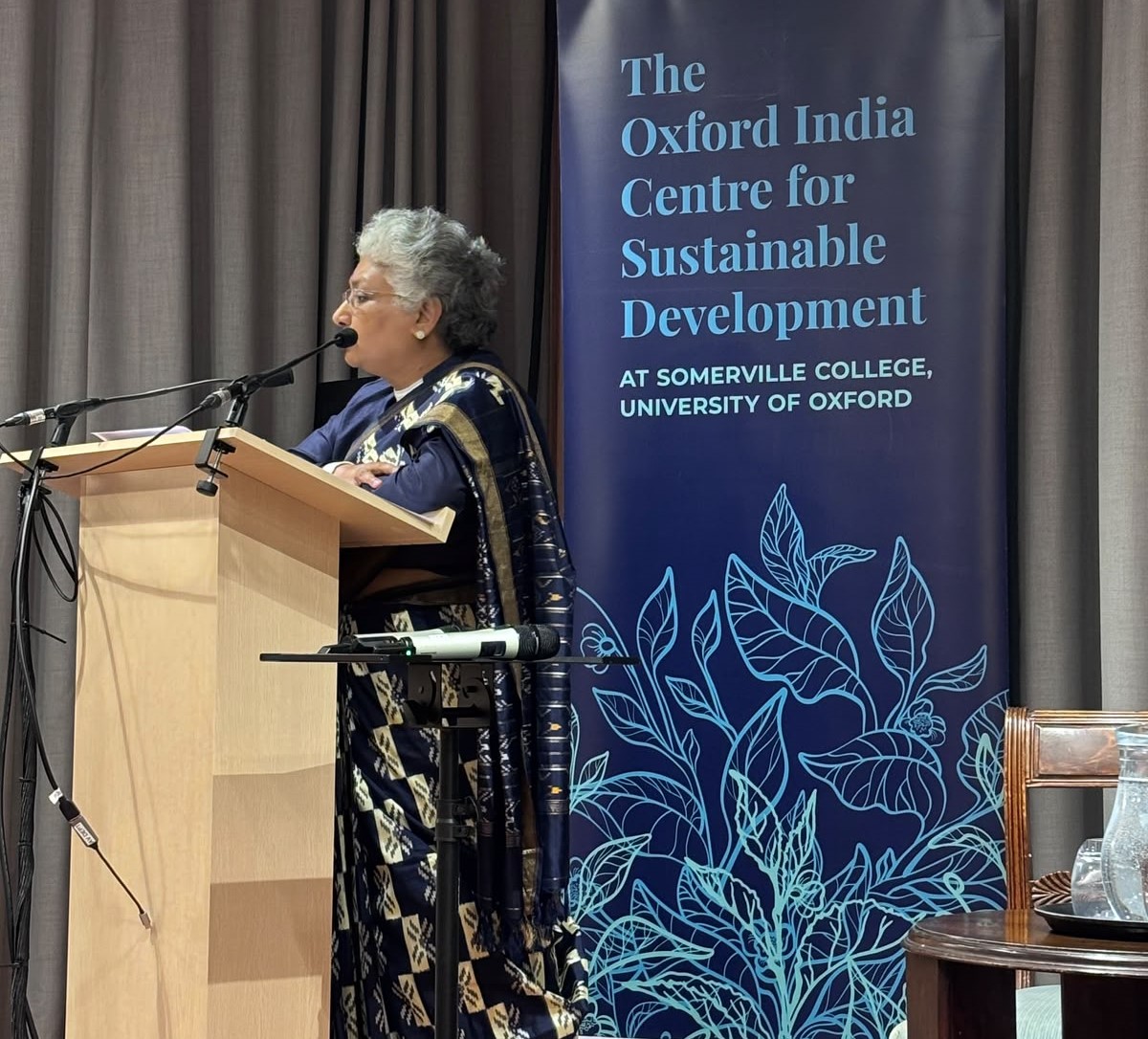
“The existence of women in high public office does not establish that equality has been achieved throughout society. A woman may hold a senior position while other women remain excluded from education, employment, property, or effective legal remedies.”
Concluding with a return to Cornelia Sorabji’s legacy, Justice Nagarathna observed that the doors opened by pioneering women and the constitutional vision of the founding mothers must remain open to future generations. She emphasised that women’s rights must translate into real choices, including the right to be born, receive education, exercise marital choice, pursue a career, inherit property and live safely at home, in the workplace and in public spaces.
The responsibility for realising these rights rests not only with courts and legislatures, but also with public institutions, civil society and society at large. The constitutional promise of equality, she stressed, will be meaningful only when women can pursue their choices and aspirations without structural barriers.
“If the women are able to fulfil their choices and goals, I feel that the word ‘empowerment’ would pale into insignificance.”






0 replies