

Organised by the Dubai International Arbitration Centre (DIAC), the Dubai Arbitration Week 2026, being held from 9 to 13 November 2026, brings together the global arbitration community for a week of panel discussions, workshops and networking, highlighting Dubai’s growing role as an international dispute resolution hub and providing a platform to exchange perspectives on emerging trends, innovations and the future of arbitration.
In a panel discussion titled “India-UAE Trade and Investment: Managing Risk and Resolving Disputes”, the panellists examined the legal and commercial considerations arising from the growing trade and investment relationship between India and the United Arab Emirates (UAE). The discussion focused on the emerging disputes, the allocation of contractual risks, choice of governing law and arbitral seat, investment treaty protections, assessment of damages, and enforcement of foreign judgments and arbitral awards.
Moderated by Mr. Manish Aggarwal, Partner, Three Crowns LLP (Dubai), and Mr. Robert Stephen, Registrar, DIAC, the panel consisted of esteemed legal professionals, namely, Ms. Shaneen Parikh, Partner, Shardul Amarchand Mangaldas & Co. (Mumbai); Dr. Hassan Arab, Partner, Al Tamimi & Co. (Dubai); Ms. Rashna Mistry, General Counsel, Tata Projects (Mumbai); Mr. Obaid Kazimi, Managing Partner, Osborne Partners (Dubai); and Mr. Paul Blakeway, Senior Counsel, Horizons & Co. (Dubai).
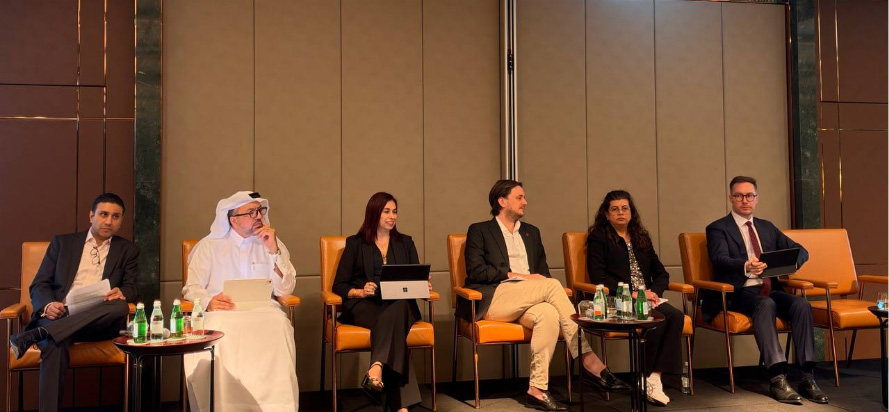
Kickstarting the discussion, Mr. Manish Aggarwal provided a brief context for the panel discussion. He highlighted the scale of the economic relationship between India and the UAE. He stated that approximately 4.3 million Indians reside in the UAE, accounting for nearly one in every three residents. Bilateral trade had exceeded 100 billion dollars in the previous financial year, making the UAE India’s third-largest trading partner and India the UAE’s second-largest trading partner. He also noted that India was the largest source of announced greenfield investments into the UAE in 2025. Referring to the Comprehensive Economic Partnership Agreement (CEPA), which has been in force since 2022, he observed that the two countries had set a target of 200 billion dollars in bilateral trade by 2032.
Against this background, he questioned whether the legal mechanisms supporting the commercial relationship were keeping pace with the growing economic engagement.
He explained that the discussion would examine the risks faced by businesses entering into cross-border transactions and the disputes that could emerge when geopolitical developments, supply-chain disruptions or changing project economics affected contractual commitments. He emphasised the importance of examining whether contracts adequately allocated risks and whether businesses had made appropriate choices concerning governing law and dispute resolution forums at the outset of their transactions.
Mr. Aggarwal further identified the India-UAE Bilateral Investment Treaty (BIT), the substantive and procedural protections available to investors, the structuring of investments to benefit from treaty protections, the assessment of losses in disputes, and the enforcement of judgments and arbitral awards against assets in the other jurisdiction as important areas for consideration.
What type of disputes occur in the India-UAE corridor?
Responding to Mr. Aggarwal’s question on the nature of disputes emerging from the growing trade and investment relationship, Dr. Hassan Arab identified construction and infrastructure as the sectors generating the highest volume of disputes.
Referring to a recent report issued by the Abu Dhabi Chamber of Commerce, he stated that approximately 700 development, infrastructure, and construction projects, valued at $138 billion, had been confirmed. He also referred to the 2024 report of the DIAC1, according to which construction disputes accounted for approximately 41 per cent and real estate disputes accounted for 19 per cent of its caseload.
Dr. Arab added that construction and infrastructure disputes were followed by technology, agriculture, and food disputes. He observed that the UAE’s emphasis on food security and the agreements entered with India could make these sectors potential sources of future disputes. Furthermre, oil and gas could be another sector in which disputes could arise.
Taking the discussion from the Indian perspective, Ms. Shaneen Parikh observed that disputes would follow the money and that the growth in trade and investment would naturally lead to disputes in the sectors receiving increased commercial activity.
Agreeing that construction would remain a significant area of disputes, she also anticipated an increase in cross-border trade and mergers and acquisitions-related disputes, particularly as sovereign investment funds increasingly invested in India.
She also highlighted several issues that investors should consider in addition to conventional representations and warranties, corporate governance, and investment exit-related concerns. These included tax structuring, withholding tax, foreign exchange compliance, repatriation, and the valuation of securities during transfers between investors. Regarding tax disputes, she observed that Indian tax regulators had frequently withheld tax at source, making tax structuring and tax litigation important considerations for foreign investors entering India.
Furthermore, Ms. Parikh highlighted the issue of arbitrability under Indian law. She explained that certain disputes which might ordinarily be arbitrable in other jurisdictions, including claims relating to unfair prejudice, oppression, and trust were not arbitrable in India. India also did not expressly recognise foundations, unlike jurisdictions such as Dubai International Financial Centre (DIFC), Abu Dhabi Global Market (ADGM), International Chamber of Commerce (ICC), which have foundation regimes.
She emphasised that these issues might not independently result in disputes but needed to be considered while structuring investments and transactions involving India.
Increasing participation of Indian parties in the DIAC’s caseload: Mr. Robert Stephen
Sharing the institutional perspective of DIAC, Mr. Robert Stephen stated that the DIAC’s caseload had become increasingly international, with parties to arbitrations commenced under its rules originating from 60 different countries in 2025, compared with 53 countries in 2024 and 49 in 2023.
He noted a significant increase in interest from Indian parties over the preceding two years, with Indian parties now featuring among the top three groups of parties and he expected their participation to increase further.
Mr. Stephen observed that Indian parties were actively choosing the DIAC’s services and incorporating DIAC arbitration clauses into their commercial contracts. He stated that two-thirds of the contracts resulting in disputes registered with the DIAC in 2025 had been entered into during the preceding six years, while more than 40 per cent had been entered into between 2023 and 2025. This demonstrated that parties were buying DIAC’s services in an unprecedented manner and there was an active interest from South Asian parties.
Regarding the predominant type of disputes, he agreed that while construction and infrastructure disputes continued to form a significant part of the caseload, disputes arising from the shipment of oil products, particularly shipments from Russia to India, was another prominent area over the preceding two years.
Impact of geopolitical developments on infrastructure projects and fixed-price contracts: Ms. Rashna Mistry
From the perspective of an in-house general counsel, Ms. Rashna Mistry observed that legal departments were invariably required to address risks and disputes arising from geopolitical developments and advise businesses on how to respond to them.
Referring to the recent conflict in the Middle East, she explained that the disruption had affected several corporations and manufacturing companies, including infrastructure projects. Tata Projects, being one of India’s major infrastructure companies, had also experienced its impact, particularly in fixed-price contracts.

She explained that such environment had created significant difficulties in assessing, controlling, and managing market fluctuations, particularly in projects with long execution periods. She highlighted the risks associated with linear infrastructure projects, such as highways, roads and railways, where land acquisition by the Government could take several years. A contractor might enter into a contract based on the prevailing economic and regulatory conditions, but the project could continue for another five to ten years, during which the circumstances might change substantially.
Ms. Mistry observed that contractors were often required to assess and price risks at the bidding and tendering stage despite the difficulty of predicting developments that could arise during the project’s lifecycle. She further noted that government contracts generally provided limited scope for risk-sharing because the Government followed standard contractual templates, leaving contractors with little room to negotiate the allocation of costs between the parties.
Referring to the memorandum issued by the Government of India in April 2026 in response to the Middle East disruption2, she discussed the implications of invoking a force majeure clause. She cautioned that invoking such a clause could result in an extension of time without necessarily entitling the contractor to additional costs or compensation.
Ms. Mistry therefore advised businesses to consult their lawyers before invoking a force majeure clause, particularly where they intended to claim additional costs arising from geopolitical developments. She emphasised that a decision to invoke this clause without examining its consequences could adversely affect the contractor’s entitlement to claims.
Separating contractual breaches from geopolitical shocks: Mr. Obaid Kazimi
Addressing the challenges involved in valuing businesses and quantifying losses in the context of geopolitical shocks and market volatility, Mr. Obaid Kazimi observed that the central question in damages assessment remained: what happened but for the breach?

He explained that the difficulty lay in constructing the counterfactual scenario, particularly where market conditions had changed substantially. It was necessary to distinguish the losses caused by the breach from those arising independently due to conflicts, sanctions, price collapses, or other market developments. He emphasised that a claimant could not necessarily recover market losses that it would have suffered even in the absence of the breach. The assessment therefore required consideration of the impact of external events on the hypothetical position of the business.
Mr. Kazimi also highlighted the importance of valuation dates and the information that was known or ought to have been known at different points in time. He cautioned against double-counting geopolitical risk, which could be reflected once through reduced cash flows and again through the country risk premium. He stressed that the risk needed to be properly identified and apportioned while calculating damages.
Choosing the governing law- No one-size-fits-all approach: Mr. Paul Blakeway
Discussing risk management and the choice of governing law for contracts involving India and the UAE, Mr. Paul Blakeway emphasised that there could be no uniform approach applicable to every transaction. Each deal and potential dispute required an independent assessment. He cautioned against adopting identical dispute resolution clauses across all contracts merely for the sake of consistency or because a particular legal system was familiar to the parties. Such an approach could expose businesses to additional risks.
He explained that merely due to familiarity with a jurisdiction, parties might take up risks like making a claim in a jurisdiction where interest could not be claimed, thereby foregoing the interest, which is a significant component of a financial claim. He also illustrated that selecting UAE law to govern a large-scale construction project in India might not be appropriate because mandatory aspects of Indian law would continue to apply. This could create conflicts that would be difficult to manage.
Mr. Blakeway suggested that parties should begin by understanding the transaction, identifying the likely nature of disputes and determining whether they were more likely to be claimants or respondents. The location of the parties and their assets, as well as the jurisdiction in which enforcement would be required, were important considerations during this assessment.
He further highlighted the risks associated with enforcing foreign contracts, particularly where questions of public policy or jurisdiction could arise. He observed that Indian clients often preferred common law jurisdictions because the availability of an established body of case law could assist in interpreting contractual provisions and provide greater certainty.
However, where a transaction involved an emerging area of law, such as the digital economy, parties might prefer jurisdictions with an established legislative framework addressing those developments. He referred to the UAE as an example of a jurisdiction that had undertaken significant legislative developments to support the digital economy.

Mr. Blakeway concluded by suggesting that parties should take sufficient time at the beginning of a transaction, seek appropriate legal advice and evaluate the practical consequences of their choice of governing law.
Risk allocation in infrastructure and EPC contracts: Ms. Rashna Mistry
Continuing the discussion on contractual risk management, Ms. Mistry observed that risks were constantly evolving and that legal departments were expected to identify and assess them at the bidding and tendering stages of infrastructure projects. She referred to the impact of COVID-19 and the conflict in the Middle East, stating that Indian infrastructure projects had been affected by such developments, while the applicable legal framework had not kept pace with the challenges faced by contractors. She reiterated that force majeure clauses might not provide adequate protection where contractors sought to recover additional costs.
Ms. Mistry emphasised that the legal department in an infrastructure company had to work closely with engineers while assessing project risks. Engineers could provide essential inputs concerning the technical aspects of a project, while lawyers had to evaluate the contractual and legal implications. She explained that long-duration projects could be executed under a different regulatory or political regime from the one prevailing when the contract was signed. Changes in laws, rules and market conditions could therefore create risks that had not been anticipated at the time of bidding.
Where contracts did not provide for adequate risk-sharing, she suggested that the contractor should highlight the potential exposure to management, which could then decide whether to proceed with the project. In certain circumstances, risks could be transferred to subcontractors. However, where subcontracting was not possible, the contractor might have to increase its bid price.
She identified five contractual provisions, which generally cover risk, that lawyers should carefully examine while reviewing infrastructure and EPC (Engineering, Procurement, and Construction) contracts:
-
Damages clause
-
Liquidated damages and penalty clause
-
Time-barring clauses relating to issuance of notices
-
Interest and delayed payment clauses
-
Exclusion of liability clause
Choice between litigation and arbitration in India-UAE transactions: Dr. Hassan Arab
Discussing the choice of dispute resolution forum, Dr. Arab observed that investors had several options, including onshore courts in India and the UAE, DIFC and ADGM courts, foreign courts and arbitration.
He highlighted the distinctive feature of the UAE legal framework, which accommodates both civil law and common law systems. He observed that investors, including Indian investors, frequently preferred DIFC and ADGM as forums for resolving disputes, in addition to arbitration. However, he emphasised that the location of assets and the enforceability of the resulting judgment or arbitral award were critical considerations.
He further stated that judgments issued by UAE courts could be enforced in India following the notification of the UAE as a reciprocating territory on 17 January 20203. In contrast, he identified difficulties concerning the enforcement in India of arbitral awards seated in the UAE.
He observed that DIFC and ADGM, with their common law systems and English-speaking courts, offered investors additional options for resolving disputes. Nevertheless, he reiterated that the enforcement of UAE-seated arbitral awards in India remained an important concern that needed to be addressed.
Choice of arbitral seat and the importance of enforceability: Ms. Shaneen Parikh
Responding to the question concerning the choice of arbitral seat, Ms. Parikh observed that parties had several options, including DIFC, ADGM, onshore UAE courts, Delhi, Mumbai, London, and Singapore.
She stated that the primary considerations while selecting an arbitral seat should be efficiency, effectiveness and, most importantly, enforceability. Parties should first consider where the award was likely to be enforced and whether their client was likely to be the claimant or the respondent. The legal system with which the client was comfortable was another important consideration.
From an Indian perspective, she said that common law jurisdictions such as DIFC and ADGM could be attractive because they offered sophisticated dispute resolution mechanisms. She observed that DIAC and Abu Dhabi International Arbitration Centre were recognised arbitral institutions. However, the difficulty arose from the uncertainty concerning the recognition and enforcement of UAE-seated awards in India. She explained that India required the Central Government to separately notify the territory in which the arbitration was seated as a reciprocating territory under the New York Convention.
Accordingly, where an award was likely to require enforcement in India, she suggested Singapore or London as the seat due to this uncertainty concerning UAE-seated awards.
Continuing the discussion on whether she would choose India as a seat, Ms. Mistry stated that she generally preferred India as the seat of arbitration because a substantial number of Tata Projects’ major contracts involved the Government of India. Since the disputes would often have to be pursued against the Government, she considered India a practical choice.
She observed that India had established institutional arbitration centres, which companies could consider while drafting dispute resolution clauses. However, where projects were funded by institutions such as the World Bank or Japan International Cooperation Agency (JICA), the parties might require arbitration to be seated in Singapore or London. Ms. Mistry reiterated that the choice of seat had to be determined on a case-by-case basis, taking into account the counterparty, the location of assets, and the likely place of enforcement.

She also highlighted the importance of considering the specific Indian jurisdiction in which proceedings would be conducted. Referring to her preference for the Delhi High Court over other regions, she stated that the time taken to obtain enforcement could vary significantly across jurisdictions. Ultimately, the objective was to recover the money, along with interest and the full amount due, as quickly as possible.
Ms. Parikh returned to the question of selecting India as an arbitral seat. For an Indian party, she underscored the concern with an Indian seat was that potential delay could arise from successive court challenges after the arbitration. However, she highlighted that where an award was challenged and a stay of enforcement was sought, the court could require a deposit of the award amount as a condition for granting the stay. This could enable the award creditor to withdraw the deposited amount at an early stage.
She also observed that interest awarded in India could be relatively generous, referring to an average rate of approximately 12% per annum. She therefore cautioned against dismissing India as an arbitral seat without considering these advantages.
Changes in investment protection and India’s treaty policy: Ms. Shaneen Parikh
Turning to the India-UAE BIT, Ms. Parikh stated that the new treaty differed substantially from its 2013 predecessor.
Tracing the history of India’s investment treaty practice, she explained that India’s journey from a protector of its domestic industries after independence to economic liberalisation in the 1990s. India recognised the need to attract foreign investment and entered into more than 80 bilateral investment treaties.
She referred to the decision in White Industries Australia Ltd. v. Republic of India, 2011 SCC OnLine Arb Awd (BIT) 1, wherein the most-favoured-nation (MFN) provision in the India-Australia treaty was used to import a provision from the India-Kuwait treaty concerning effective means of enforcing an award. According to her, the decision came as a shock to India and led to the termination of approximately 70 treaties, followed by the introduction of the 2016 Model BIT.
Explaining the features of the Model BIT and the 2024 UAE treaty, Ms. Parikh highlighted that the newer framework did not contain an MFN provision, thereby preventing investors from importing more favourable provisions from other treaties. She also noted the absence of a conventional fair and equitable treatment provision, which had been replaced by language referring to customary international law.
She further highlighted the requirement under the Model BIT of exhausting local remedies for five years before an investor could invoke arbitration against India. In her view, this reflected the Government’s approach towards Investor-State arbitration and its emphasis on preserving the State’s right to regulate. She also mentioned the limitations concerning the valuation of expropriation claims, under which fair market value was to be determined as on the date preceding the measure complained of.
Ms. Parikh additionally shed light on an important provision in the India-UAE BIT concerning enforcement. She stated that the treaty expressly provided for BIT awards to be enforceable in each other’s territories. This, according to her, addressed the issues concerning reciprocity and the commercial reservation under the New York Convention, as well as the absence of a separate notification. Consequently, while commercial arbitral awards might encounter difficulties in enforcement, BIT awards would be covered by the treaty provision.
Structuring investments to secure treaty and contractual protection: Mr. Manish Aggarwal
Addressing how foreign investors were structuring and restructuring investments into India to secure treaty protections, Mr. Aggarwal identified two principal approaches: strategic treaty planning and the structuring of contracts with State counterparties.
He observed that sophisticated investors were increasingly considering investment treaty planning alongside tax planning at the very beginning of a transaction.
Referring to India’s existing treaty network, he stated that 28 Indian treaties containing investment provisions remained in force, of which only 16 contained investor-State dispute resolution provisions. He explained that the first step in advising an investor was to examine whether any of these 16 treaties provided meaningful protection for the proposed investment. This required an assessment of whether the investing entity, either directly or through an intermediary, qualified as a protected investor and whether the investment qualified for protection under the relevant treaty. It was also necessary to determine whether the dispute fell within the scope of the Investor-State dispute resolution provision.
Mr. Aggarwal further noted that the treaties differed considerably in the substantive and procedural protections they offered. He referred to older Indian treaties with countries such as Senegal, Libya and the Philippines, which contained provisions relating to MFN, fair and equitable treatment, and the absence of a local remedies exhaustion requirement.
However, he observed that these jurisdictions could be commercially unattractive or may not offer favourable tax regimes for multinational investors. As a result, investors continued to prefer jurisdictions such as Singapore and the UAE, notwithstanding the more restrictive provisions in India’s newer treaties with these countries. He emphasised that investors were not guided solely by the protections contained in a treaty. They also considered the rule of law, stability of the legal regime and the depth of investment and trade relations with India.
Mr. Aggarwal further explained that treaty planning was only one aspect of the overall investment strategy. Given India’s reduced investment treaty network, investors were increasingly relying on contractual protections in agreements with State entities. These included tailored dispute resolution clauses, governing law provisions, and modified stabilisation clauses.
He concluded that India’s changing investment treaty policy did not necessarily indicate a retreat from investment protection. Rather, it reflected an increasingly sophisticated approach in which investors considered treaty protections alongside contractual safeguards.
Drafting clear contractual provisions for post-acquisition disputes: Mr. Obaid Kazimi
Discussing the issues that could influence the value of claims in post-acquisition disputes, Mr. Kazimi stated that the underlying considerations were not substantially different in the India-UAE context, although the process of recovering money across jurisdictions also needed to be considered.
Referring to a post-acquisition dispute involving an Indian entity and foreign investors, he explained that the earn-out provisions and the formula for calculating the amounts payable were excessively complex. Although the provisions might have appeared clear to the person who drafted them, difficulties arose when the parties and experts attempted to interpret them and arrive at a quantifiable figure.
He emphasised that contractual provisions should be drafted in a manner that allowed the parties and their legal advisers to understand how the relevant amounts would be calculated. If lawyers found it difficult to understand the intended contractual arrangement, parties should consider obtaining assistance from experts to make the provisions clearer. Clarity at the transaction stage could substantially assist in defending and quantifying claims if a dispute subsequently arose.
Enforcement of foreign judgments and arbitral awards in the UAE: Mr. Paul Blakeway
Addressing the routes available for recovery against assets in the UAE, Mr. Blakeway discussed the enforcement mechanisms available through the DIFC and ADGM courts. He observed that both jurisdictions recognised their position at the crossroads of the global economy and were taking steps to demonstrate that they were arbitration-friendly and committed to effective enforcement.
Referring particularly to developments concerning the DIFC courts, he discussed their willingness to grant orders, including worldwide freezing orders, in support of foreign proceedings. He also referred to mechanisms such as a Part 50 application, through which parties could be required to answer questions concerning the location of their assets. He observed that these mechanisms demonstrated the courts’ willingness to assist parties in identifying and recovering assets rather than requiring them to arrive with all the relevant information before seeking relief.
Agreeing with Mr. Blakeway, Dr. Arab referred to a Serene Resources DMCC v. Energen DMCC4, which resolved the conflict between the DIFC courts and the Dubai courts. He stated that the decision confirmed the DIFC courts’ jurisdiction to recognise and enforce foreign arbitral awards even where there was no nexus with the DIFC. He considered this an important development that strengthened the DIFC’s ability to recognise and enforce foreign awards.
However, he clarified that enforcement against assets located elsewhere would fall within the jurisdiction of the execution judge. Based on his experience, he observed that there was a good relationship between the DIFC and ADGM courts, on the one hand, and the onshore courts, on the other, in relation to the enforcement of assets situated outside their jurisdictions.
Enforcement of UAE-seated arbitral awards in India and the notification requirement: Ms. Shaneen Parikh
Addressing the difficulties in enforcing UAE-seated arbitral awards in India, Ms. Parikh explained that India had adopted the commercial and reciprocity reservations under the New York Convention, which raised no concerns for UAE awards. However, India also imposed an additional requirement that the Central Government shall notify the territory in which the arbitration was seated as a reciprocating territory.
She stated that out of the 172 countries that were parties to the New York Convention, India had notified only 50. Despite the 2013 and 2024 BITs between India and the UAE, the 2020 agreement concerning the recognition of judgments, and the 1999 agreement on juridical and judicial cooperation for enforcement of judgments and awards, the UAE had not been notified by India as a reciprocating territory for the purposes of enforcement of arbitral awards. Ms. Parikh considered this a significant and unusual policy issue and believed that this requirement was necessarily a precondition to enforcement.
Tracing the requirement to the Foreign Awards (Recognition and Enforcement) Act, 1960, she explained that the notification requirement had originally served as a rule of evidence to establish that the country concerned was a signatory to the New York Convention. However, when the Arbitration and Conciliation Act, 1996 (Arbitration Act) was enacted, the requirement was carried forward.
In her view, the requirement should be understood as an evidentiary mechanism rather than an absolute precondition to enforcement. Nevertheless, she acknowledged that a respondent could rely on the absence of notification to oppose enforcement, making it necessary for the issue to be resolved either by the Supreme Court or through legislative changes.
She also discussed the possibility of obtaining recognition of an arbitral award through UAE courts and subsequently seeking enforcement of the resulting judgment in India. However, she questioned the effectiveness of this approach because the reasoning and decision on the merits would remain contained in the underlying arbitral award rather than the judgment recognising it. She therefore stated that, until the issue was resolved, choosing an Indian seat could be a safer option where enforcement was likely to be required in India.
Institutional efforts to address enforcement uncertainty: Mr. Robert Stephen
From an institutional perspective, Mr. Stephen emphasised that parties needed confidence not only in the arbitral process but also in the practical enforceability of the resulting award. He observed that the commercial relationship between India and the UAE was expected to deepen further, making it important for the legal framework to facilitate cross-border dispute resolution.
He acknowledged that the absence of notification under Section 44 of the Arbitration Act created uncertainty for parties choosing a UAE seat, particularly where enforcement might ultimately be required against assets located in India.
Referring to his involvement in discussions with the DIFC courts in 2018 and 2019, he stated that the issue of arbitration had not been addressed despite being part of the requests made at the time. He emphasised that the matter ultimately required action through national legislation and the courts rather than through an arbitral institution.
Mr. Stephen stated that the DIAC was interested in promoting an effective and predictable enforcement environment and had taken active steps to address the issue. He confirmed that discussions had taken place with both the sides and that these discussions had progressed positively as a draft notification had already been prepared.
He concluded that addressing the notification issue would provide Indian businesses with a meaningful choice of dispute resolution forum. He considered Dubai and the wider UAE, including DIAC, compelling options for Indian corporates seeking to resolve cross-border disputes and expressed optimism that parties would increasingly choose the jurisdiction once the enforcement uncertainty was addressed.
Conclusion
The discussion highlighted the legal and commercial considerations arising from the expanding India-UAE trade and investment relationship. The panellists examined the increasing volume of construction, infrastructure, cross-border trade and investment-related disputes, while emphasising the importance of addressing contractual risks at the bidding and transaction stages. The panellists also underscored the need to carefully assess governing law, arbitral seat and enforcement options based on the parties, the location of assets and the nature of the transaction.
The discussion on the India-UAE BIT highlighted the importance of treaty planning and contractual protections for investors, while the deliberations on damages emphasised the need to distinguish losses arising from contractual breaches from those caused by wider market and geopolitical developments. They also delved into the India-UAE BIT, the notification requirement concerning UAE-seated arbitral awards, quantification of damages, enforcement frameworks, and more.
1. DIAC Annual Report 2024
2. Force Majeure Clause (FMC) — New Relief for Government Contractors due to Global Disruptions: Department of Expenditure, Finance Ministry O.M. dated 29.04.2026, No.1/3/2026-PPD
3. Ministry Of Law and Justice (Department of Legal Affairs) Notification dated 17th January, 2020, G.S.R. 38(E).
4. SIAC Case No. ARB455/23/ALS