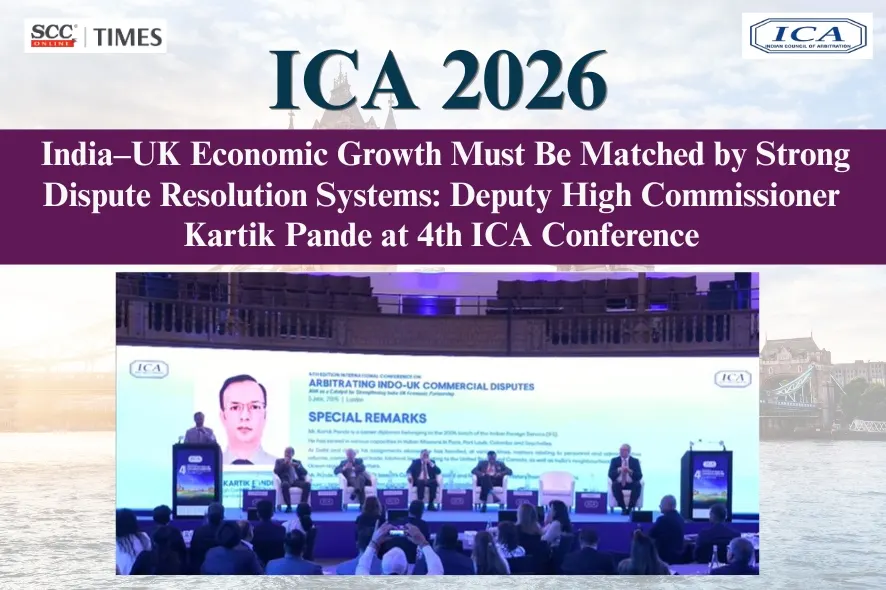
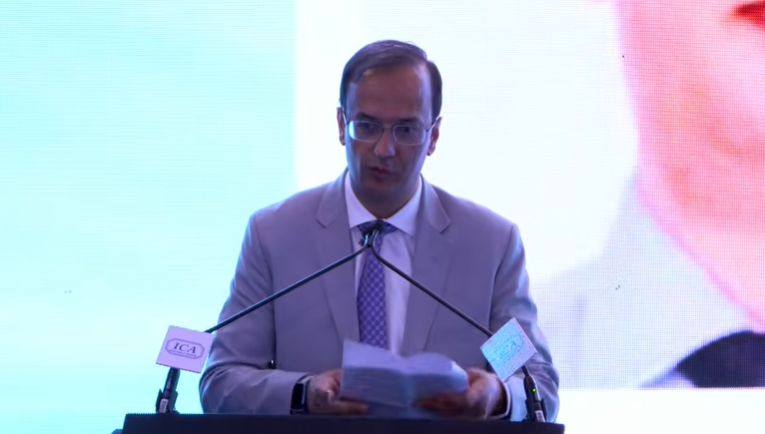
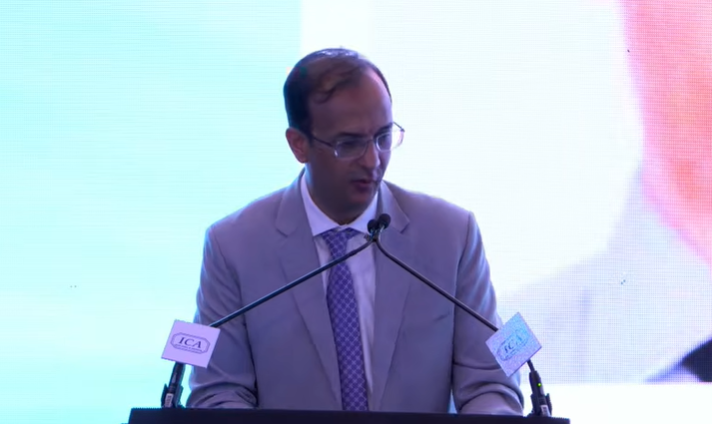
At the 4th International Conference on Arbitrating Indo-UK Commercial Disputes organised by the Indian Council of Arbitration (ICA) in London, Mr. Kartik Pande, Deputy High Commissioner of India to the United Kingdom, highlighted the close link between the rapidly expanding India—UK economic partnership and the need for dependable dispute resolution mechanisms.
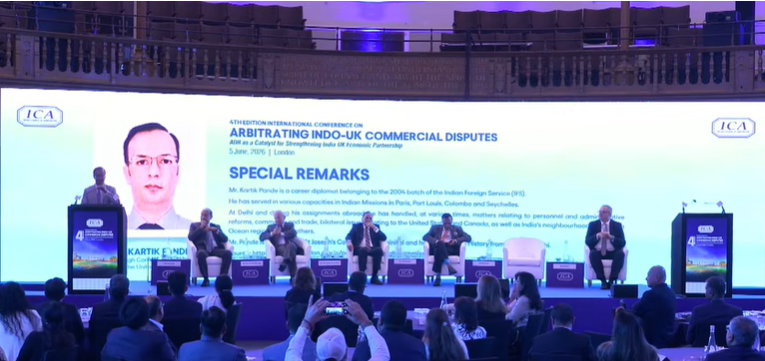
Addressing a gathering that included Chief Justice of India Justice Surya Kant, Sir Geoffrey Vos, Master of the Rolls and Head of Civil Justice of England and Wales, legal practitioners, policymakers and business leaders, Mr. Pande described the conference as an important forum for strengthening legal cooperation and promoting dialogue on cross-border dispute resolution.
India—UK Trade Ties Gather Momentum
Drawing attention to the broader economic context, Mr. Pande said that India—UK relations had witnessed significant momentum over the past year, marked by high-level political engagement and growing commercial cooperation.
Noting that bilateral trade currently stands at approximately £47.9 billion, he observed that the goal of doubling trade by 2030 no longer appears distant. According to him, the growing depth of the relationship reflects both the maturity of the partnership and the confidence businesses have in the opportunities available in the two markets.
Free Trade Agreement Expected to Boost Commercial Confidence
Mr. Pande pointed to the recently concluded India—UK Free Trade Agreement as a major step forward in economic cooperation. While tariff reductions remain an important feature of the agreement, he noted that its significance lies equally in measures aimed at simplifying trade processes and improving transparency.
Referring to provisions relating to digital customs procedures and rules of origin, he said that the agreement would help businesses move goods more efficiently and at lower costs, thereby creating conditions for deeper economic integration between the two countries.
Investment Partnership Becoming Increasingly Balanced
Speaking about investment flows, Mr. Pande said that India and the United Kingdom are increasingly becoming partners of mutual economic significance rather than one-way investment destinations.
He referred to initiatives such as the India—UK Economic and Financial Dialogue and the India—UK Infrastructure Financing Bridge as examples of institutional cooperation supporting long-term growth. These mechanisms, he noted, are helping mobilise investment and strengthening collaboration in areas such as infrastructure and sustainable finance.
Reforms Strengthening India’s Business Environment
Mr. Pande also highlighted the series of reforms undertaken by India to improve ease of doing business and attract investment. Initiatives such as PM Gati Shakti, the National Logistics Policy, public-private partnership reforms and policy changes relating to taxation, labour and foreign investment were cited as measures contributing to a more transparent and efficient business environment.
According to him, these reforms are positioning India for sustained economic growth and deeper integration into global value chains.
Arbitration Critical for Cross-Border Commerce
Against the backdrop of increasing trade and investment, Mr. Pande emphasised that reliable dispute resolution systems are indispensable to modern commercial relationships.
Businesses entering cross-border transactions, he said, require confidence that disputes, if they arise, can be resolved fairly, efficiently and predictably. In this regard, arbitration and other ADR mechanisms play a crucial role in reducing uncertainty, preserving commercial relationships and supporting international business activity.
India Continues to Promote ADR Frameworks
Reaffirming the Government of India’s commitment to strengthening alternative dispute resolution mechanisms, Mr. Pande said that arbitration and mediation have become integral components of India’s legal and commercial landscape.
He added that as economic ties between India and the United Kingdom continue to deepen, closer legal cooperation between the two countries will assume greater importance in facilitating cross-border commerce and investment.
Concluding his remarks, Mr. Pande acknowledged the role played by the Indian Council of Arbitration in bringing together stakeholders from both jurisdictions. He expressed confidence that the discussions at the conference would contribute to the development of a modern and internationally respected dispute resolution ecosystem capable of supporting the evolving needs of global commerce.