Permanent Establishment Doctrine Explained Through Hyatt International Case
In this video, Adv Tarun Jain, author of Goods and Services Tax: Constitutional Law and Policy explains the Supreme Court’s landmark ruling

Bringing you the Best Analytical Legal News


In this video, Adv Tarun Jain, author of Goods and Services Tax: Constitutional Law and Policy explains the Supreme Court’s landmark ruling
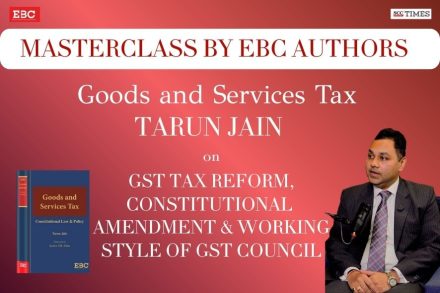
In this episode of Masterclass by EBC Authors, Advocate Tarun Jain, Supreme Court of India unpacks GST not merely as a tax reform but as a constitutional re-engineering of India’s federal structure. From the 101st Constitutional Amendment to Supreme Court rulings and the institutional design of the GST Council, this masterclass explores how GST has transformed legislative power, Centre–State relations, and cooperative federalism.
by Mahendra Kumar* and Sidhant Satya**
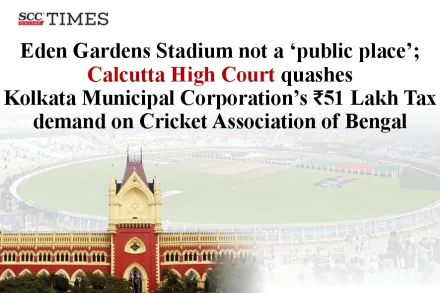
“In common parlance, for a particular place to be a public place, the members of the public must have an absolute, unqualified and unconditional right of free access thereto of their own free will and volition without any restriction whatsoever.”
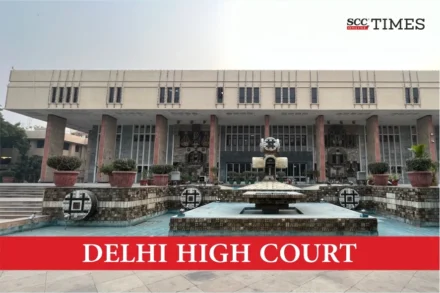
Section 28 of Customs Act, by its very nature posits, in each set of facts and circumstances, the issuance of a SCN either under Section 28(1) or under Section 28(4) of the Act and not under both. Under the circumstances, we are unable to agree that the impugned SCN under section 28(4) of the Act post the issuance of the SCN under Section 28(1) could be termed a “Supplementary Notice”.
The Court held that the proceedings initiated in terms of the impugned SCNs and their continuance would be futile and impractical. The impugned SCNs are essentially rendered impotent and would serve no practical purpose.