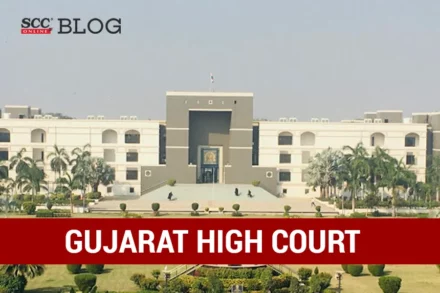
Wrongful detention | Gujarat HC grants 1 Lakh compensation to prisoner who spent 3 years in jail after Bail
The Convict was released on regular bail on 29-09-2020, however, the jail authorities did not open the E-mail containing the bail order.
The respondent’s contention that the petitioner himself contributed to the unfortunate electrocution, was rejected by the Court.
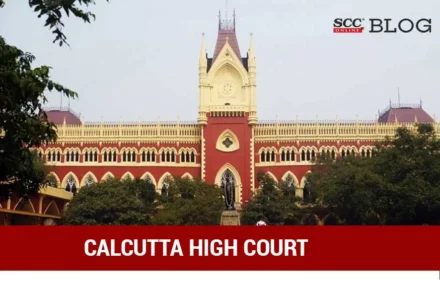
Supreme Court had previously directed states to ensure a minimum compensation of Rs. 3 lakhs for acid attack victims. However, the Calcutta High Court acknowledged the need for higher compensation due to the severe physical, economic, social, and psychological ramifications.
The principle governing the evidence in civil cases is that there should be a preponderance of the events which should be proved unlike in criminal matters, where the evidence have to be proved beyond a reasonable doubt. Moreover, the burden of proof is on the party which will suffer if such evidence is not proved.
The claimant was a passenger travelling in the truck, but the claimant did not state about any of his loaded goods in the statement or having taken the truck on hire
Supreme Court said that the burden was on the appellant more particularly in a circumstance when all the family members had got administered the same vaccination from the same source and the appellant himself did not undergo any difficulty when the first two doses were administered.
Allahabad High Court said that Development Authority is only in possession of part of the land and the scheme for proposed ‘New Kanpur City’ as of now is not viable.
The single-judge bench had directed the Distribution Company to adopt the multiplier method used in assessing compensation in Motor Accident Claim Cases while issuing compensation in the present matter.
When funds to the tune of Rs.8154.84 Crore is available with the National CAMPA, which can be utilised , the UOI has the statutory duty, pursuant to the manifestation of the Directive Principles of State Policies, considering the extreme urgency and critical nature of the issue.
The Calcutta High Court held that since the acquired land had been used for public purposes, compensation under the Act, 2013 should be provided to the petitioners.
“The liability of the Insurance Company will be restricted to that arising under the Workmen Compensation Act, 1923 and the owner will be liable to satisfy the remaining part of the award.”
Kerala High Court scrutinized the definition of ‘sexual assault’ and expressed that the same has to be construed as sexual offence against a victim, including sexual harassment.
Madras High Court rejected the argument that compensation has been already paid to the petitioner, thus the question of providing employment to the surviving daughter will not arise, as the petitioner is relying upon the provision of a Special Act.
Indian Railway’s has failed to substantiate its grounds for setting aside the impugned Arbitral Award that the impugned award suffers from patent illegality and the findings therein are perverse and would shock the conscience of this Court.
Allahabad High Court said that as the compensation has already been assessed by the authorities to the tune of Rs. 1,33,05,600/-, thus no question arises for interfering for awarding higher compensation
Bombay High Court observed that it is the farmer’s legal right to get compensation and for a person who is vested with a legal right, the demand for justice goes hand in hand.
In absence of any explanation suggesting that the wife was incapable of working again, the Court stated that she is legally bound to meet her own expenses and should only seek supportive maintenance from her husband.
The Court only expressed its prima facie view and final orders in the writ appeal on merits will be passed after hearing the parties in full, uninfluenced by any of the observations made in this order. Therefore, the Senior Advocate was not prevented from placing his contentions to sustain the order of the Single Judge at the time of final hearing.
Jharkhand High Court commented that the State Police’s lackadaisical attitude to arrest anyone and put him in custody made the petitioner suffer humiliation, who was having a bright career and completed SSC exam.
“It is for the Doctors to take a decision and continue the treatment by following the medical protocol. Contrarily, High Court cannot interfere with the opinions of the medical expert by acting as an expert body which is not desirable, and it will lead to excess exercise of powers of judicial review conferred under Article 226 of the Constitution”