
India International Disputes Week 2026
Events & Collaborations

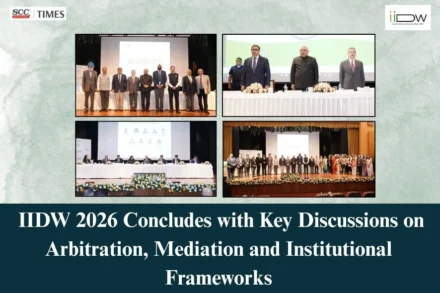
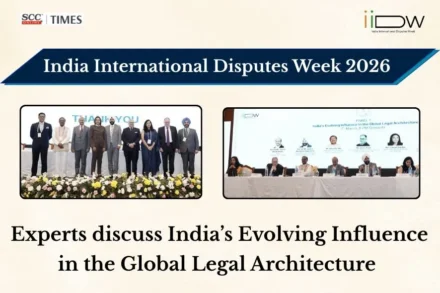
The fifth and final day of IIDW 2026 brought together judges, senior advocates, academics, practitioners, and international delegates for a series of discussions on arbitration, mediation, and institutional reform, culminating in reflections on India’s evolving role as a trusted seat of dispute resolution.
IIDW 2026
Events & Collaborations

India International Disputes Week 2026 explored India’s growing influence in the global legal order, with discussions on constitutional jurisprudence, arbitration law, international criminal justice, and cross-border dispute resolution.

India International Disputes Week 2026
Events & Collaborations

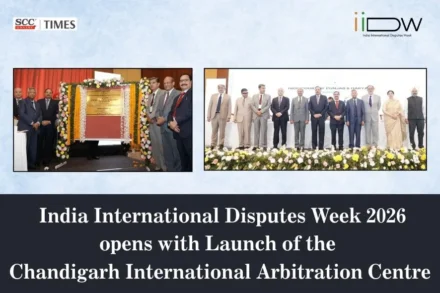
Day 1 of India International Disputes Week 2026, commenced in Chandigarh with the launch of the Chandigarh International Arbitration Centre (CIAC), an initiative of the Punjab and Haryana High Court, marking an important institutional development in India’s dispute resolution ecosystem.

Section 29-A of Arbitration and Conciliation
Case BriefsSupreme Court

“The impugned interim order has been passed by the High Court on a misinterpretation of the ratio of the decision of this Court in Mohan Lal Fatehpuria (supra).”

extension of arbitral mandate under Section 29-A
Case BriefsSupreme Court

“The ‘Court’ under Section 29A shall be the Civil Court of ordinary original jurisdiction in a district and includes the High Court in exercise of its original civil jurisdiction under Section 2(1)(e), and shall not be the High Court or the Supreme Court under Section 11(6) of the Act.”

Forged Arbitration Agreement
Case BriefsSupreme Court

“Arbitration is founded upon consent. A party may be bound by the arbitral process only if it is first shown, even at a prima facie level, that such a party had agreed to submit disputes to arbitration.”

civil suit cannot nullify arbitral award
Case BriefsHigh Courts

Once arbitral award attains finality up to the Supreme Court, separate civil suit challenging underlying transaction on grounds of fraud is barred by Section 5 of the Arbitration Act and principles of finality.

Akhanda 2 release
Case BriefsHigh Courts

In light of the settlement agreement and receipt of ₹5 Crores, the Court vacated the he interim order of injunction and permitted the release the movie ‘Akhanda 2’.

edge servers dispute
Case BriefsHigh Courts

“TCS should consider itself lucky that Inspira was successful in selling TCS’s user-specific Servers… Otherwise, TCS would have been liable to pay the entire price.”

delayed arbitral award public policy
Case BriefsSupreme Court

Supreme Court held that the undue delay and indecisive conduct of the Arbitrator, which culminated in a rudderless Award, were utterly shocking, as he completely lost sight of the fundamental purpose of the arbitration process.

arbitral awards by lay arbitrators
Case BriefsHigh Courts

The Court was dealing with a case where the arbitrators forming part of the Arbitral Tribunal are not only lay persons, but are also, the family elders, who consented to resolve the dispute between two brothers considering the overall interest of the family and its business.

non-operation of arbitration clause
Case BriefsSupreme Court

“The arbitration agreement must be interpreted in a purposive manner, but not literally so as to enable the parties to pursue the intended dispute redressal mechanism of contract”.

DreamFolks Lounge
Case BriefsHigh Courts

“Nothing has been placed on record by Dreamfolks to show that the said entities/ banks are its exclusive clients and that they have not entered similar agreements with other service providers like Dreamfolks.”

Limitation Act applicability to Arbitration
Case BriefsHigh Courts

“As there is conflicting view upon the same by co-ordinate benches, in such circumstances this Court is of the view that the issue should be examined by a larger bench.”

Unilateral Arbitrator Appointment
Case BriefsHigh Courts

“The waiver under Section 4 of the Arbitration and Conciliation Act, 1996 will be inapplicable to the unilateral appointments as it is governed by Section 12(5), which specifically provides for waiver by express agreement in writing.”

Law Governing
Op EdsOP. ED.

by Vaishnavi Agrawal*

Arbitral Tribunal
Op EdsOP. ED.

by Parth Gupta*

Loss of Profit and Profitability
Op EdsOP. ED.

by Ramkishore Karanam* and Preethi Sivaraman**

International Arbitration
Op EdsOP. ED.

by Mohit Pandey*

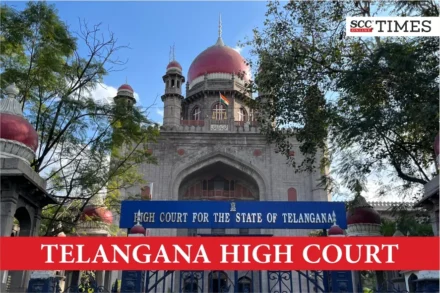
Telangana High Court
Case BriefsHigh Courts

“We find the conduct of HMDA not only to be in blatant disregard of the law but also evincing desperation to avoid the processes of law by pushing back their obligation to make payment to CEL by filing one vexatious proceeding after another.”