Justice T Raja to be transferred from Madras High Court to Rajasthan High Court at the earliest, Supreme Court Collegium reiterates its recommendation
The Collegium resolution was passed on 19-04-2023.
Continue reading
Bringing you the Best Analytical Legal News


The Collegium resolution was passed on 19-04-2023.
Continue reading
The Supreme Court collegium resolutions were passed on 19-04-2023.
Continue reading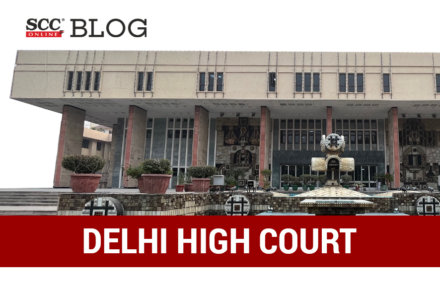
The Delhi High Court held that the judgement passed by the High Court of England was conclusive and would not fall within the exceptions carved out in Section 13 of CPC and was thus, found to be duly executable in India
Continue reading
The Supreme Court resolution was passe dated 17-04-2023.
Continue reading
Petitioner contended that they were entitled to the Fundamental Right to marry which was entrenched in the Constitution which includes the choice of a marital partner. Neither the State nor Society could intrude into the domain of individual right to pursue a way of life which were central to their identity and autonomy.
Continue reading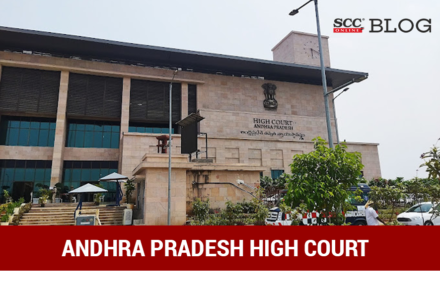
The Andhra Pradesh High Court opined that conducting of the play had no legal bar, but it was the responsibility of everyone associated to maintain peace.
Continue reading
The Supreme Court Collegium Resolution was passed dated 12-04-2023.
Continue reading
The three Supreme Court collegium resolutions were passed dated 12-04-2023.
Continue reading
It was alleged that the Calcutta High Court had arbitrarily cancelled the appointment of petitioners who were appointed as Assistant Teachers of Government aided primary school in the year 2017-2018.
Continue reading
The Supreme Court affirmed the order passed by the High Court stating that the respondent assessee was neither entitled to the deductions nor profit earned under Section 80-IB on the amount of DEPB as well as Duty Drawback Scheme.
Continue reading
The issue before the Supreme Court pertains to the question whether WhatsApp’s privacy policy which was introduced in January 2021 is in violation of right to privacy under Article 21 of the Constitution of India.
Continue reading
The Delhi High Court reprimanded the contention of the applicant stating that since the complainant was a lawyer and was, thus, well aware about nuances of writing a complaint and had, therefore, twisted the facts and police had lodged a false complaint against the applicant. It was opined that a person’s profession of being an advocate cannot be held against him.
Continue reading
The Delhi High Court directed the Ministry of Information and Broadcasting along with other relevant Ministries to hold the consultation with film producers, OTT platforms operating in India, television broadcasters, association of theater owners, organizations consisting of disabled persons, distributors of films and any other stakeholders it may consider appropriate.
Continue reading
The Delhi High Court stated that the Constitution of India conferred a large gamut of rights upon Indian citizens and there existed a smaller bouquet of rights which were also recognised and conferred in respect of non-citizens.
Continue reading
The Supreme Court stated that the erroneous assessment order had resulted in loss of the Revenue in the form of tax. Thus, the High Court had committed a very serious error in setting aside the order passed by the Commissioner passed in exercise of powers under Section 263 of the Income Tax Act.
Continue reading
The Delhi High Court held that “the petition was a mala fide attempt to throw mud on the reputation of the incumbent and is a gross abuse of process.”
Continue reading
Supreme Court was quick to clarify that if prosecution was unable to prove its case on its own legs, then it won’t be able to derive advantage from the weakness of the defence and the Court would not be able to convict the accused on the strength of the evidence in the form of reply to the suggestions made by the defence counsel to a witness.
Continue reading
The Supreme Court doubted the prosecution’s story due to various lacunas existing in it, the manner in which the investigation was conducted and the material inconsistency in the statements of the eyewitnesses.
Continue reading
The Delhi High Court opined that that technicalities and procedural defects, which do not go to the root of the matter, should not be permitted to defeat a just cause, more so in cases where suits are initiated or defended on behalf of public corporations.
Continue reading
The petitioner relied upon S.K. Raju v. State of West Bengal, (2018) 9 SCC 708 which had observed that wherever the search of a person takes place, the requirement of mandatory compliance of Section 50 of NDPS was attracted, irrespective of whether the contraband was recovered from the body of the person or not.
Continue reading