








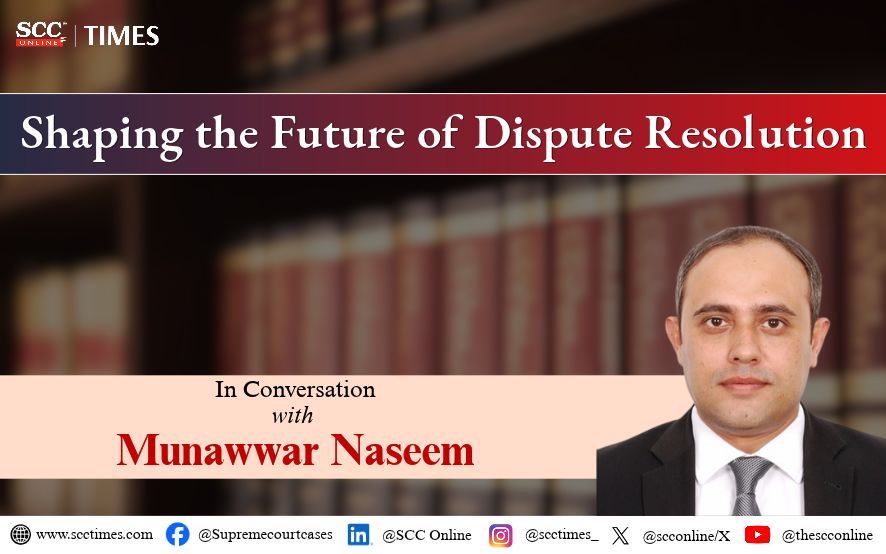
1. To begin with, could you tell us about your journey into the legal profession and what inspired you to pursue a career in law?
My father was a criminal trial lawyer in Patna, and while growing up, I often watched him leaf through volumes of criminal law journals, make notes, and pace thoughtfully as he worked through a case. I also saw him meet people who had little voice of their own, including those who had been falsely implicated. Through his work, I came to understand how a lawyer could protect a person’s liberty and even change the course of a life. Equally influential was his commitment to practising law ethically — not only in his professional conduct, but also in the way he treated people and approached his work.
Those observations quietly shaped me, although my path to law was not a straight one. My first ambition was to become a doctor. When that did not work out, I tried to join the Army while pursuing my LLB, but that opportunity did not materialise either. As I became more engaged with my legal studies, however, I realised that law was a natural fit for me rather than simply an alternative to my earlier ambitions.
My temperament also suited the profession. I am an empathetic listener, and I find it easy to connect with people. These qualities helped me grow into the role of a lawyer, where understanding a person’s circumstances is often as important as understanding the law.
2. Many law students aspire to build careers in dispute resolution without fully understanding the realities of the profession. What are some common misconceptions you would like to dispel?
One common misconception is that there is a standard career path in dispute resolution — that your progress should mirror someone else’s or that everyone should reach the same milestones at the same stage. There is no uniform trajectory. Lawyers differ in their opportunities, experiences, temperament and even in how they approach the same case. Constant comparison can therefore create unrealistic expectations and unnecessary anxiety.
Another misconception is that an interest in law necessarily translates into an aptitude for dispute resolution. The work demands a particular combination of skills and temperament: careful listening, sound judgment, clear communication and the ability to manage uncertainty. It is not merely about enjoying an argument; it is about understanding a dispute and helping someone navigate it. Determining whether you are suited to that work is an important part of your early years in the profession.
Perhaps the biggest misconception is that, with time, you become “settled”. Experience certainly helps, but the profession rarely becomes settled in the conventional sense. New challenges, disruptions and testing situations will always arise. What gradually settles is your mindset: You learn to respond with greater discipline, perspective, and composure.
For students, I would say that the aim should not be to replicate someone else’s career or to expect uncertainty to disappear. Instead, it should be to develop the habits that sustain you through uncertainty: hard work, discipline, common sense and a willingness to keep learning. Equally important is the ability to work well with others. Ultimately, dispute resolution is a team effort, not merely an exercise in individual ability, and learning to listen, collaborate and contribute to a shared purpose is essential.
Another misconception is that experience means you should no longer need guidance. Whenever I feel underconfident or overconfident about a matter, I turn to a senior colleague as a sounding board. Their perspective helps me assess the situation objectively and respond with greater balance. The law requires lifelong learning, and fluctuations in a lawyer’s confidence must never compromise a client’s liberty, property or reputation.
3. How important are internships, moot courts, legal research, and professional networking in securing opportunities at premier law firms? What advice would you give students seeking to stand out?
Internships, moot courts, legal research and professional networking all help students develop their abilities and gain access to leading law firms, law offices and the chambers of Senior Advocates. Participation alone, however, is not enough. What matters is how thoughtfully you use those experiences and what others remember about working with you.
I meet many intelligent, articulate and capable interns. What distinguishes the best among them is consistency: They take ownership of assignments, complete them carefully and follow through without repeated reminders. Urgent matters may occasionally require extra effort or flexibility, and a willingness to help at those moments is valued. That should not, however, be confused with being available around the clock or routinely sacrificing personal commitments.
The same principle applies after an internship. Students often lose touch with the people they worked with and assume that good performance alone will lead to an opportunity. Professional relationships require thoughtful follow-up — not repeated requests for a job — but genuine engagement that builds on the work and conversations you shared.
A senior is more likely to remember you when your work moves a matter forward or saves time. This may involve finding the relevant authority, preparing an accurate chronology, organising documents or anticipating what will be needed in court. Ask yourself: “Does my work make the next step easier for the person relying on it?”
Being pleasant is valuable, but being dependable, considerate and helpful is what makes people want to work with you again. The aim is not to flatter a senior; it is to earn trust through the quality of your contribution.
Whether preparing for a moot or researching a live matter, begin by understanding the facts, identifying the issue and answering the question actually asked. An impressive collection of judgments has little value if it does not address that question. Identifying a judgment against your proposition can be just as valuable as finding one that supports it. It allows the team to assess the difficulty honestly and prepare to address it.
A mentor will usually need three things: a clear conclusion, the supporting authority and any important qualification. They do not need a detailed account of every step you took to reach the answer. Effort matters, but the result should be concise, relevant and easy to use, especially when the person relying on it is short on time.
Listen to understand rather than merely to respond. Note the task, clarify genuine ambiguities, and confirm the expected output and deadline. Many interns and even associates begin work before fully understanding what is required, wasting both their own time and that of the person guiding them.
Learning to take instructions well also prepares you to lead. It teaches you what makes an instruction clear and what another person needs to carry it out effectively.
None of this should become an argument for burnout. Seniors and mentors have a responsibility to guide their teams, allocate work sensibly and respect reasonable boundaries. Therefore, students should focus less on appearing impressive and more on being useful, thoughtful and reliable. Those are the qualities that can turn a short internship into a lasting professional relationship.
4. Artificial intelligence (AI) is increasingly transforming the legal profession. How do you see AI reshaping the work of corporate and commercial disputes lawyers, and what skills should young lawyers develop to remain relevant in an AI-driven legal landscape?
We are in an era of disruption, and AI is an important part of it. It has made many tasks easier, but we should also acknowledge that some of those tasks traditionally formed part of the work and training of interns, juniors and associates. For young lawyers, the challenge is therefore not merely to learn how to use AI, but to develop the judgment that makes its use meaningful.
In corporate and commercial disputes, I see AI as a tool to help lawyers organise material, work through lengthy documents and produce more focused drafts and submissions. The objective should not be to generate more pages. It should be to identify what matters, sharpen the argument and save the time of both the lawyer preparing the case and the court hearing it. The responsibility for understanding the matter, choosing the strategy and standing behind the submissions must remain with the lawyer.
For young lawyers, I would emphasise three things. Firstly, use internships to develop practical readiness. Meaningful internships become even more important when technology can perform some of the preliminary work previously assigned to juniors. Students should use that time to learn how a matter moves from documents to pleadings, from pleadings to arguments, and from arguments to a decision. They should aim to enter the profession with practical understanding, rather than familiarity with legal terminology alone.
Secondly, do not allow AI to replace your own reading. Before AI tools became part of everyday legal work, we would spend time with the documents, become familiar with them and use that understanding to build our pleadings and the narrative of the case. That engagement must not stop. Whether you use AI before or after reading the record, you must be familiar with the documents themselves, not merely with an AI-generated account of them.
In a commercial dispute, a date, a contractual qualification or a passage in correspondence may change the entire argument. If you have not read the underlying material, you may not recognise what an AI-generated summary has missed or misunderstood. The same discipline applies to legal research: check the authority, read the relevant passages and satisfy yourself that they support the proposition you intend to advance.
Thirdly, develop judgment and the ability to communicate clearly. A young lawyer should be able to identify the issue, distinguish the important facts from the background and brief a senior accurately and quickly. That requires preparation, attentive listening and a developing sense of the law.
It also means knowing when to question an AI output, when to verify it independently and when to seek a senior’s guidance. A polished answer is not necessarily a correct answer, and confidence in its presentation should never substitute for scrutiny.
Ultimately, I see AI as an aid to legal work, not a substitute for the lawyer’s responsibility. Young lawyers who combine technological fluency with close reading, sound judgment and clear communication will be better placed to use it without becoming overly dependent on it.
5. Alternative dispute resolution mechanisms, particularly arbitration and conciliation, have gained significant prominence in recent years. What factors do you believe are driving this shift?
I think there are a few reasons for this shift. One is the time litigation takes. As lawyers, we can advise a client on the merits of a case, but we often cannot tell them with any certainty how long it will take. Arbitration gives the parties more control over the timetable. It may not always be faster or cheaper, but that control gives clients some comfort.
The second is the choice of the arbitrator. A dispute may involve a specialised contract or technical issues. Being able to appoint someone who understands that field is a considerable advantage. It is not that a Judge cannot understand those issues, but parties value the opportunity to choose someone with relevant experience.
The third is flexibility. Hearings can be scheduled at a convenient time and place, and the parties can plan their work around them. You are not spending the day waiting for your matter to be called. That makes a practical difference to both the client and the lawyer.
Conciliation serves a different purpose. It gives parties a chance to resolve their differences without taking every issue through a contested proceeding. Sometimes, the client wants a workable settlement and to get on with business, particularly where the commercial relationship is worth preserving.
Having said that, arbitration does not necessarily end the dispute. You may get an award within a fixed period, only to spend considerable time in proceedings under Sections 34 and 37, Arbitration and Conciliation Act, 1996. So, I would not present it as a complete answer to delay. Overburdened courts have certainly pushed parties towards alternatives, but the ability to choose the decision-maker and have a greater say in the process has also drawn them towards arbitration.
6. Despite the existence of well-established domestic and international legal frameworks, the enforcement of cross-border arbitral awards continues to present challenges. In your view, what are the key obstacles, and how can they be addressed?
Getting an award and getting paid under that award are two different things. For the client, the matter does not end with a favourable award. It ends when the money is recovered.
One practical difficulty is that, by the time enforcement begins, the debtor’s asset position may have changed considerably. Assets may have been transferred or encumbered, third-party rights may have been created, or the debtor may have undergone restructuring or entered insolvency. In some cases, these steps may be deliberately used to frustrate recovery.
Dealing with this requires a carefully planned recovery strategy, backed by reliable information about the assets, their ownership and any existing claims over them. Specialist asset-tracing agencies can help, but their findings must be tested by the legal team with the assistance of local counsel. The effort should be to identify not merely where the assets are, but where recovery is realistically possible.
This exercise should begin well before the award is delivered. The legal team should examine the debtor’s corporate structure, monitor changes in ownership and significant asset transfers, and identify jurisdictions where protective measures may be sought. Where there is a risk of assets being moved or dissipated, local counsel should advise promptly on the availability of disclosure, freezing or attachment orders. If assets have already been transferred, the team should examine whether those transactions can be challenged. At the same time, it must distinguish assets belonging to the debtor from those belonging to related entities; a connection between companies does not, by itself, make all their assets available for recovery.
Coordination is equally important. Lawyers and investigators working in different countries should follow a common plan, so that a step taken in one jurisdiction does not unnecessarily alert the debtor before protective action can be considered elsewhere. The information must also be kept current. An asset identified six months ago may no longer be available when enforcement begins. Ultimately, the strategy has to make commercial sense: what is the asset worth, what claims already exist over it, what will recovery cost, and how long is it likely to take? The client needs a realistic route to payment, not merely another round of proceedings.
7. Could you share a particularly significant or memorable case from your career and explain how it influenced your professional growth or perspective as a lawyer?
It is difficult to pick one case. I would be doing a disservice to several matters that have shaped my career, my outlook and my understanding of what it means to be a lawyer. I began my independent practice in the same year that I qualified as an Advocate-on-Record of the Supreme Court of India. My work spanned the trial courts, the High Courts and the Supreme Court, and the learning flowed both ways. My experience in the Supreme Court helped me recognise how mistakes made at the trial stage could eventually prove costly to litigants. I tried to bring that perspective to my work in the trial courts and High Courts, paying particular attention to laying the right foundation for a case. Equally, my work in the trial courts kept my understanding of legal principles and procedure grounded in practice. I brought that experience to my submissions before the Supreme Court.
My practice has given me the opportunity to handle a wide range of matters. These include advising and representing multinational companies engaged in mineral exploration across jurisdictions; appearing for State Bank of India in contempt and extradition proceedings involving industrialist Vijay Mallya; representing the Petroleum and Natural Gas Regulatory Board (PNGRB) in the “deemed authorisation” case and in the M.C. Mehta proceedings; and appearing in arbitrations for National Hydroelectric Power Corporation Limited (NHPC Limited) and Neyveli Uttar Pradesh Power Limited (NUPPL) in arbitrations involving disputes with their contractors.
Representing the newly formed Rouse Avenue Bar Association was, however, memorable for a different reason. The association challenged a decision of the Bar Council of Delhi concerning the recognition of the Bar Association. This meant questioning a decision of our own professional regulatory body against all kinds of odds and pressures. The matter remains pending before the Supreme Court, so I would not comment on the merits.
The proceedings were a roller coaster for over three years. They gave me the opportunity to stand for a cause I believed in, even when it meant taking a position against our own parent body. The experience tested my resolve and taught me something about conviction. Some cases do more than develop your abilities as a lawyer; they help you discover a part of yourself you did not know existed.
8. Beyond your legal practice, you are actively involved in social initiatives through non-governmental organisations (NGOs). Has this work influenced the way you approach ethical decision-making as a lawyer?
I have been associated with Snehi for 23 years. It works to promote mental health and well-being through counselling, crisis support and community outreach, with particular attention to children and young people. Its work includes helping students cope with examination-related stress and working with schools to build awareness among students, teachers and parents. At the heart of this work is a simple belief: People in distress should have someone who will listen without judgment and treat them with dignity. My seniors and mentors Mr Jagdeep Kumar Sharma, Mr Jay M. Savla and Mr Robin Ratnakar David (all Senior Advocates now). They saw that I was genuinely interested and gave me time and space to pursue social work while I was working in their offices.
I discovered early in my career that social work energises me and gives me a sense of purpose. That is not why I undertake it, but its influence carries into every part of my life, including my legal practice. Good lawyering also requires perspective and situational awareness, and the mind needs recreation to sustain both: playing a sport, reading beyond the law and travelling provide the distance and renewal needed to return to professional work with greater clarity.
It also gives me a clearer basis for making difficult professional choices: I know which values I am not prepared to compromise.
I founded Look Forward Foundation in 2021 to create opportunities for education, training and mentoring. Through one of its mentoring programmes, the Foundation connects people seeking guidance with experienced professionals and entrepreneurs willing to share their knowledge and experience.
9. What advice would you offer to junior advocates and law students who aspire to build such a broad and versatile legal practice?
Spend time with people whose abilities and experiences are different from your own, including those outside the legal profession. Listen more than you speak, and do not assume that learning happens only through books or in court. You can learn a great deal by observing how someone handles a difficult conversation, approaches a problem or makes a decision. For instance, I find that understanding a company’s business or a technical process from someone who knows it well makes it much easier to connect the facts with the legal issues and present the case effectively.
But learning by itself is not enough. Develop the habit of asking how you can apply what you have learnt to the matter before you. A broad practice is not built merely by accepting different kinds of cases; it is built by being willing to become a student again whenever an unfamiliar issue arises.
Above all, remain curious and be comfortable saying, “I do not know, but I will find out.” You need not have an answer to everything at the outset. What matters is the willingness to understand the problem, do the work and seek guidance when needed. This is a process of incremental learning across different fields. Over time, you learn to connect the dots and bring that understanding to your practice.
1. Advocate-on-Record, Supreme Court of India,Partner, Dua Associates.
2. EBC-SCC Online Student Ambassador, Aligarh Muslim University(2026-27).





0 replies