








Constitution of India — Arts. 136 and 142 — Uncompoundable offences: Quashing of criminal proceedings on basis of compromise petition, when permissible, explained. [Naranbhai Bhikhabhai Kachchadia v. State of Gujarat, (2024) 2 SCC 239]
Constitution of India — Arts. 239-AA(3)(a) and Sch. VII List II Entries 1, 2, 18, 64, 65 and 66 and Arts. 73, 162, 163 and 74 — Posts under NCT of Delhi under Joint AGMUT cadre (Arunachal Pradesh-Goa-Mizoram-Union Territories Cadre) [as per Cadre List 2 of the Indian Administrative Service (Fixation of Cadre Strength) Regulations, 1955]: As no conclusive decision could be rendered in view of pendency of matter before Constitution Bench, prima facie, held, it would be far-fetched to postulate that the Central Government is divested of the power to appoint the Chief Secretary of GNCT of Delhi. [State (NCT of Delhi) v. Union of India, (2024) 2 SCC 300]
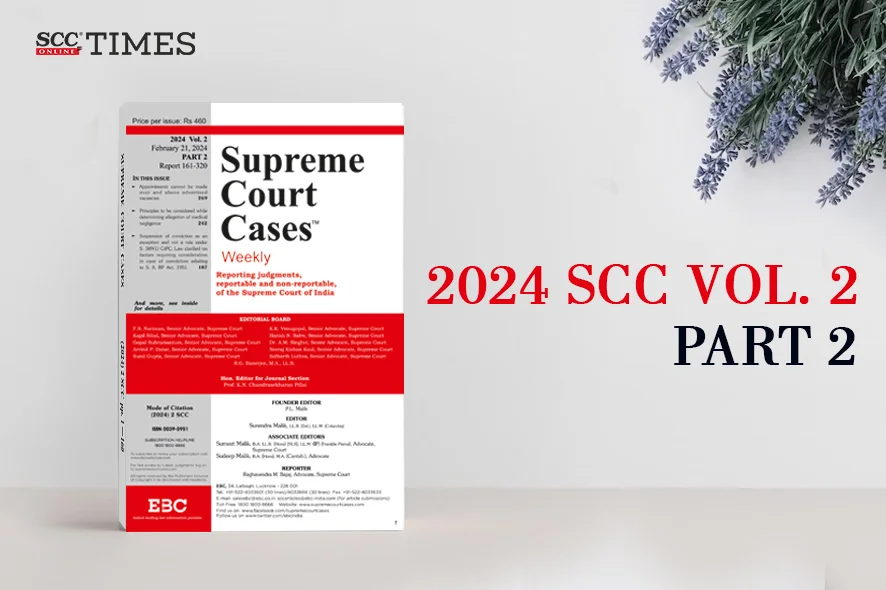
Criminal Procedure Code, 1973 — S. 389(1): Suspension of conviction is an exception and not a rule under S. 389(1). Law clarified on factors requiring consideration in case of conviction relating to S. 8, Representation of the People Act, 1951. [Afjal Ansari v. State of U.P., (2024) 2 SCC 187]
Employees’ Provident Funds and Miscellaneous Provisions Act, 1952 — Ss. 1(3)(a) & (b) and 16 — Establishment of manufacturing, assembling and selling umbrellas: Scope of “Trading and Commercial establishments” notified under Noti. dt. 7-3-1962 issued by Central Government in exercise of powers under S. 1 (3)(b), clarified. [Thankamma Baby v. EPFO, (2024) 2 SCC 295]
Medical and Health Law — Medical Negligence: When a doctor opts for a particular line of treatment but does not achieve desired result, they cannot be held liable for negligence, provided that said course of action undertaken was recognised as sound and relevant medical practice. Principles to be considered while determining allegation of medical negligence. [M.A. Biviji v. Sunita, (2024) 2 SCC 242]
Penal Code, 1860 — Ss. 299 to 304 — Assault or accidental injury — Determination of: Appreciation of evidence, when material witnesses withheld by the prosecution; stand taken by the defence corroborated by other evidence, including medical evidence; and FIR lodged after unexplained delay, explained. [Sekaran v. State of T.N., (2024) 2 SCC 176]
Rent Control and Eviction — Arrears of Rent/Default/Tender of Rent/Striking off Defence — Default in payment of rent — Provisions in Rent Control Acts providing protection to tenant: Rent Control Acts provide for certain protection to tenant beyond contractual rights. These provisions must be strictly adhered to. Proceedings initiated for non-payment of rent have to be dealt with in that manner as a tenant cannot occupy the premises and then not pay for it. Tenant is required to deposit all arrears rent. Even if there is dispute about rent, tenant is required to deposit it. [Debasish Paul v. Amal Boral, (2024) 2 SCC 169]
Service Law — Judiciary — Recruitment process — Vacancies — Recruitment to post of Civil Judge (Junior Division) in State of H.P.: Appointments cannot be made over and above advertised vacancies except in case of emergency, or for some unforeseen reason, in public interest, or pursuant to policy decision taken by State Government. [Vivek Kaisth v. State of H.P., (2024) 2 SCC 269]





1 reply