MSME Quarterly Digest: April-June 2025
by Abhisaar Bairagi*, Milind Sharma** and Ausaf Ayyub***

Bringing you the Best Analytical Legal News


by Abhisaar Bairagi*, Milind Sharma** and Ausaf Ayyub***
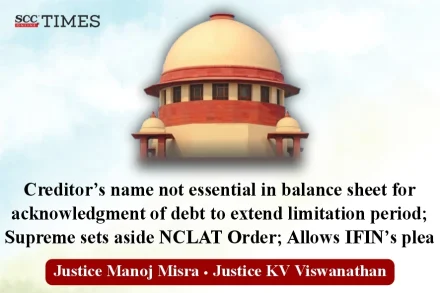
The judgment reaffirmed the principle that entries in a corporate debtor’s balance sheet can constitute an acknowledgment of liability under Section 18 of the Limitation Act, provided they indicate a subsisting jural relationship between the parties, even if the financial creditor is not named explicitly. The Court emphasised that such entries must be interpreted liberally and in context, considering the overall tenor of the balance sheet and the surrounding circumstances.
The CIRP was initiated against the Corporate Debtor vide order dated September 30, 2024, passed by the Hon’ble National Company Law Tribunal, Mumbai Bench.
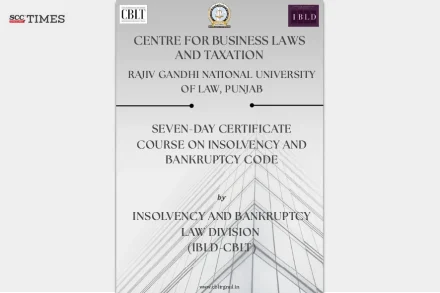
The Insolvency and Bankruptcy Law Division of Centre for Business Laws & Taxation (IBLD-CBLT), RGNUL is organizing a Seven-Day Online Certificate Course on Insolvency and Bankruptcy, scheduled to be held from 18th to 24th August 2025.
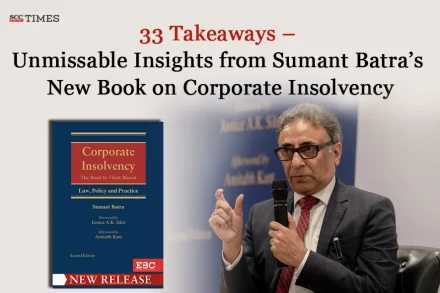
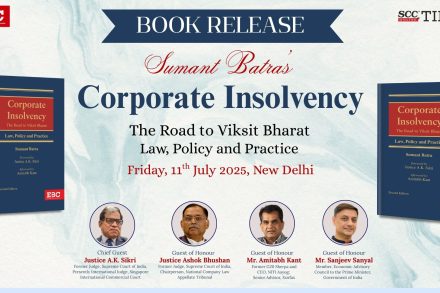
The book release of “Corporate Insolvency: The Road to Viksit Bharat — Law, Policy and Practice”, authored by leading insolvency lawyer and author Sumant Batra and published by EBC (Eastern Book Company) took place recently in the second week of July in New Delhi.

Cyril Amarchand Mangaldas acted as legal counsel to JSW Energy Limited (as successful bidder) for availing credit facility of INR 12,475 Crore from State Bank of India for implementation of resolution plan.
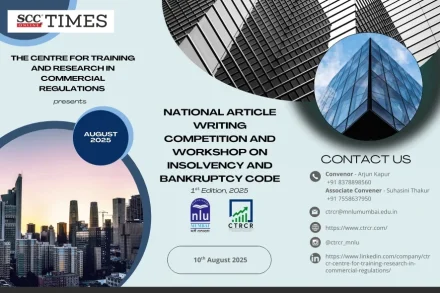
The National Article Writing Competition and Workshop on IBC, 2025 designed to cultivate deep academic inquiry and practical understanding of India’s insolvency regime is to be held in August 2025.
2025 SCC Vol. 5 Part 3: Explore the latest Supreme Court Cases on the Arbitration, IBC, CPC, Contract, Criminal Law, Education Law, Labour Law and Land Acquisition.
Reiterating that the commercial wisdom of the CoC is to be given paramount importance for approval/rejection of the Resolution Plan, the NCLT held that the Resolution Plans in the present case met the requirements of the IBC and the IBBI Regulations, and thus, had to be approved.
Cyril Amarchand Mangaldas has advised and represented Nazara Technologies Limited
by Mridul Chitransh* and Milan Asati**
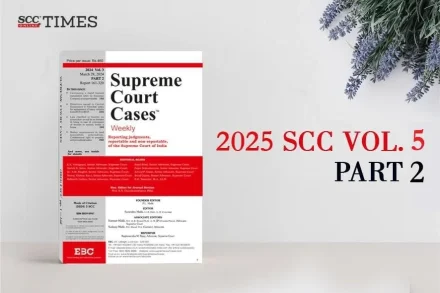
2025 SCC Vol. 5 Part 2: Explore the latest Supreme Court Cases on the Employees’ Compensation Act, IBC and the Transfer of Property Act.
The Resolution Plan has been approved by 83.46% voting share of the CoC, therefore, at the instance of Appellant, approval of Resolution Plan cannot be allowed to be questioned.”
From 03 to 04-04-2025, the International Bar Association corporate and M&A Law Committee at Taj Mahal Palace, Mumbai.
“There is a clear distinction between the Avoidance Applications that may be filed by the Resolution Professional in view of Section 25(2)(j), for avoidance of transactions in accordance with Chapter III of the IBC, and the applications that may be filed in respect of the fraudulent trading or wrongful trading under Section 66, which falls under Chapter VI of the IBC.”
‘On the complete extinguishment of all tax liabilities of the Corporate Debtor upon the approval of the Resolution Plan, there could be no occasion whatsoever for the IT Commissioner to issue the impugned notice under Section 263 of the Act, seeking to revise the assessment order for the Assessment Year 2020-21.’
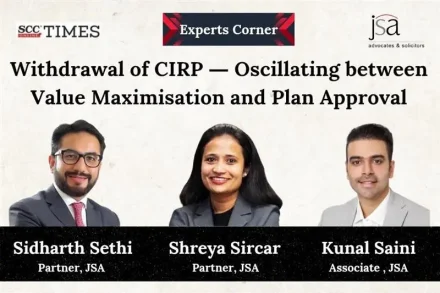
by Sidharth Sethi*, Shreya Sircar** and Kunal Saini***
The immunity granted by the moratorium order issued under Section 14 of the IBC can only be obtained by a corporate debtor and not by a natural person such as the present accused, who was the Director of the corporate debtor.