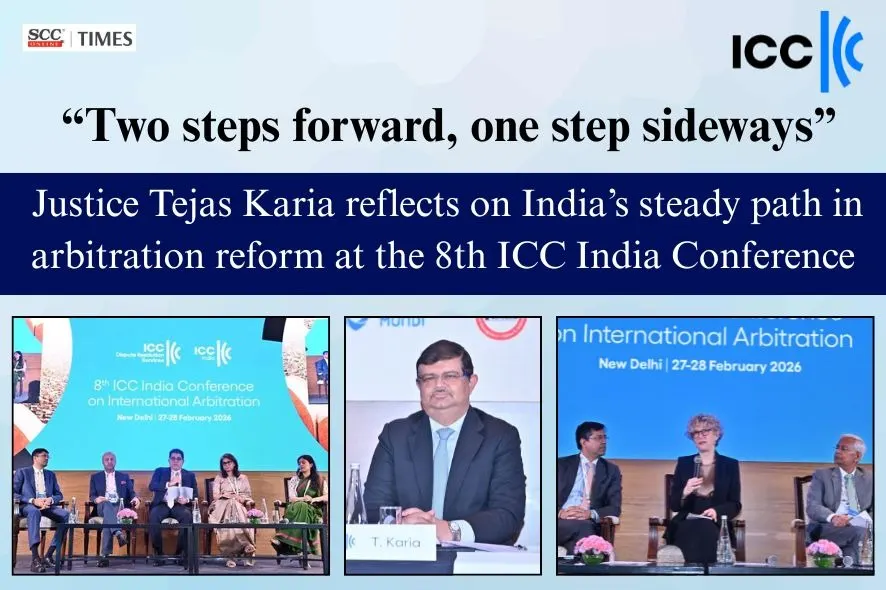
On 28 February 2026, the International Chamber of Commerce (ICC) held the 8th edition of the ICC India Conference on International Arbitration in New Delhi . The conference was preceded by an ICC Institute of World Business Law advanced training on interim measures on 27 February 2026.
The event brought together arbitration practitioners, in-house counsel, and members of the ICC International Court of Arbitration to discuss recent developments in international arbitration and issues relevant to the Indian arbitration landscape.
Welcome Address: Ms. Claudia Salomon, President, ICC International Court of Arbitration
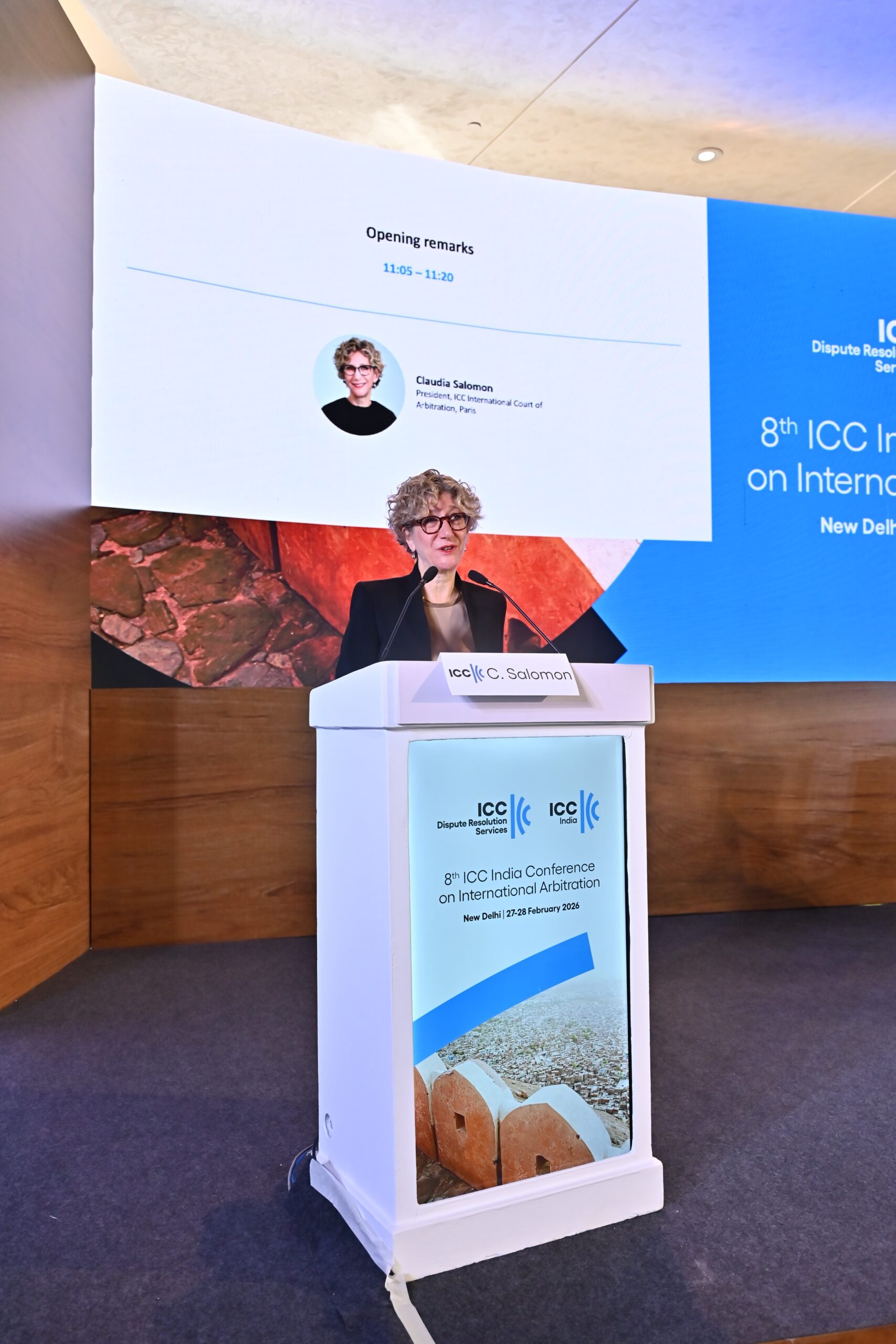
Delivering the welcome address, Ms. Claudia Salomon, President of the ICC International Court of Arbitration, highlighted the institution’s global character and its role in safeguarding the integrity of arbitral proceedings. Referring to the ICC as “the most preferred arbitral institution in the world,” she noted that the Court has administered over 30,000 cases and is composed of members from more than 120 countries, ensuring that decisions reflect diverse legal perspectives. She emphasised that institutional decisions, including challenges to arbitrators and scrutiny of draft awards, are taken after “careful and thoughtful considerations about the legal issues” that affect parties and enforceability. In conclusion, she remarked that “an arbitration is only as good as the arbitral institution.”
Session 1: Shifting winds: Risk management and economic strategies for India’s businesses amid geopolitical haze
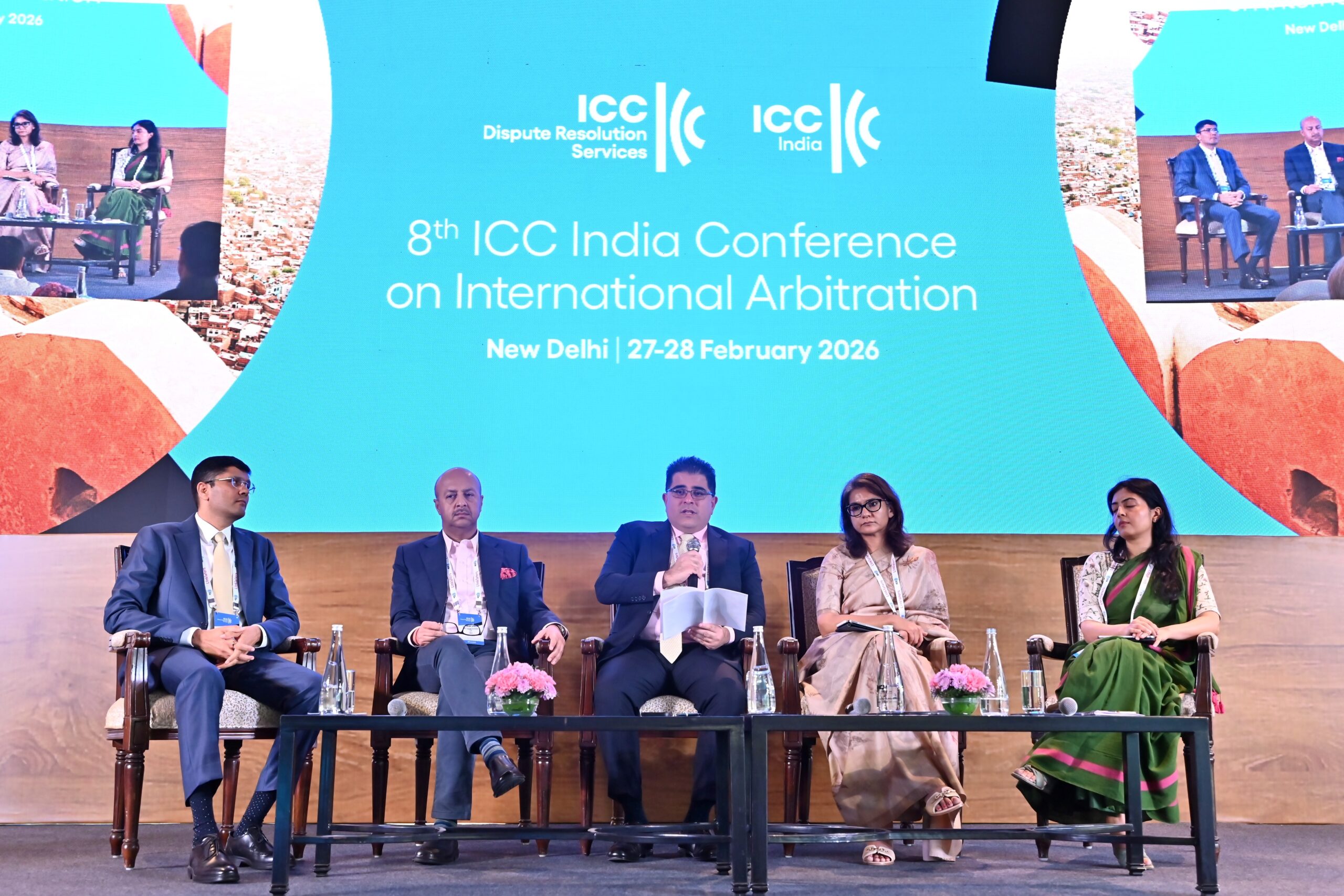
Session 1 was chaired by Mr. Kabir Singh, Partner, Clifford Chance, Singapore, with panellists Ms.Shubhangi Garg, Partner, Shardul Amarchand Mangaldas; Mr.Nitesh Jain, Partner, Trilegal; Mr.Deepankar Sanwalka, Senior Partner, Grant Thornton Bharat; and Ms. Meghana Singh, General Counsel, Vertis Fund Advisors.
Setting the context, Mr. Kabir Singh noted that geopolitics has become unavoidable for businesses and lawyers alike, observing that “these developments are not only impacting trade, they’re impacting investment flows, they’re impacting how contracts are being drafted, how contracts are being enforced, how disputes are being run, and how disputes are being resolved.”
Speaking from the financing side, Ms. Shubhangi Garg explained that lenders have historically preferred offshore comfort, but as Indian capital needs and structures mature, parties are forced to look towards alternatives, with arbitration finding space in financing, though it’s not a default approach. She also pointed to regulatory movement, including SEBI’s push towards online dispute resolution and arbitration for certain market disputes, and highlighted a recent shift in RBI’s approach on acquisition finance, describing it as a significant departure from earlier practice.
Mr. Nitesh Jain underlined that drafting choices around seat and governing law have become increasingly strategic, stating that “what matters the most according to me on a strategic decision is the seat,” and flagged how sanctions and enforcement risks are reshaping dispute pathways, including matters being diverted from arbitration into insolvency proceedings.
Addressing the practical side of risk and recoverability, Mr. Deepankar Sanwalka noted that wars and regulatory shifts can alter the economics of long-term contracts and lead parties to invoke force majeure, while also emphasising that award creditors often overlook groundwork on enforcement, adding that “India is not the easiest place for recovery of assets.”
Ms. Meghana Singh explained that from an investor’s standpoint the focus is on preserving neutrality and economic balance, stating that when structuring dispute clauses, the aim is to build a framework that “will ultimately deliver that economic equilibrium” contemplated when the contract was signed, and she cautioned that where neutrality is not credible, no matter how lucrative the deal is we would typically walk away from it.
The discussion closed with audience questions on green finance and enforcement, with the panel indicating that the intersection of sanctions, regulatory change, and enforceability is now shaping not only dispute strategy, but also front-end contracting and risk pricing.
In focus: Revamping the ICC Arbitration Rules – towards enhanced clarity and efficiency
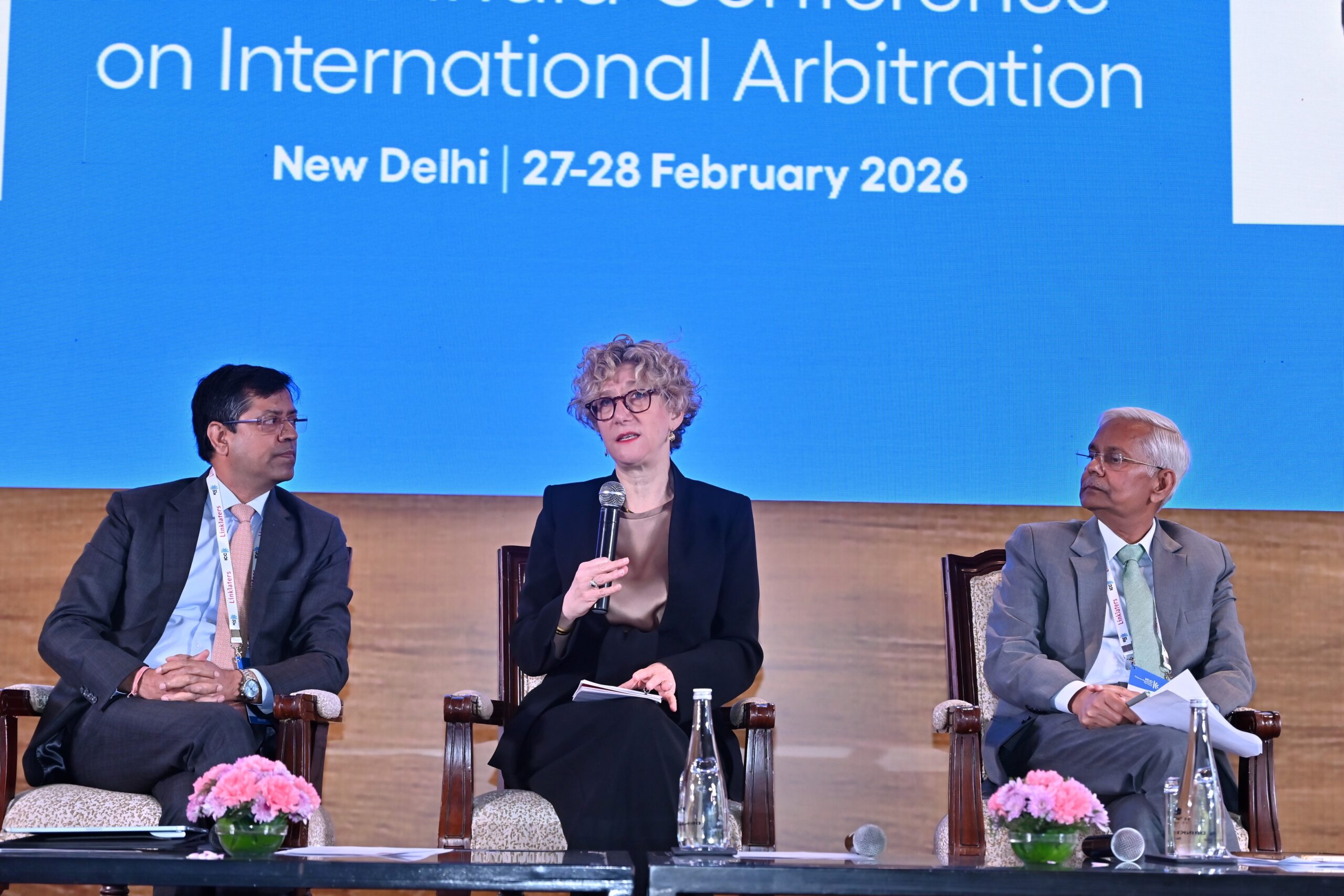
Moderated by Ms. Claudia Salomon, the session offered a preview of the ICC Arbitration Rules revision expected to take effect on 01-06-2026, subject to approval by the ICC Executive Board, the panel consisted of Mr. Sanjeev Kapoor, Senior Partner, Khaitan and Co, and Vice President, ICC International Court of Arbitration and Mr. Amar Gupta, Joint Managing Partner, JSA, and Member, ICC Court.
Kickstarting the discussion, Ms. Salomon explained that the proposed amendments follow an 18-month consultation process involving multiple rounds of feedback and deliberations within the ICC Court and its Bureau, guided by five aims: maintaining the ICC’s leadership position, improving efficiency, reflecting developments in practice and law, responding to evolving user expectations including technology, and enhancing clarity of the rules.
Key changes discussed included a strengthened disclosure framework encouraging arbitrators to disclose in case of doubt, with parties permitted to provide reasoned lists of relevant entities to assist conflict checks, while reaffirming that disclosure does not imply bias.
Furthermore, Mr. Sanjeev Kapoor shed light on the proposed introduction of limited ex-parte preliminary orders in emergency arbitration where prior notice could defeat urgent relief. Such orders, he noted, would be “strictly time-bound and subject to safeguards.” He also referred to replacing the fixed six-month deadline for awards in regular cases with case-specific timelines based on the tribunal’s procedural calendar.
Mr. Amar Gupta focused on efficiency measures. He discussed raising the expedited procedure threshold from USD 3 million to USD 4 million and introducing an opt-in “highly expedited” process aimed at concluding within 90 days. On the proposal to remove mandatory Terms of Reference, he observed that practice under expedited rules shows that proceedings can move forward effectively “without compromising fairness.”
The session provided a concise preview of how the revised Rules aim to balance flexibility with institutional control, while reinforcing clarity and enforceability.
Session 2 – Is silence golden? Pitfalls and practical insights of arbitration involving defaulting parties
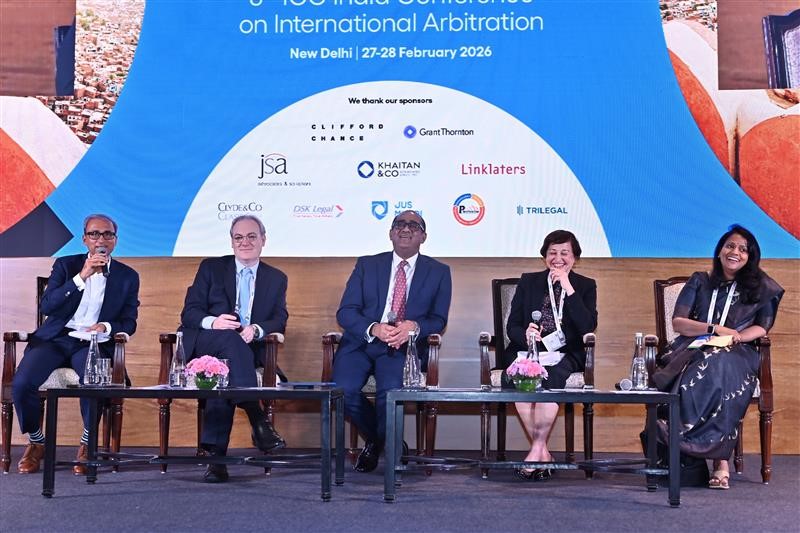
Moderated by Mr. Gaurav Pachnanda, Senior Advocate (India), Barrister (England and Wales), Fountain Court Chambers, United Kingdom, this session brought together Justice Judith Prakash, Senior Judge, Supreme Court of Singapore; Mr. Andrew Battisson, Litigation, Arbitration & Investigations Partner, Linklaters, Singapore; Ms. Amita Gupta Katragadda, Partner, Deputy Head – Disputes, Cyril Amarchand Mangaldas; and Mr. Dinesh Pardasani, Partner, DSK Legal, to examine how tribunals should deal with defaulting parties.
Mr. Gaurav Pachnanda began by noting that arbitration rests on consent, but default situations test the balance between efficiency and due process.
Taking the discussion further, Mr. Dinesh Pardasani outlined the practical forms of default he encounters. These range from complete non-appearance to what he described as the “invisible man” who appears intermittently to delay proceedings. He cautioned that tribunals should not rush to proceed ex-parte and must record each step carefully. At the same time, default does not mean the claimant gets a walkover. The tribunal must still scrutinise the evidence and ensure the award is legally sound.
Ms. Amita Gupta Katragadda addressed anti-arbitration injunctions and strategic non-participation. She observed that challengers are often quickly labelled as defaulters, but in some cases injunctions are pursued in the service of equity and justice. She emphasised that when one party stays away, the burden on the tribunal increases. The record must clearly show notice, opportunity, and reasoned consideration of the issues.
Regarding enforceability, Mr. Andrew said that the goal was to avoid “the cure being worse than the disease.” Even where a party refuses to participate, tribunals should test the participating party’s case, hold hearings where necessary, and avoid procedural shortcuts that may later expose the award to challenge.
Justice Judith Prakash explained that Singapore courts focus strictly on process. A party may sit back, do nothing at all and still raise a jurisdiction objection later. However, where notice was proper and the absence was deliberate, courts are unlikely to accept claims of unfairness.
The discussion closed with agreement that default heightens the tribunal’s responsibility. Silence does not simplify arbitration. It demands greater discipline.
Session 3: Oxford-style debate: Two steps forward, one step sideways: can India’s arbitration modernization co-exist with the continuing uncertainty under the BCI rules?
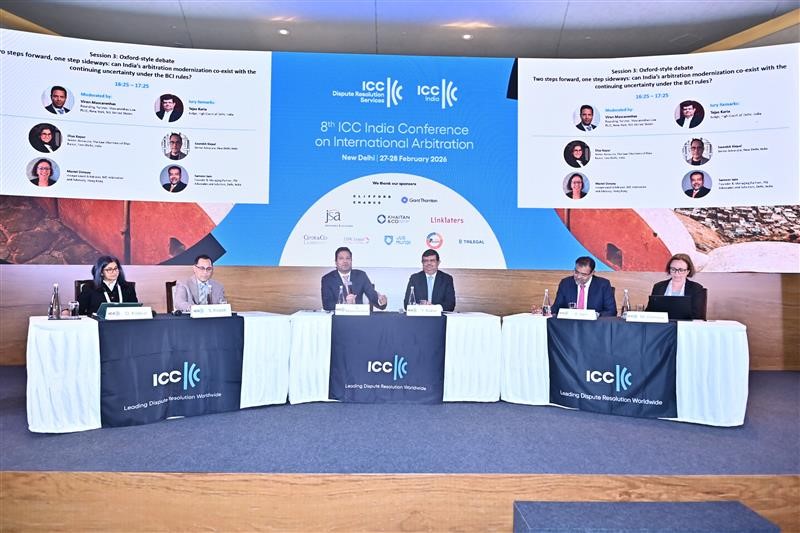
The conference concluded with an animated Oxford-style debate moderated by Mr. Viren Mascarenhas, Founding Partner, Mascarenhas Law PLLC, New York, N.Y. United States. The motion was whether India’s arbitration modernisation can truly progress while uncertainty under the Bar Council of India rules persists. The exchange was sharp and direct, centred on regulatory clarity, party autonomy and India’s ambition to be a global arbitration hub.
Opposing the motion, Ms. Mariel Dimsey, Independent Arbitrator, MD Arbitration and Advisory, Hong Kong, warned of a “chilling effect” caused by ambiguous regulations. Foreign counsels, she noted, are risk-averse. If participation carries uncertainty or disproportionate costs, “foreign lawyers may go elsewhere.” She questioned the USD 3,000 fly-in fee and the security deposit requirement and clarified that her concern was not about practising Indian law, but about arguing international cases seated in India.
Speaking from the same side, Mr. Sameer Jain, Founder & Managing Partner, PSL Advocates and Solicitors, Delhi, India, focused on client choice. The issue, he said, is not foreign lawyers practising Indian law, but the present uncertainty. He stressed that the topic was about the present, and reform may come later, but clarity is needed now. Party autonomy, he argued, should not be narrowed by regulatory confusion.
Supporting the motion, Mr. Saurabh Kirpal, Senior Advocate, New Delhi, pointed to the practical realities of Indian arbitration. Proceedings often interact with Court processes under Sections 9, 11, and 34. In such a system, complete separation was unrealistic. He suggested fears of deterrence are overstated and noted that international counsel continue to engage with India.
Adding to this, Ms. Diya Kapur, Senior Advocate, The Law Chambers of Diya Kapur, emphasised that the framework only restricts the practice of Indian law. “Nobody should be practising Indian law if they don’t know Indian law,” she remarked. International arbitrations governed by foreign law remain open to foreign counsel.
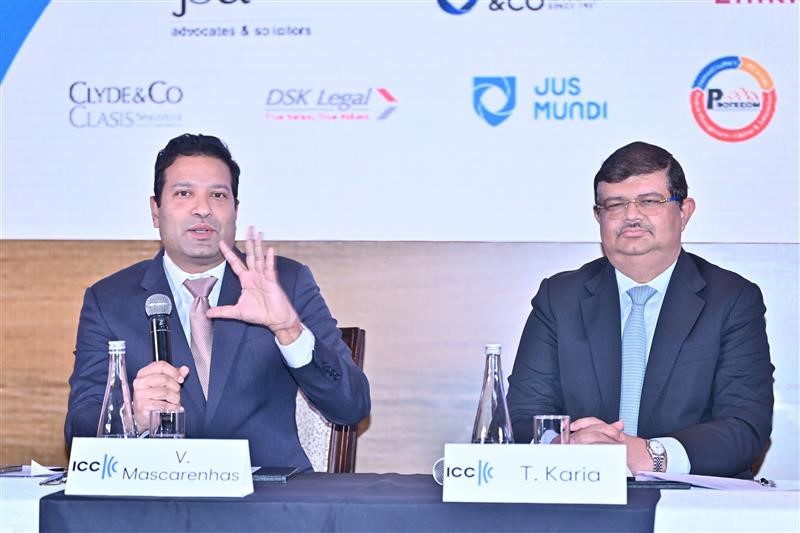
Delivering closing reflections, Justice Tejas Karia, Judge, Delhi High Court, captured the balance of the debate. “Two steps forward, one step sideways. Thank God it’s not two steps backward.” A sideways step, he observed, can help maintain balance before moving ahead. He added that “modernisation is not dependent on liberalisation” and reaffirmed that party autonomy in arbitration is paramount. India, he concluded, must continue building trust and clarity if it seeks to stand alongside established arbitration seats.
Bringing the conference to a close, Mr. Tejus Chauhan, Regional Director at the Secretariat of the ICC International Court of Arbitration, thanked the speakers and participants for their engagement and noted the strong international turnout. He formally announced that the 9th ICC India Conference will take place on 26 and 27 February 2027, inviting the arbitration community to reconvene for the next chapter in India’s evolving arbitration journey.
*Alisha Khan, EBC-SCC Student Ambassador, USLLS, GGSIPU, Delh