


CPC
Can a stranger to a suit, dispossessed of immovable property by decree-holder, seek redelivery? Supreme Court answers
Order XXI Rule 99, CPC is lucid that where any person other than the judgment debtor is dispossessed of immovable property by the holder of a decree for the possession of such property, he may make an application to the Court complaining of such dispossession.
Allahabad High Court affirms Central Administrative Tribunal as substitute for Civil Court in service disputes
“Initially a writ petition was filed before the High Court in the year 2000 which was transferred to the Tribunal in 2017 and thereafter, it came to be dismissed in 2024, we request the Tribunal to grant priority to hearing of this petition, and expect that the Tribunal shall hear and decide the same within a period of five months”
Delhi High Court allows submission of encrypted DVDs and VCDs as evidence on record
Novex Communications Private Limited sued the operators of Social- Saket and Social- Hauz Khas for unauthorized use of copyrighted sound recordings, seeking to introduce video evidence of these infringements.
‘Jurisdiction of Civil Courts is not barred from adjudicating a contractual dispute’ says Delhi High Court in case against Yes Bank Ltd.
‘The rule of amendment has been termed as rule of justice, equity, and good conscience which needs to be exercised in the larger interest of doing full and complete justice to parties before the Court.’
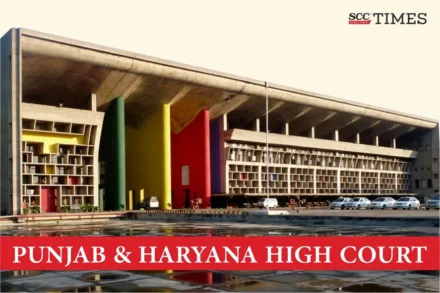
‘Acted in irresponsible and negligent manner while defending its case’; Punjab and Haryana HC dismisses petition to set aside ex parte proceedings
No sufficient reason was mentioned by the petitioner for the delay in filing the written statement and apparently blunt excuse was provided that the representative of the petitioner fell ill and no instructions could be issued to the Advocate.
‘O. VI R. 17 does not limit amendment of pleadings at any stage of proceedings, if it is necessary for determining the real questions in controversy’: Sikkim HC
The amendments were imperative for the proper and effective adjudication of the dispute; refusal to allow the amendment application would have caused injustice or resulted in multiple litigations; and the amendments did not constitutionally or fundamentally change the nature of the case.
‘Records summoned will reveal basis of dispute between parties’: Delhi HC dismisses Hershey India’s plea for recalling summons of witnesses
The Court noted that the respondent merely seeks to summon the record, which was not in his possession but was in the possession of the petitioner, which right cannot be denied to him.
Can mandate of arbitral tribunal be extended u/s 29A of the Arbitration Act, even after expiry of such mandate? Delhi HC answers
Section 29A of the Arbitration and Conciliation Act, 1996, empowers Courts to extend mandate of arbitral tribunals beyond the specified limitation.
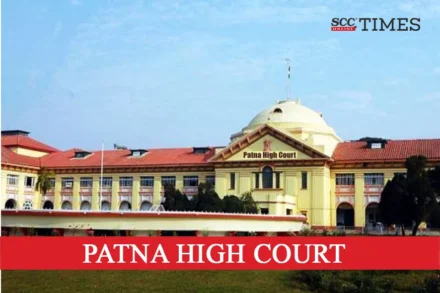
‘Necessary to determine real conflict between parties’; Patna HC sets aside order refusing to amend pleadings after commencement of trial
The Court stated that if the amendment was not allowed it would lead to unnecessary multiplicity of litigation, as the amendments appeared to be necessary to determine the real controversy between the parties.
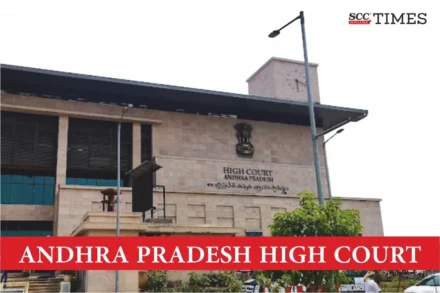
Explained| Andhra Pradesh HC allows transfer of divorce petition on account of wife’s inconvenience in a matrimonial proceeding
“In matrimonial proceedings, the convenience of the wife has to be considered than inconvenience of the husband. There are grounds to consider the request of the petitioner to transfer the petition.”
[Specific Performance of Contract] | Sikkim HC finds party’s unwillingness for performance on their part; Discusses scope of Second Appeal under S.100 CPC
Relying on UN Krishnamurthy v. AM Krishnamurthy, the Court stated that the appellant failed to indicate willingness to perform their part of the transaction, as they neither showed nor proved the availability of sufficient funds required to make the payments per the contract
Can pleadings be amended on the ground of typographical errors or change of counsel? Allahabad HC answers
“In the light of law laid down by the Courts, change of counsel cannot be a ground to file amendment application bypassing the rigorous conditions of due diligence. In fact, to meet out any mistake, no advantage can be given to litigant due to change of counsel.”
Will personal right of action survive by transfer to legal heir upon original plaintiff’s death? Delhi HC answers
“The nature of infringement of his legal rights, if any, which were claimed by the deceased/plaintiff, were personal to him and certainly not heritable”
‘Counterclaim akin to a cross-suit, can proceed independently’: Allahabad HC allows counterclaim to proceed after withdrawal of main suit
“Insofar as Rule 6-D of Order VIII C.P.C., it clearly provides for “Effect of discontinuance of suit” that if in any case in which the defendant sets up a counterclaim, the suit of the plaintiff is stayed, discontinued or dismissed, the counter-claim may nevertheless be proceeded with.”
Delhi High Court denies bail to alleged NSCN-IM member in terror funding case
The Delhi High Court says that being a government employee, the appellant cannot be permitted to be free by merely contending that the accounts, though in his name, were being managed by the co-accused.
Time to Fill the Legislative Vacuum for Limitation Under the Arbitration and Conciliation Act, 1996
by Justice (Retd.) Hemant Gupta*
Scope of powers to District Registrars under Registration Act cannot be expanded for adjudication of civil disputes or rights: Madras HC
“District Registrar is duty bound to draw a distinction between the summary proceeding and the trial nature proceedings with reference to the Registration Act and the Code of Civil Procedure”
Issue of limitation cannot be decided without recording of evidence, once it becomes a mixed question of law and fact: Delhi High Court upholds Trial Court’s dismissal of Order 7 Rule 11
Delhi High Court held that the dismissal of the petitioner’s application under Order VII Rule 11 CPC was warranted, emphasizing the need to focus solely on the allegations in the plaint at the preliminary stage because the issues regarding limitation and adverse possession required further evidence and examination, which could not be resolved without a full trial.
Inside Supreme Court verdict on importance of question of jurisdiction at the stage of granting interim relief
“No tribunal, far less a civil court, in exercise of judicial power ought to play ducks and drakes with the rights of the parties.”