
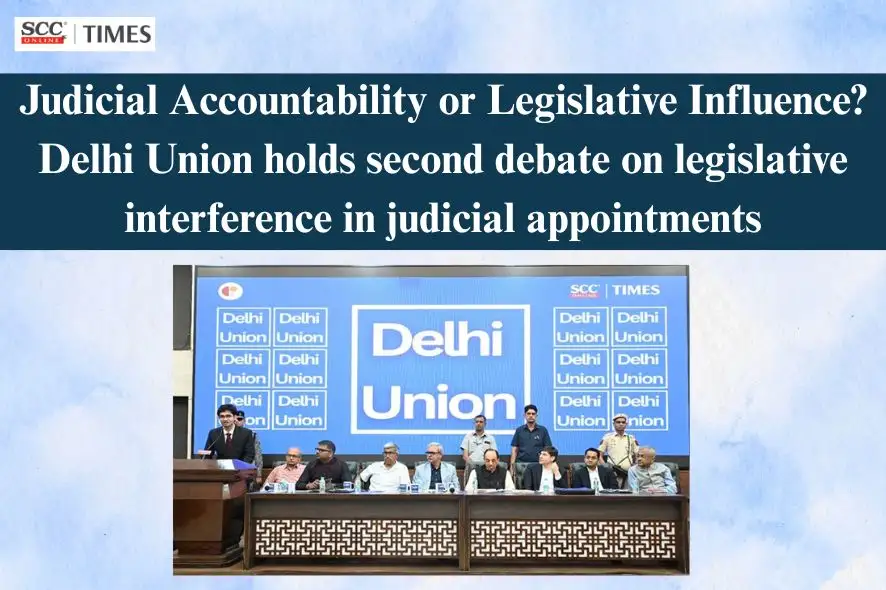
The Delhi Union, a non-political student-led forum dedicated to fostering civil and informed discourse on matters of national public interest, successfully organised the second episode of its flagship series centred around the motion, “This House Believes That India’s System of Judicial Appointment Should Have Legislative Interference.”
The event brought together some of India’s most distinguished legal minds to deliberate upon one of the most significant constitutional questions concerning the balance between judicial independence and accountability.
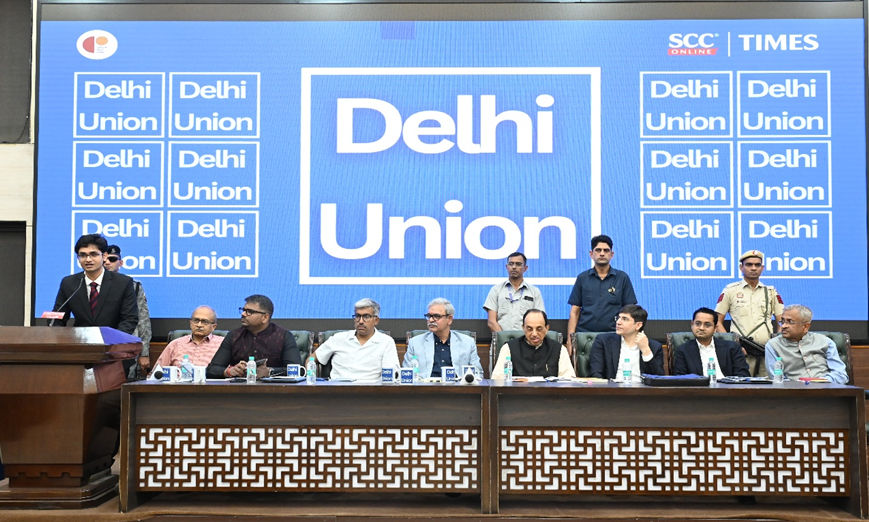
It commenced with an introductory welcome address by Mr. Shivom Singh Lovell, President of Delhi Union, followed by a brief explanation of the rules of procedure, after which the debate unfolded through a series of structured rounds featuring speakers from both the proposition and opposition. Each participant was given 6.5 minutes to present their arguments, with opportunities for Points of Information, making the session interactive and engaging.
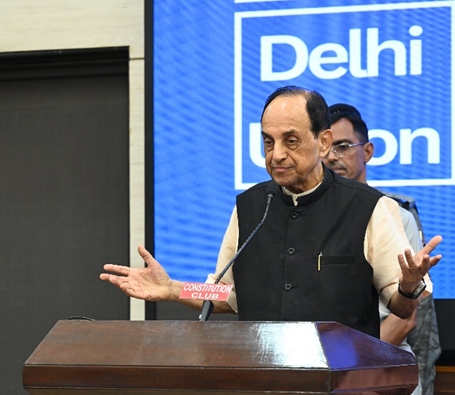
The debate was set in motion by Former Minister Dr. Subramanian Swamy, who opened with the assertion that “justice must not only be done but must also be seen to be done.” Drawing a comparative distinction between the Indian system and that of the United States, he emphasised the importance of parliamentary involvement in a democratic framework. He argued that adopting a model akin to the American system of judicial appointments would enhance transparency and inclusivity within the legal system.
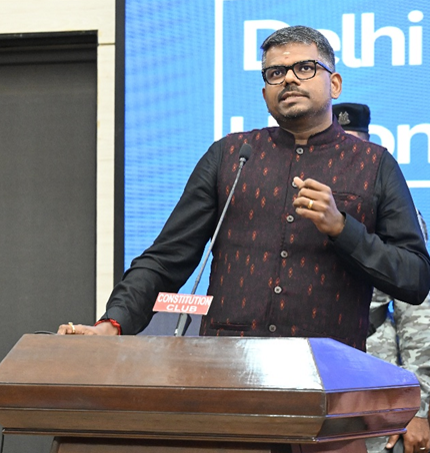
Following him, Senior Advocate Mr. J. Sai Deepak, speaking from the opposition, adopted a measured and analytical approach. He began by clarifying the scope of the motion, particularly interrogating the phrase “legislative interference,” and argued that it does not inherently relate to the process of judicial appointments. He distinguished between the collegium system and the broader framework of judicial appointments, while underscoring that the judiciary serves the people of India and not the government. He concluded by cautioning against conflating judicial appointments with judicial accountability, stressing that both concepts are fundamentally distinct.
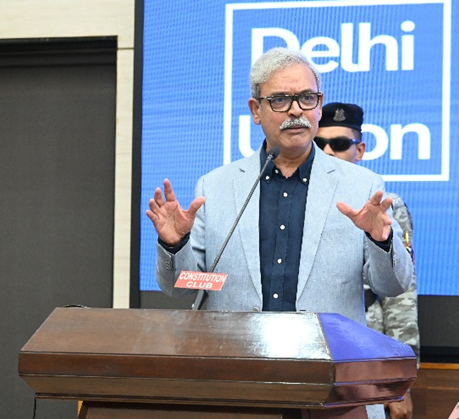
Justice Siddharth Mridul, Former Chief Justice of Manipur High Court, followed with a strong rebuttal by grounding his arguments in a textual reading of Article 124 of the Constitution, with particular emphasis on the term “consultation.” He elaborated on its meaning by referring to its French connotation as an “opinion of counsel.” His address invited Points of Information from both Vaibhav Gaggar and J. Sai Deepak, further intensifying the exchange.
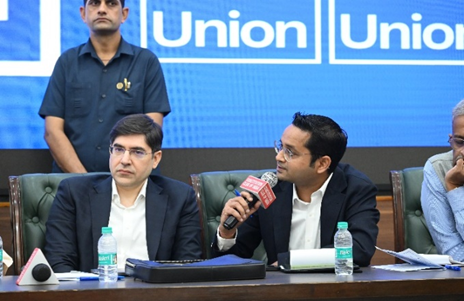
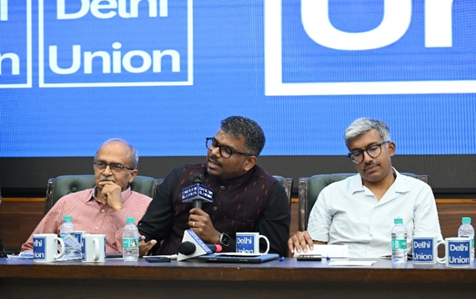
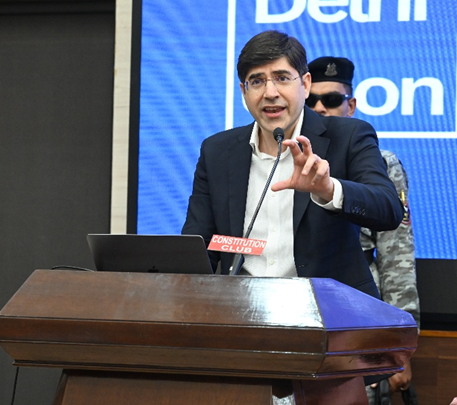
Senior Advocate Mr. Akhil Sibal, speaking against the motion, characterised the proposition as entirely vague and cautioned that granting the legislature a decisive role in judicial appointments would undermine judicial scrutiny. While acknowledging the imperfections of the existing system, he argued that reform must be measured, remarking that one cannot “throw the baby out with the bathwater.” He underscored the judiciary’s role as the guardian of the rule of law and questioned who would hold the government accountable if it were granted final authority in Judicial appointments.
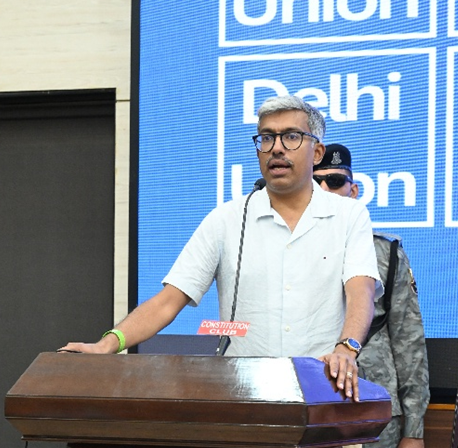
Senior Advocate Mr. Gopal Sankaranarayanan, speaking in favour of the motion, drew upon his professional experience to describe the current judicial system as imperfect and highlighted the need for reform through mechanisms such as the National Judicial Appointments Commission (NJAC). He advocated for legislative involvement, noting concerns about opacity and the perception that influence over judges affects legal outcomes. After that, the floor was subsequently opened to the audience for questions.
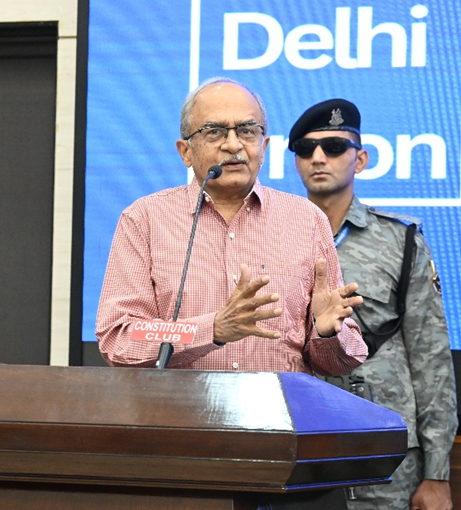
Furthermore, Senior Advocate Mr. Prashant Bhushan presented a nuanced position, neither fully endorsing nor opposing the motion. He emphasised that the objective of the debate was not to determine a winner but to chart a constructive path forward. Acknowledging instances of arbitrary appointments and perceived bias, he proposed the creation of a transparent, full-time, multi-member judicial appointments body, cautioning against direct legislative interference while advocating institutional reform.
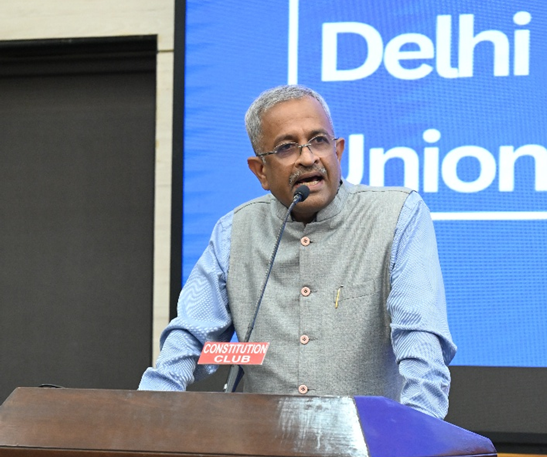
Senior Advocate Mr. Sanjay Hegde, speaking for the motion, argued that the shortcomings of the system lie not in its structure but in the individuals operating within it, and invoked historical references, including the Emergency, to support the need for legislative involvement.
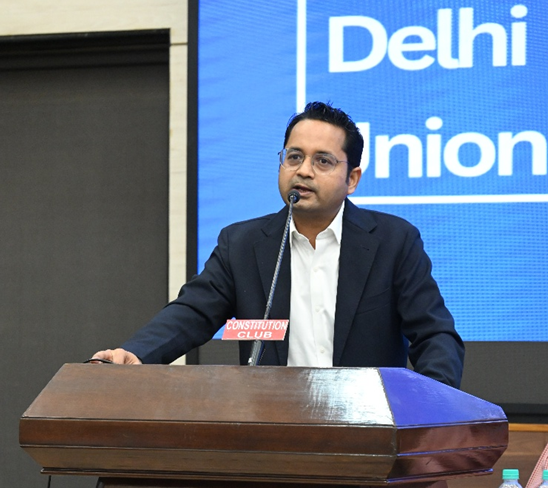
Concluding the panel discussion, Mr. Vaibhav Gaggar, Senior Advocate, opposed the motion by asserting that the legislature already exerts influence over the judiciary, citing instances such as the supersession of judges in landmark cases like Kesavananda Bharati and ADM Jabalpur. He warned that granting the legislature final power in judicial appointments would risk excessive control and undermine judicial independence, ultimately advocating for strengthening, rather than interfering with, the judiciary’s autonomy.
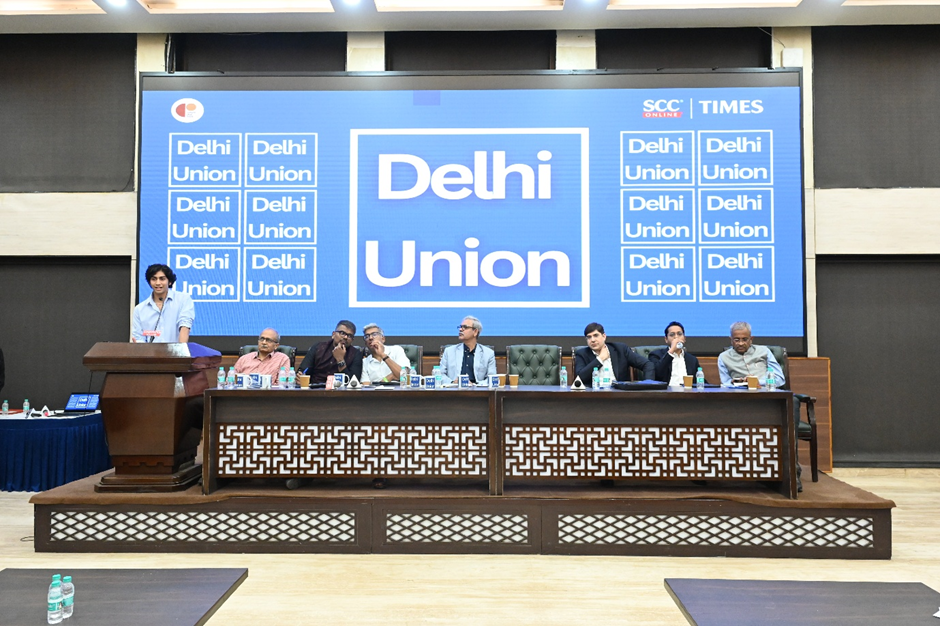
The session concluded with an engaging question-and-answer segment involving the audience, followed by a brief rebuttal round between the speakers. A word from the sponsors was delivered by representatives of the Culture Plus Foundation, and the event concluded with a vote of thanks by legal stand-up comedian Mr. Manu Abhishek Bhardwaj, who also acknowledged SCC Times for its role as the media sponsor.
Reported by: Muhammad Shaghil Ansari, EBC-SCC Online Student Ambassador, Faculty of Law, Jamia Millia Islamia, Delhi