Disclaimer: This has been reported after the availability of the order of the Court and not on media reports so as to give an accurate report to our readers.
Delhi High Court: In a petition filed under Section 50, Copyright Act, 1957, where the Court was called upon to examine the overlap between copyright and trademark in a dispute over the TIGER artwork, the the Single Judge Bench of Tushar Rao Gadela, J., found the artistic work used in the SHREE SAKSHAT label to be copied in its totality from Heineken Asia Pacific Pte. Ltd’s well-known TIGER artistic work. The Court, hence, directed the removal of the deceptively similar artistic work from the Register of Copyrights.
Background
The petitioner, Heineken Asia Pacific Pte. Ltd., being an internationally recognized and global leader in the business of manufacture and supply of beverages claimed that its string of world-renowned beverages includes the 1932, Singapore-born lager beer under the trademark “TIGER”. The petitioner exercises its statutory rights over the TIGER logo in India, under the Trade Marks Act, 1999 on the basis of numerous registrations commencing from 02.01.2006.
Petitioner was aggrieved by the unauthorized adoption of the device mark of the TIGER by the respondent, claiming that the impugned artistic work clearly incorporated an identical artistic work of the TIGER mark, which belongs to the petitioner. Thus, the petitioner sought rectification of the entry in the Register of Copyrights.
Analysis
The Court at first observed a close scrutiny of both the logos, hereunder:
|
Petitioner’s Logos |
Respondent No.1’s impugned logo |
|
|
|


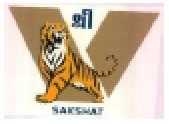
The Court then clearly drew the evidence of the fact that the TIGER logo of the petitioner has been copied in totality, in that, the Tiger with an outstretched left front paw, an open mouth where its teeth are visible, and a head that is turned towards the left; the tail is upturned and curled towards the right; a mane is visible around the Tiger’s face, and its eyes are not discernable, is clearly described by the petitioner. The Court noted that the mere placement of the letter ‘V’ in the backdrop with the letters “SHRI” (in Hindi) and “SAKSHAT” (in English) placed at the top and bottom of the logo respectively, would not, ipso facto, diminish the effect or the essentiality of the TIGER logo, in other words, the TIGER logo is the dominant feature or the prominent aspect of the entire mark/label of Respondent 1.
On petitioner’s submission that the TIGER logos constitute original artistic work, making it the first owner with copyright extending to all signatory countries, including India, the Court noted that this was supported by the law laid down in Marico Ltd. v. Jagit Kaur (2018) SCC OnLine Del 8488, and also observed that though trademarks and copyright operate under different statutes, the rights in original artistic work could overlap with the label mark registrable under the Trade Marks Act, 1999, for which the proviso to Section 45 has been engrafted. Thus, when such overlap exists, the proviso to Section 45 carves out a procedure to protect original artistic work in a mark against a person seeking registration of a similar artistic work, to prevent such mischief. The registration of the TIGER logos in several countries may constitute dates of publication under the Act.
The Court noted that the application of Respondent 1 to be not bona-fide, as the Search Certificate failed to disclose the petitioner’s prior registered TIGER logo, which was warranted under the Trade Marks Act, 1999, reflecting failure on the part of the Trade Marks Registry. Even otherwise, the deceptive similarity between the two marks cannot be undermined, as the petitioner’s TIGER logo appears to have been lifted and pasted in entirety, and the mandate to cite it was not properly discharged by the Registry.
Discussing the significance to consider the proviso to Section 45(1) read with Rule 70 of the Copyright Rules, 2013 which requires both the applicant and the Registrar to follow the steps and manner to conduct an “inquiry” before grant of registration and requires an applicant to declare that no identical or deceptively similar trademark is registered or applied for by others, along with a Certificate from the Trade Marks Registry. This requirement is mandatory to fulfil the purpose of the proviso and that the sub-rule (6) of Rule 70 of the 2013 Rules, necessitates such declaration by the applicant and mandates the Certificate from the Trade Marks Registry and any other interpretation would defeat the legislative intent, which is to obviate mischief.
The Court observed that since there was a failure by the Trade Marks Registry, the Registrar of Copyrights did not have the opportunity to conduct a proper inquiry regarding originality or existence of identical or deceptively similar registered marks, and had the Registry complied with the mandate of the Act, the situation would not have arisen.
Noting that the Respondent 1 had falsely declared the work as “Unpublished” in the copyright application while claiming prior user in the trademark application, showing the declaration was false to its knowledge. Hence, it was observed that the adoption of the TIGER logo was not bona-fide and the artistic work was a copy, not original and which disclosed the mala-fide intention of the Respondent 1 in seeking registration of copyright in the impugned artistic work under the Act.
The Court refused to render any opinion on the contention to declare the Respondent 1 a trademark squatter as the same was not substantiated by any averment or document in the petition. Thus, the Court held that the registration granted to Respondent 1 for the impugned artistic work cannot be permitted to continue and directed the Registrar of Copyrights to remove it from the Register of Copyrights.
[Heineken Asia Pacific Pte. Ltd. v. Vijay Keshav Wagh, 2026 SCC OnLine Del 1154, decided on 10-03-2026]
Also read: Delhi HC orders cancellation of copyright registration of edible oil brand ‘NIOP NIWAI’
Advocates who appeared in this case:
For the petitioner: Priya Adlakha and Urvi Nama, Advocates.
For the respondent: Apoorva Sharma, Sumit Nagpal, SPC with Kunal Khurana, Advocates
Buy Trade Marks Act, 1999 HERE