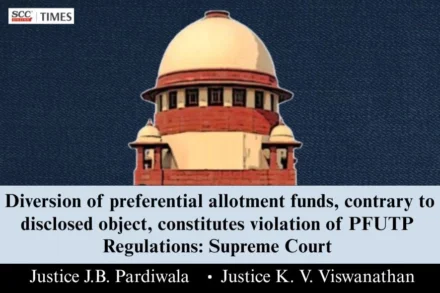
Diversion of preferential allotment funds
Case BriefsSupreme Court

Emphasizing investor protection and market transparency, the Supreme Court ruled that the unlawful diversion of preferential issue proceeds could not be legitimized through subsequent shareholder ratification.
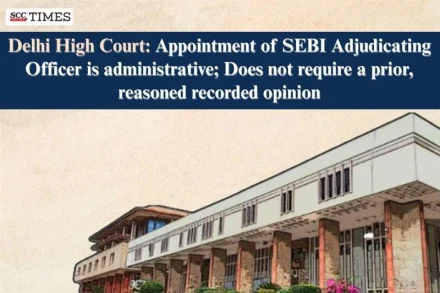

appointment of SEBI adjudicating office
Case BriefsHigh Courts

“Formation of opinion under Rule 3 of Securities and Exchange Board of India Adjudication Rules need not be expressly recorded at pre-notice stage.”

Ketan Parekh
Case BriefsHigh Courts

“The right to travel abroad has been considered to be a facet of right to life and personal liberty, and, thus, cannot be subjected to unreasonable and arbitrary restrictions, even when a person is facing a prosecution.”

partners liability in partnership firm
Case BriefsTribunals/Commissions/Regulatory Bodies

With respect to noticee’s liability as a partner, the noticee submitted that she resigned within short span of time and did not receive any remuneration or profit from the firm. Further, she was not a part of decisions or involved in day-to-day affairs of the firm.

Profit Motive
Op EdsOP. ED.

by Aniket Panchal† and Sidharth Pai††

landmark-judgment (1)
Experts CornerSiddharth R Gupta

by Siddharth R. Gupta*
Cite as: 2023 SCC OnLine Blog Exp 78

Criminal Charges
Op EdsOP. ED.

by Shubham Damani† and Deepali Bhandari††

Case BriefsTribunals/Commissions/Regulatory Bodies

Securities Exchange Board of India (SEBI): Madhabi Puri Buch (Whole Time Member), prima facie found two Infosys employees and 6 others violating

Case BriefsTribunals/Commissions/Regulatory Bodies

Today, SEBI has raised an objection. Tomorrow a private litigant would raise a similar objection. It would be a never-ending process. This issue needs to be resolved on the judicial side as well.

Case BriefsTribunals/Commissions/Regulatory Bodies

Securities and Exchange Board of India (SEBI): Madhabi Puri Buch, a Whole-Time Member addressed the issue of global depository receipts issued by

Case BriefsSupreme Court

Supreme Court: In the case where it was argued that for offences allegedly committed under Section 26(2) of the Securities and Exchange