Transactions Between Clubs and Their Members: An Analysis Through the Lens of the Principle of Mutuality
by Shivam Kumar* and Utkarsh Pandey**

Bringing you the Best Analytical Legal News


by Shivam Kumar* and Utkarsh Pandey**
The Court stated that State authorities cannot retain the excess amount which is not in accordance with law and the same would be violative of Article 265 of the Constitution.
The Tribunal opined that once the coal companies have charged sales tax/VAT at the appropriate rate on the sale of coal to appellant and in turn, appellant has charged sales tax/VAT to the consumers of coal, the transaction is one of sale/purchase and not of rendering service.
Supreme Court said that, since the appeal is a statutory remedy, the appellant had availed it and withdrawn the same, only as a pre-condition for availing the benefit under the Amnesty Scheme.
In a 106 pages long verdict, the Supreme Court has decided whether a credit note issued by a manufacturer to a dealer of automobiles in consideration of the replacement of a defective part, using spare parts from dealer’s own stock or from an open market, in the automobile sold pursuant to a warranty agreement being collateral to the sale of the automobile, will be exigible to sales tax.
“When a legitimate expectation of a specific outcome is created by a public authority, the said public authority is required to take into account such expectation created by it when making a decision that affects the interests of the individual or group” –Justice Krishna Murari
The supply of ISO Tankers on lease/rental basis by foreign suppliers to the appellant would amount to a ‘deemed sale’ under Article 366(29A) of the Constitution as the appellant throughout had effective control and possession over the ISO Tankers.
“When the undeniable facts, including the traffic blockage due to agitation, are taken into consideration, the State alone remains responsible for not providing smooth passage of traffic.”
Orissa High Court: A Division Bench of S. Muralidhar CJ and B.P. Routray, J. allowed the petition and held that the Tribunal
Jharkhand High Court: A Division Bench of H.C. Mishra and Deepak Roshan, JJ., allowed the present petition against the respondent authorities charging

Supreme Court: When the bench of AM Khanwilkar and Ajay Rastogi, JJ was called upon to decide whether the condition of ‘use
Supreme Court: While examining the applicability of the turnover tax as defined under Section 6 B(1) of the Karnataka Sales Tax Act, 1957, the bench of AM Khanwilkar and Ajay Rastogi, JJ held: “the expression ‘total turnover’ which
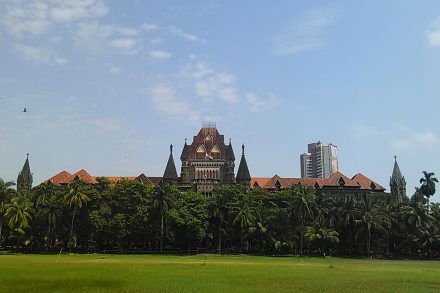
High Court of Bombay: In a case where the petitioners were charged against unanticipated dues on a property by the Sales Tax