2024 SCC Vol. 2 Part 5
Constitution of India — Sch. X and Art. 145(3) — Power of Speaker/Deputy Speaker to initiate disqualification proceedings, when proceedings for removal

Bringing you the Best Analytical Legal News


Constitution of India — Sch. X and Art. 145(3) — Power of Speaker/Deputy Speaker to initiate disqualification proceedings, when proceedings for removal
“Applicants herein have joined investigation, as and when directed by the IO and there are no allegations of tampering with evidence or threatening any person associated with the case.”
Supreme Court found the appellant’s contention as unsustainable because they did not appear before the Court on issuance of bailable warrants but moved applications for bail.
It is crucial to recognize that delays in the victim’s testimony before the learned trial court, often attributed to the intricate nature of trauma recovery, should not serve as grounds for the accused to seek bail.
Delhi High Court noted that the trial in the instant case is at a very initial stage and charges have not been framed yet by the Trial Court, and there are 34 prosecution witnesses to be examined who are prone to influence and pressure.
Constitution of India — Arts. 136 and 142 — Uncompoundable offences: Quashing of criminal proceedings on basis of compromise petition, when permissible,
Supreme Court acknowledged that in case of special law prescribing a limitation period, Section 5 of the Limitation Act would have no application.
“Each passing moment in the face of cardiac distress is fraught with the peril of irreversible harm, and in case of any eventuality that may occur in applicant not getting proper and specialised treatment, this Court will have to bear the weight of regret.”
Supreme Court observed that “mere delay in trial pertaining to grave offences as one involved in the instant case cannot be used as a ground to grant bail.”
“Considering the gravity of the offence committed by the husband, and the thought process that, as a husband, he was entitled to sexually, physically, and economically abuse his wife to the extent as mentioned in the complaint, goes against the very intent of the law of this country.”
Sexual violence against a woman should invite no tolerance, however, manipulating the system by the parties to a case under Section 376 IPC would equally need to be dealt with a stern hand and serious efforts should be made to address and remedy failings within the criminal justice system and through our society.

“The fact that the Trial Court had not issued the summons under all the Sections mentioned in the complaint and had given the reasons, negate the plea of the petitioners that the Trial Court had not applied its mind while issuing the summons.”
Central Vigilance Commission Act, 2003 — S. 25 r/w FR 56 — Tenure of Director of Enforcement: Permissibility of continuation of tenure
“Where women are honoured, divinity blossoms there and where women are dishonoured, all actions no matter how noble remain unfruitful.”
Penal Code, 1860 — Ss. 302 and 201 — Circumstantial evidence — Last seen theory and recovery of weapon: In this case,
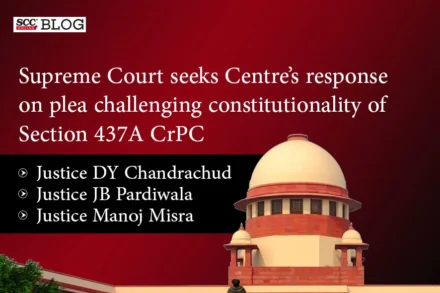
Supreme Court also sought assistance from Attorney General for India, R. Venkataramani.
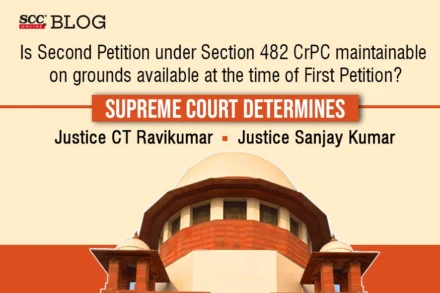
The Supreme Court was deciding the appeal against Allahabad High Court’s order wherein it had held that the petitioner could not continue to challenge the proceedings when he had not raised objections to the charge sheet or cognizance order in his first petition under Section 482 Cr.P.C.
Supreme Court wondered “how a Civil Writ Petition for clubbing First Information Reports could be entertained”.
Chandigarh Estate Rules, 2007 — R. 16 and second proviso thereto: Fragmentation/division/bifurcation/apartmentalisation of residential units in Phase I of Chandigarh is not
Criminal Law — Criminal Trial — Proof — Burden and Onus of proof — Recourse to S. 106 of the Evidence Act