BCCI — The Question of State, and the Broadcasting Rights
by Rani Vaishnavi and Shobhit Arora*

Bringing you the Best Analytical Legal News


by Rani Vaishnavi and Shobhit Arora*
The Court remarked that it was one of those cases where the authority instead of carrying out its own obligations, kept on tightening the screw upon the contractor to finish the work within the extended timeline.
The Court held that under Section 74, CGST Act, each financial year is a separate unit for tax determination, and limitation periods apply independently. It found that the respondent-GST Authorities acted illegally by issuing a consolidated notice and ignoring documentary evidence provided by State Bank of India (SBI). Consequently, the impugned show-cause notice and order were declared void and without jurisdiction.
The Court called for a shift from occasional seminars to continuous professional learning and proposed a full-time National Legal Academy to strengthen advocates’ skills, ethics, technological competence, and long-term development.
The instant dispute arose from Canara Bank’s allegation that the appellant’s legal opinion wrongly certified the entire mortgaged property as belonging to the guarantor, despite prior sale deeds affecting part of it. The Bank treated the alleged omission in title verification as negligence that exposed it to financial risk.
The Court held that NSEI would qualify as a “public authority” not only under the second part, but also under the first part of Section 2(h), RTI Act.
“Bar Association is a body of private individual lawyers and in normal discharge of its functions, it does not perform any function which can be said to be a public function”
“Gauhati High Court noted that the petitioners were employees of the Board and served on conditionally sanctioned posts, which were permanently retained and they were being paid their salary from grants-in-aid and not from the ordinary Head for disbursement of salary of the government employees.”
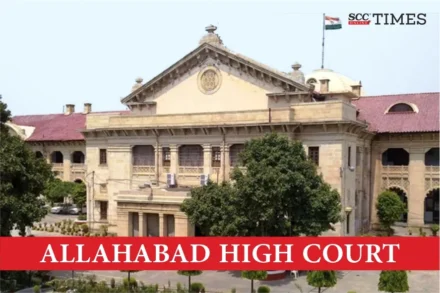
“To determine whether an authority/body would fall under ‘State’ within the meaning of Article 12 would have to be determined on the cumulative facts of financial, functional and administrative dominance and/or control of the Government upon such a body. If such control is factually found, then the body would be treated as ‘State’ within Article 12.”
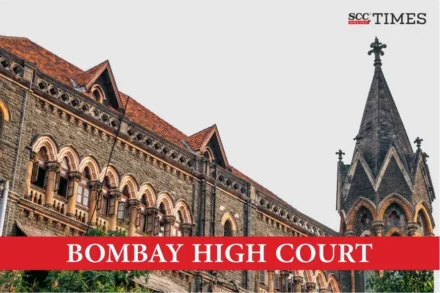
“In matters of alleged indemnification of the petitioner in the context of penalties imposed upon Lalit Modi by the ED, there is no question of discharge of any public function, and therefore, for this purpose, no writ could be issued to the BCCI.”
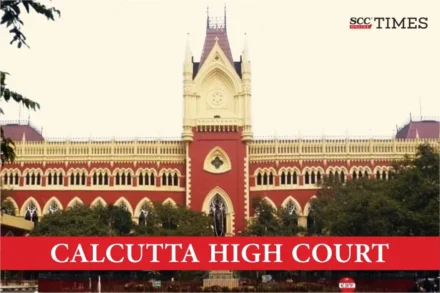
Alipore Bar Association being not a state “other authority” or “agency or instrumentality” of the state within Article 12 and “authority or person” discharging public function within the meaning of Article 226, writ against Alipore Bar Association that too in the matter of election to the Bar Association is not maintainable.
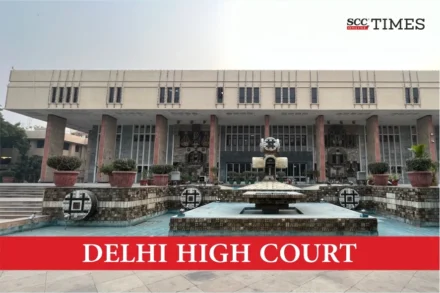
An entity is required to be tested on three parameters namely, (a) financial, (b) functional, and (c) administration for its inclusion as ‘other authority’ in Article 12 of the Constitution.
Delhi High Court elucidated the treatment of subscription fees vis-à-vis royalties and technical services under both the Double Taxation Avoidance Agreement (DTAA) and the Income Tax Act and clarified the distinction between income from subscription fees and payments for intellectual property rights or technical consultancy services.
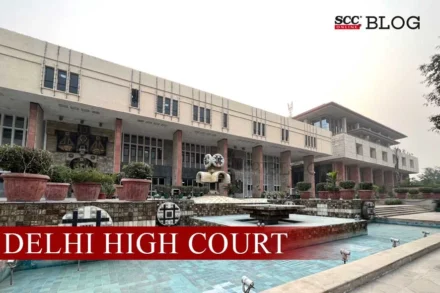
The interpretation of the term other authority has evolved over a period of time where the judicial dictum, at various instances has decided for inclusion or exclusion of various authorities under Article 12 of the Constitution of India.
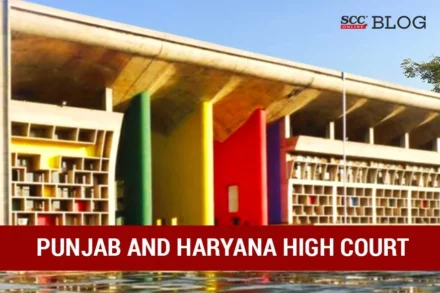
Punjab and Haryana High Court clarified that right to lien is provided to employees of government/statutory bodies as per applicable rules, and the same was not a fundamental right to be read in every employment.
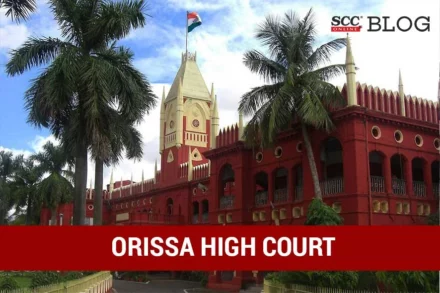
The tests laid down in Ajay Hasia v. Khalid Mujib Sehravardi, (1981) 1 SCC 722 were not fulfilled, hence, the Association is not ‘State’ within Article 12.
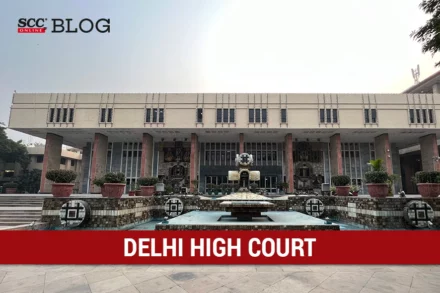
Under Article 226 of the Constitution of India, a writ cannot be issued against a Government- entity which has been subsequently privatized and no longer performs any public duty.
“The writ petition, while initially deemed maintainable, has since become non-maintainable due to the privatization of Air India Limited. This development has rendered it beyond this Court’s jurisdiction to issue any writ, order, or direction against the respondents.”
A person who is residing in South India does not know the geography of Delhi and if recruited as civil defence volunteer, and in case of emergency he will get lost in Delhi instead of reaching to the place where emergency has occurred
Even though petitioners have claimed that deduction of an amount of their contribution to the Society is permitted by the Ministry of Finance and that the land to run the Society is allocated by the Government, we find that purpose to provide aid in the form of sanction and land to the Society is to enable it to function smoothly to the benefit of its members. However, this does not establish that these functionaries are being run by the Air Force or the Central Government.