








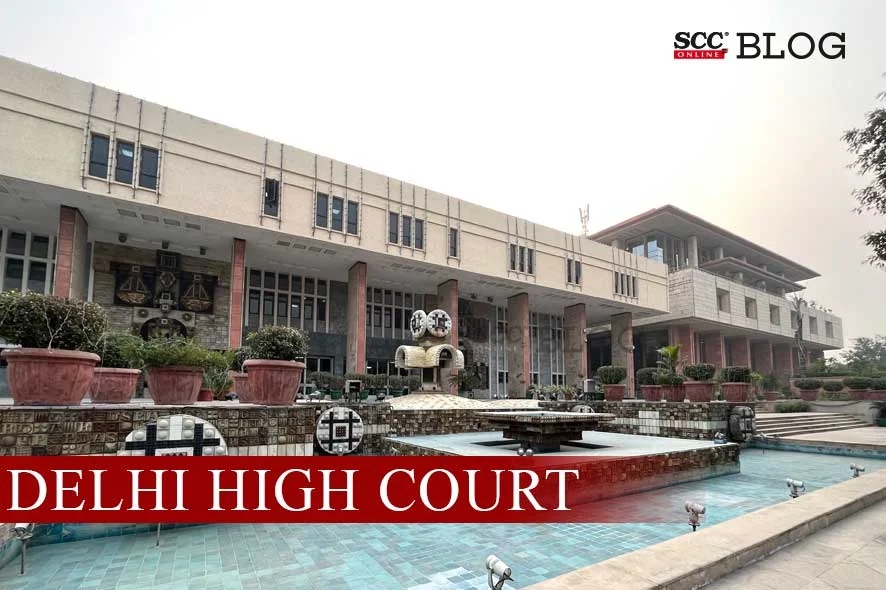
Delhi High Court: In a matter concerning the maintainability of writ petition against the South Asian University, Chandra Dhari Singh, J., held that the present petition being non-maintainable is liable to be dismissed and the petitioners are advised to approach the appropriate forum i.e. the Arbitral Tribunal for adjudication of the dispute on merits as the University to be neither a State under Article 12, nor under the ambit of Article 226 of the Constitution of India.
The petitioners were Assistant professors in the University and were firstly issued show cause notice seeking a response to the charges leveled against them and were later suspended from the University on establishment of prima facie involvement in a student-led protest in the University premises. Aggrieved by the same, the petitioners had approached the Delhi High Court under Article 226 of the Constitution for issuance of a writ of certiorari to quash the show cause and suspension notices.
Counsel for the respondent raised preliminary objection to the maintainability of the writ against the respondent University. Therefore, the Court heard the case at length and reserved the matter on the aspect of maintainability.
The Court noted that the interpretation of the term ‘other authority’ has evolved over a period where the judicial dictum, at various instances has decided for inclusion or exclusion of various authorities under Article 12 of the Constitution of India. The respondent University being an organization deriving its powers from an intergovernmental agreement dated 04-04-2007, is an international organization where the Government of India does not hold any control over its functioning, administration and finances despite it being situated in India. The arguments advanced by the petitioner did not satisfy the Court that the respondent University is a state for purpose of adjudication of dispute by the Writ Court and therefore, it cannot be brought under judicial scrutiny by the Court.
The Court further noted that the issue concerning the immunity of international organizations, in the context of employment disputes, is of utmost importance, and the existence of a forum for settling disputes between international organizations and their employees is thereby necessary. The existence of such a mechanism for redressal of the dispute between the employees and the respondent University satisfies the Court that the petitioners have an effective remedy to redress their grievances, therefore, the present Court does not have jurisdiction to adjudicate the issue. Even though the settled position of law, regarding the inclusion of Educational institutions under the ambit of Article 226 of the Constitution of India has been made clear by the Supreme Court, all the parties subjected to the said jurisdiction were not established out of an international agreement signed between the nations and therefore do not enjoy the status of an international organization, therefore, the same cannot be made applicable to the respondent University.
The Court held the respondent University is not a ‘State’ and therefore not liable under writ jurisdiction.
[Snehashish Bhattacharya v. South Asian University, 2024 SCC OnLine Del 481, decided on 23-01-2024]
Advocates who appeared in this case :
Mr. Abhik Chimni, Mr. Saharsh Saxena, Mr. Anant Khajuria and Ms. Riya Pahuja, Advocates for petitioner
Mr. Sandeep Kumar Mahapatra, Ms. Mrinmayee Sahu and Ms. Kritika Sharma, Advocates for respondents
Buy Constitution of India HERE









0 replies