Arbitral Tribunal
Writ Jurisdiction and Arbitral Autonomy: Striking the Right Balance in India’s Arbitration Landscape
by Vasanth Rajasekaran* and Harshvardhan Korada**
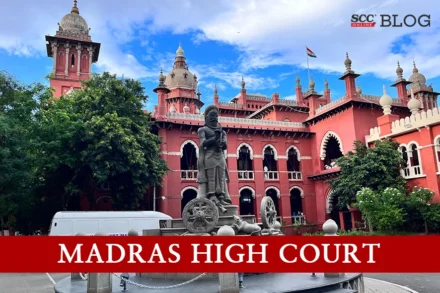
‘Section 29-A of Arbitration Act is procedural and discretion is given to parties to extend arbitration period further for 6 months’ ; Madras HC upholds arbitration award passed beyond 12 months
“The legislative intent of inserting Section 29-A of the Act is only for expeditious disposal of the arbitration proceedings and not to confer a new defence upon an unsuccessful party to challenge the award and to reopen the entire proceedings.”
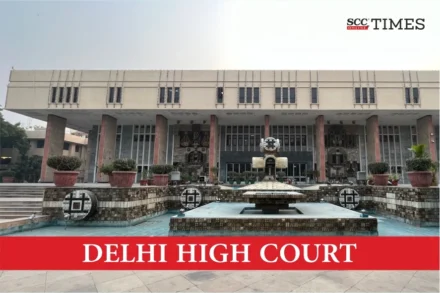
‘Necessary ingredients of Sec. 11(6) clearly exist’; Delhi HC appoints Arbitrator to resolve dispute between Yuvraj Singh and real estate developer for claim of Rs. 1.38 Crores
“Deletion of party is an issue to be decided by the Arbitral Tribunal, it cannot be looked into by the Court under Section 11(6) of the Arbitration Act”
Panel Paradox: A Closer Look at Arbitrator Appointments from Interested Party Panels
by Abhisaar Bairagi*, Milind Sharma** and Ausaf Ayyub***
Delhi High Court | Arbitral Tribunal cannot award certain types of damages if they are specifically excluded by contractual clauses
The Court emphasized the necessity of adhering to the specific terms and limitations outlined in contractual clauses. This decision underscores the importance of clear contractual provisions and their binding nature on arbitral tribunals, reaffirming that such limitations must be respected and enforced in arbitral awards.
‘Situation not emergent to justify parallel adjudication by Court’: Delhi High Court dismisses Section 9 Arbitration petition due to Lack of Urgency
“When the Arbitral Tribunal is in seisin of disputes between parties, there is the pernicious possibility of any observation being made by the Court influencing the proceedings before the Arbitral Tribunal”
Can allegations of coercion be looked into u/s 11 of the Arbitration Act by the referral Court? Delhi HC explains
“Consequent on introduction of sub-Section 6(A) in Section 11, the Supreme Court has in several decisions held that the jurisdiction of the referral Court is now circumscribed.”
Can mandate of arbitral tribunal be extended u/s 29A of the Arbitration Act, even after expiry of such mandate? Delhi HC answers
Section 29A of the Arbitration and Conciliation Act, 1996, empowers Courts to extend mandate of arbitral tribunals beyond the specified limitation.
‘Process for redressal of grievances for refund of amount already initiated through arbitration’; Delhi HC refuses relief under Section 9 of the Arbitration and Conciliation Act, 1996
The Delhi High Court said that the petitioner had no prima facie right, title, and interest in the allotted units, and a case was not made out to restrain the respondents from creating any third-party interest.
Can Arbitration proceedings be terminated on claimant’s failure to request Arbitral Tribunal to fix a date for hearing? SC answers
“The abandonment of the claim can be either express or implied. The abandonment cannot be readily inferred. There is an implied abandonment when admitted or proved facts are so clinching that the only inference which can be drawn is of the abandonment.”
Pre-Award, Pendente Lite, and Post-Award Interest in Arbitration: Decoding the Supreme Court’s Perspective
by Vasanth Rajasekaran† and Harshvardhan Korada††
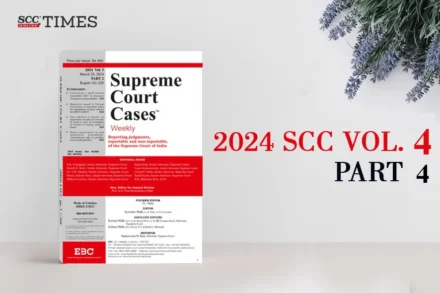
2024 SCC Vol. 4 Part 4
Arbitration and Conciliation Act, 1996 — Ss. 11(14) & Expln. thereto [as they stood prior to the 2019 Amendment Act], 31(8), 31-A,
Which judgment is binding when coordinate benches of Court have conflicting decisions? Allahabad HC answers
“When a Coordinate Bench issues a judgment on a particular legal issue, that judgment becomes binding precedent for subsequent cases involving a similar issue before another Coordinate Bench”
Can the issue of limitation be decided in a petition under Section 11 of the Arbitration Act? Delhi High Court answers
“The Court’s jurisdiction at the pre-reference stage is only to determine the prime facie existence of an arbitration agreement and the final adjudication, even on the question of limitation, is to be left to the arbitral tribunal, being the parties’ chosen forum.”
Deciphering the Supreme Court’s Verdict on DMRC v. DAMEPL — The “Cure” to Longstanding Legal Battle
by Vasanth Rajasekaran† and Harshvardhan Korada††
‘Certificate issued during pendency of dispute would not amount to final payment certificate’; Delhi HC sets aside arbitral award in conflict with public policy of country
“When no opportunity is given to deal with an argument which goes to the root of the case based on evidence which go behind the back of the party and results in a denial of justice to the prejudice of the party, the same would amount to violation of principle of natural justice.”
Supreme Court allows DMRC’s Curative Petition against arbitral award in favour of Delhi Airport Metro Express
Supreme Court has applied the standard of a ‘grave miscarriage of justice’ in the exceptional circumstances of this case where the process of arbitration has been perverted by the arbitral tribunal to provide an undeserved windfall to DAMEPL.
An Edge of the Institution Over Ad hoc Arbitration
by Justice Hemant Gupta (Retd.)*
Cite as: 2024 SCC OnLine Blog Exp 28
Enforcement of Arbitral Awards in India: An Analysis of Potential Issues and Strategies for Success
by Vasant Rajasekaran* and Harshvardhan Korada**
Cite as: 2024 SCC OnLine Blog Exp 26